The Perceptual Process
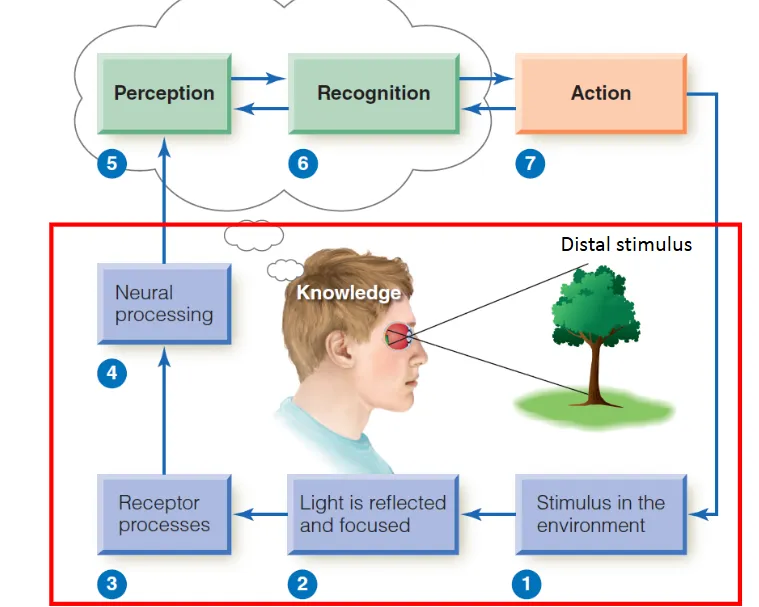
Stimulus in environment (light), receptor process in eyes, sensitive to light, neural processing, perceptions, recognition and action
| Term | Definition |
|---|---|
The Perceptual Process | Stimulus in environment (light), receptor process in eyes, sensitive to light, neural processing, perceptions, recognition and action |
Distal Stimulus - Step 1 | Environmental stimuli are all objects in the environment are
available to the observer. Observer selectively attends to objects. Physical stimulus |
Proximal Stimulus - Step 2 | Stimulus impinges on receptors resulting in internal representation. light pattern hitting retina, image on retina , transform some form of energy (light) turns into neural activity |
Receptor processes - step 3 | Sensory receptors are cells specialized to respond to
environmental energy, visual pigment is what reacts to light, Transduction occurs, which converts environmental energy
to nerve impulses
Transduction, transforms light energy into electrical processes, Shaping of perception by the properties of visual pigments in receptor’s outer segments. |
Neural Processing (Step 4) | Changes that occur as signals are transmitted through maze
of neurons, Primary receiving area, Occipital lobe (vision), Temporal lobe, Parietal lobe. Different things need different levels of details.
Interactions between electrical signals traveling in networks of neurons early in system (in retina); later, on pathway to brain;
and finally, within brain. Get to brain though blind spot in brain no receptors.
Likely evolved to interact with environment |
Behavioral Responses (Step 5-7) | 5 perception
6 recognition
7 action
Electrical signals are transformed, giving rise to conscious
experience. Person perceives object (such as a tree). Person recognizes it as a tree (places object in category). |
Recognition and knowledge | Knowledge is any information perceiver brings to a situation. Knowledge can affect how we interpret images |
Bottom-up processing | Processing based on incoming stimuli from environment, Also called data-based processing, energy leading to receptor activity |
Top-down processing | Processing based on perceiver’s previous knowledge (cognitive
factors), Also called knowledge-based processing.
improve perception if you go out looking for a camouflaged animal with it in your head what you're looking for |
Studying the Perceptual Process | Relationships pertinent to studying the perceptual processes:
A: stimulus-perception relationship
B: stimulus-physiology relationship
C: physiology-perception relationship 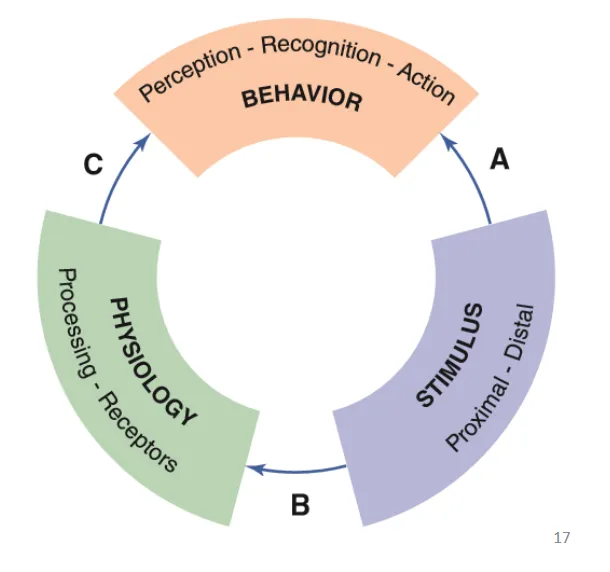 |
Stimulus perception (A and B) | Measuring grating acuity,
Measuring variations in brain activity as a function of orientation (Stimuli: vertical horizontal, slanted, Brain response: Bigger to
vertical and horizontal orientations) 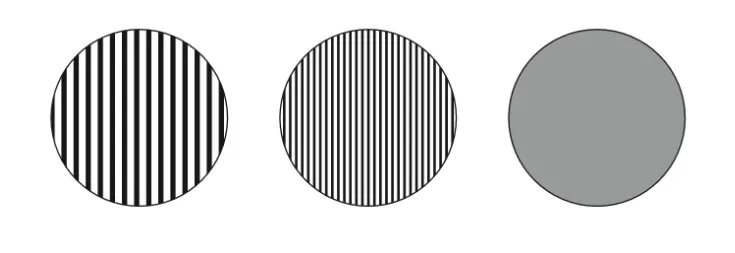 |
Perception Relationship (C) | Relative decision sensitivity 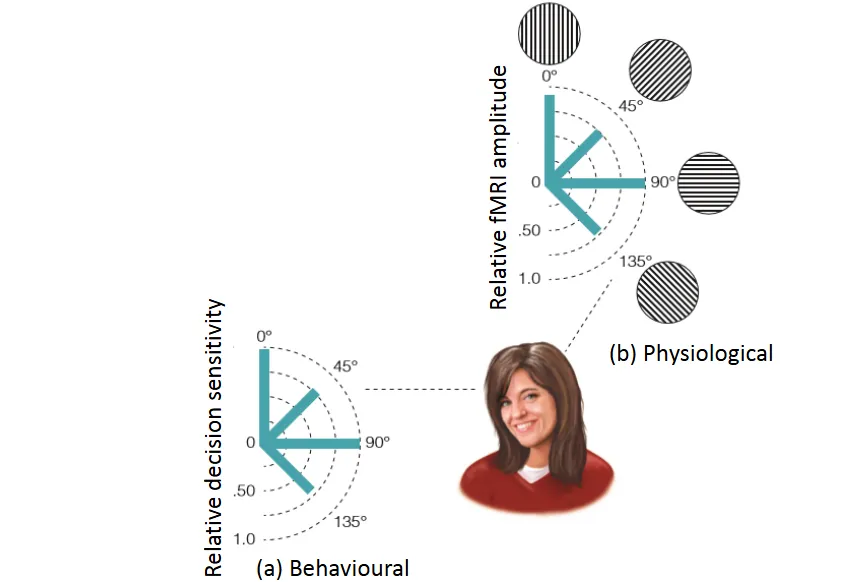 |
Measuring Perception | Absolute threshold: smallest amount of energy needed to
detect a stimulus
• Method of limits
• Stimuli of different intensities presented in ascending and descending order
• Observer responds to whether they perceived stimulus
• Cross-over point is threshold 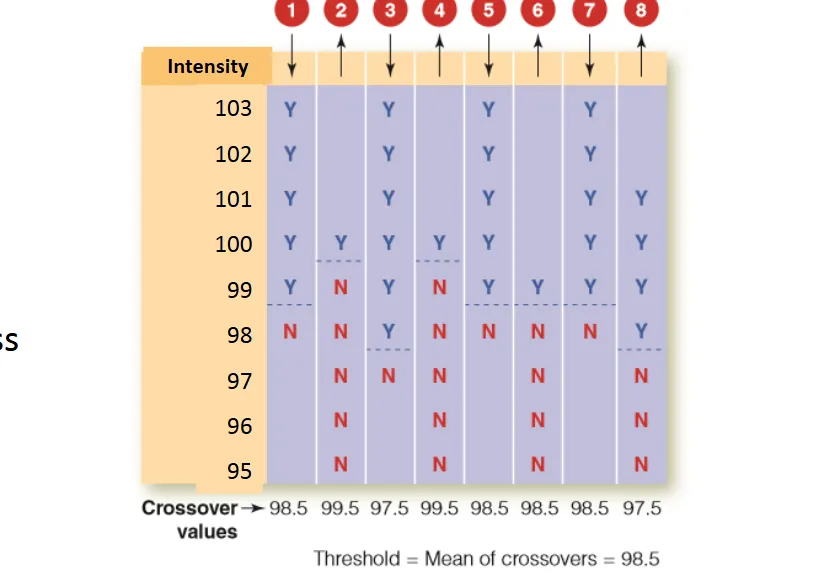 |
Dark adaptation (measuring perception) | adapting to being in the dark overtime, become more sensitive to light, different receptors are involved |
Five questions about perception | What is perceptual magnitude of a stimulus? Magnitude estimation
What is identity of the stimulus? Recognition testing
How can I quickly react to it? Reaction time
How can I describe what is out there? Phenomenological report (identity of object)
How can I interact with it? Physical tasks and judgment |
What is the Identity of the Stimulus | Recognizing rapidly flashed scene
Subjects can often recognize general properties of a rapidly
flashed scene, such as “houses near water and a boat,” but need
more time to perceive details |
What is perceptual magnitude of a stimulus | Judging perceptual properties
Using haptics (i.e., not vision) to estimate length of held/ manipulated objects |
How Quickly Can I React to It | Effect of attention
Fixate on +, stimulus flashed in A or B, pay attention to A
Quicker responses for stimuli appearing in A 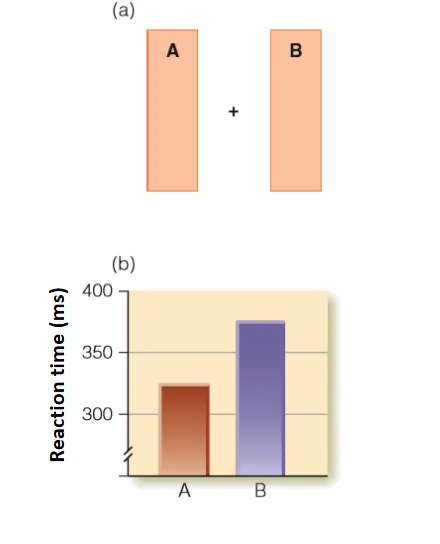 |
How Can I Describe What is Out There | Optical illusions, can only focus on one at one time  |
Why is the Difference Between Physical and Perceptual Important | Viewing lights with different physical intensities: physical Intensity of two lights (b) is twice that of a single light (a).
Judge brightness (a perceptual judgment): light at (b) is only about 20 or 30 percent brighter than light at (a).
perceived brightness is not always the same as what physical instruments record 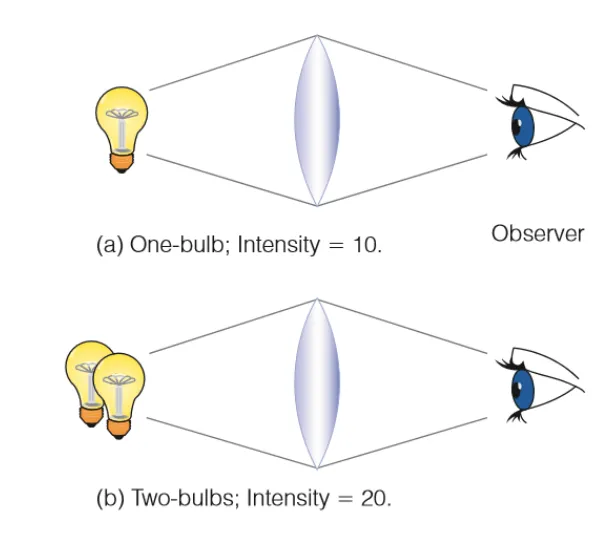 |