hindbrain
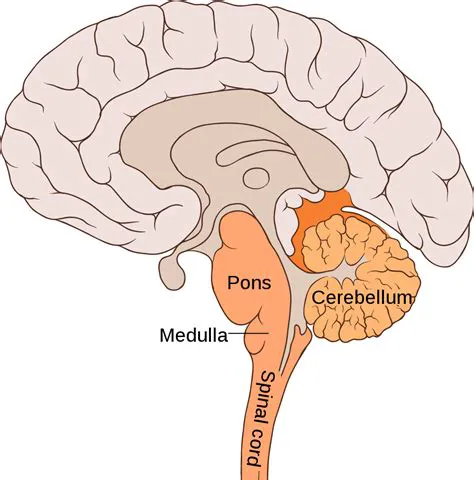
medulla, pons, and cerebellum; directs essential survival functions like breathing, sleeping, wakefulness, as well as coordination and balance
| Term | Definition |
|---|---|
hindbrain | medulla, pons, and cerebellum; directs essential survival functions like breathing, sleeping, wakefulness, as well as coordination and balance |
midbrain 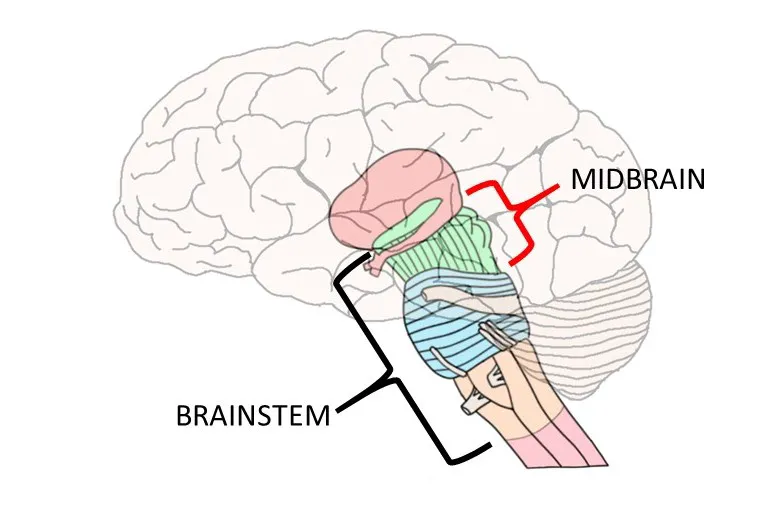 | found at the top of the brainstem; connects with hindbrain and forebrain; controls some motor movement, and transmits auditory and visual information |
forebrain 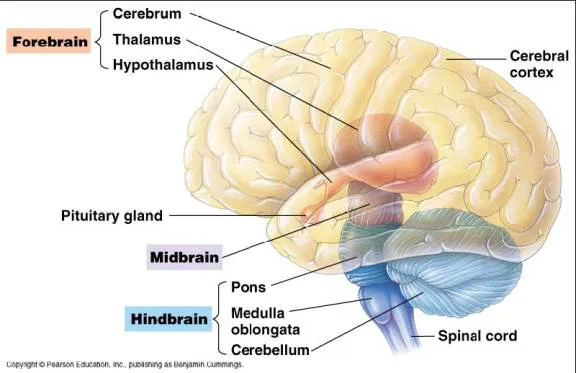 | consists of the cerebral cortex, thalamus, hypothalamus; manages complex cognitive activities, sensory and associative functions, and voluntary motor activities |
brainstem 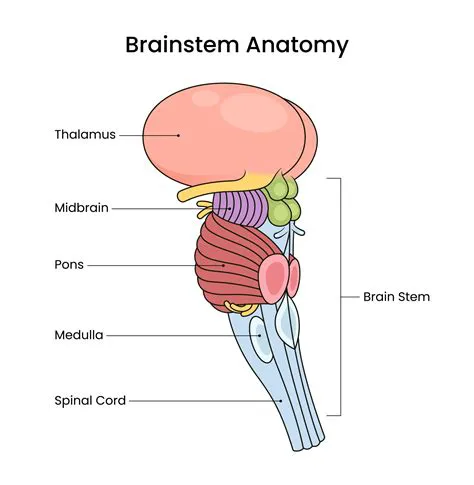 | the central core of the brain, beginning where the spinal cord swells as it enters the skull; the brainstem is responsible for automatic survival functions |
medulla | the hindbrain structure that is the brainstem's base; controls heartbeat and breathing |
thalamus | the forebrain's sensory control center, located on top of the brainstem; it directs messages to the sensory receiving areas in the cortex and transmits replies to the cerebellum and medulla |
reticular formation | a nerve network that travels through the brainstem into the thalamus; filters information and plays an important role in controlling arousal |
cerebellum | the hindbrain's "little brain" at the rear of the brainstem; processes sensory input, coordinates movement output and balance, and enables nonverbal learning and memory |
limbic system | neural system located mostly in the forebrain that includes the amygdala, hypothalamus, and hippocampus; associated with emotions and drives |
amygdala 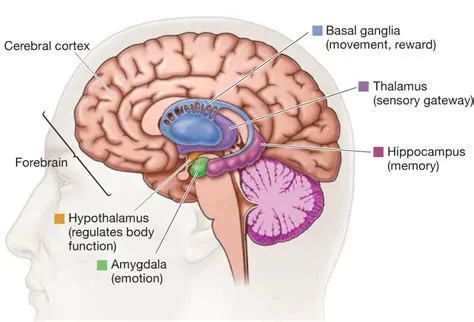 | two almond-shaped clusters in the limbic system linked to emotion and threat perception |
hypothalamus | limbic system structure below the thalamus; directs several maintenance activities like eating, drinking, body temperature, helps govern the endocrine system via the pituitary gland, and is linked to emotion and reward. |
hippocampus | part of the limbic system that helps process explicit (conscious) memories of facts and events for storage |
cerebral cortex | the intricate fabric of interconnected neural cells covering the forebrain's cerebral hemispheres; the body's ultimate control and information-processing center |
frontal lobes | the part of the cerebral cortex just behind the forehead; involved in speaking and muscle movements as well as making plans and judgments |
parietal lobe 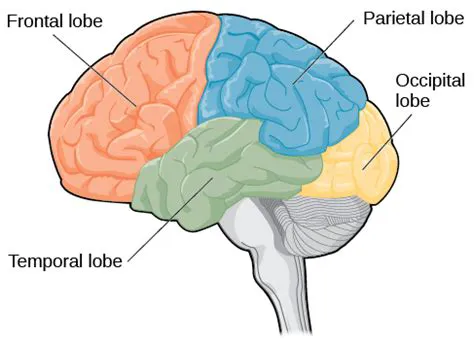 | the top of the cerebral cortex toward the rear of the head; receives sensory input for touch and body position |
occipital lobe | part of the cerebral cortex at the back of the head; includes areas that receive information from visual fields |
temporal lobe | part of the cerebral cortex roughly above the ears; includes auditory processing information, each receiving info from primarily the opposite ear |
motor cortex | a cerebral cortex area at the rear of the frontal lobes that controls voluntary movements |
somatosensory cortex | a cerebral cortex area at the front of the parietal lobe that registers and processes body touch and movement sensations |
association areas | parts of the cerebral cortex that are not involved in primary motor or sensory functions; rather, they are involved in higher mental functions like learning, remembering, thinking and speaking |
neuroplasticity | the brain's ability to change, especially during childhood, by reorganizing after damage or by building new pathways based on experience |
neurogenesis | formation of new neurons |
corpus callosum | the large band of neural fibers connecting the two brain hemispheres and carrying messages between them |
split brain | a condition resulting from the surgical separation of the brain's two hemispheres by severing the connecting fibers (mainly corpus callosum) |