| Term | Definition |
|---|---|
biopsy | the removal and examination of tissue for the purpose of diagnosis or treatment |
clean technique | involves practice and procedures that reduce disease causing organisms, thus achieving medical asepsis |
medical asepsis | the state of being free of disease causing microorganisms; nonpathogenic organisms may still be present |
normal flora | normal microorganisms on or in our body |
sterile field | an area free of microorganisms that is used in a surgical procedure to reduce the risk of infection |
sterile technique | involves practices and procedures to make equipment and areas free from all microorganisms and to maintain that sterility |
surgical asepsis | the state of being free of all microorganisms |
transient flora | microbes that do not live permanently on or in the body but are present |
fenestrated drape | a surgical drape with an opening in the center. |
sterile | free of all microorganisms |
well approximated | the margins or edges of the wound fit neatly together |
debridement | the surgical removal of dead, damaged, or infected tissue to improve the function of healthy tissue |
exudate | fluids with high concentrations of protein and cellular debris that have escaped from the blood vessels and have been deposited in tissues or on tissue surfaces |
hemostasis | the stoppage of bleeding |
hyperbaric oxygen therapy | treatment in which a patient is placed in a sealed chamber and breathes oxygen at higher than atmospheric pressure |
cauterize | to destroy tissue through burning |
void | to empty the bladder |
needle biopsy | a needle is used to remove fluid or tissue |
core needle biopsy | a wise gauge needle is used to remove a tissue specimen |
fine-needle aspiration (FNA) | a fine gauge needle is used to remove a fluid specimen |
punch biopsy | a surgical punch is used to remove a small round piece of tissue |
shave biopsy | a small blade is used to remove a skin abnormality and a small layer of surrounding skin |
epidermoid cyst | a noncancerous cyst of the sebaceous gland |
incision and drainage | a minor surgical procedure used to treat abcesses |
laceration | a jagged, irregular breaking or tearing of tissues, usually caused by blunt trauma 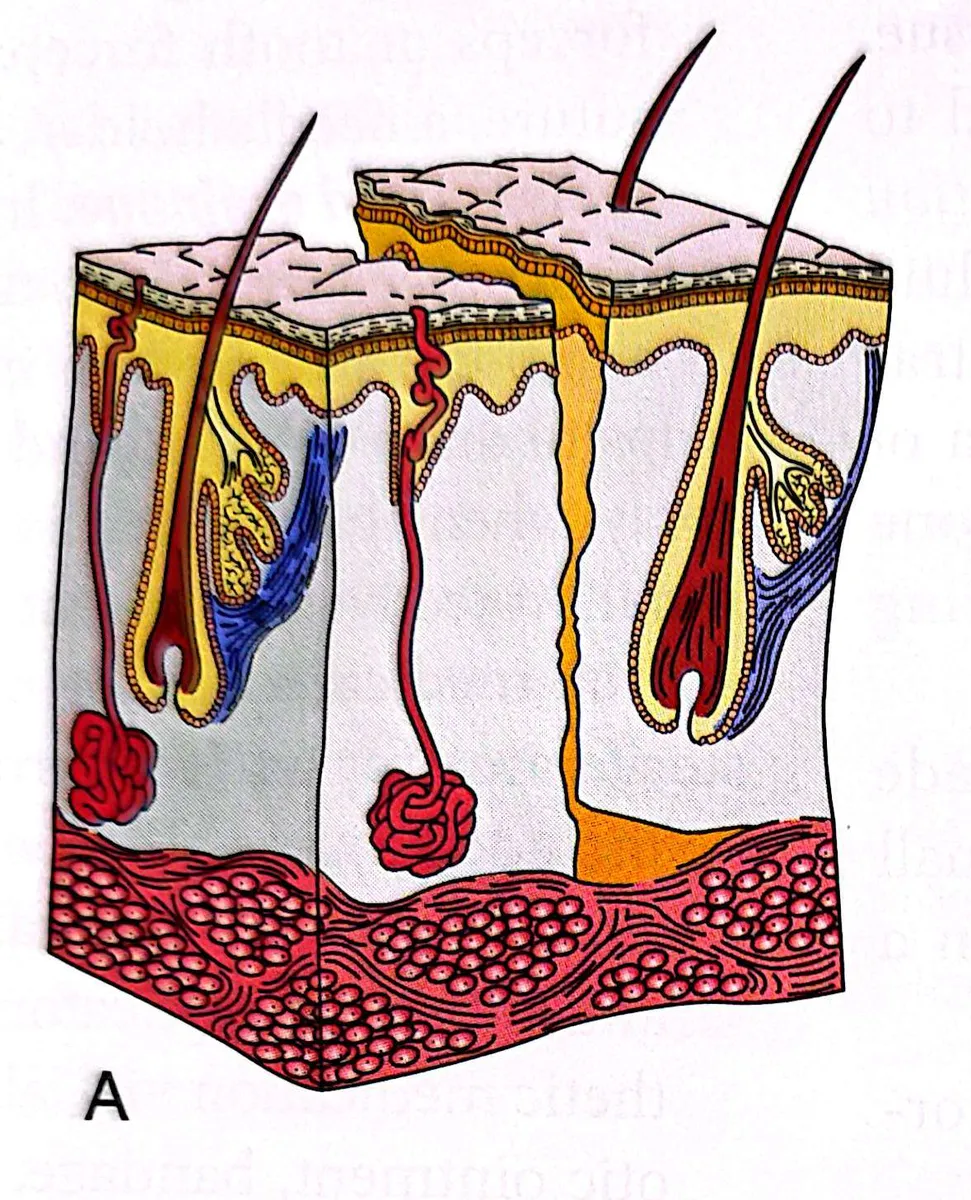 |
puncture | piercing of the skin by a pointed object, such as a pin, nail, splinter, or bullet 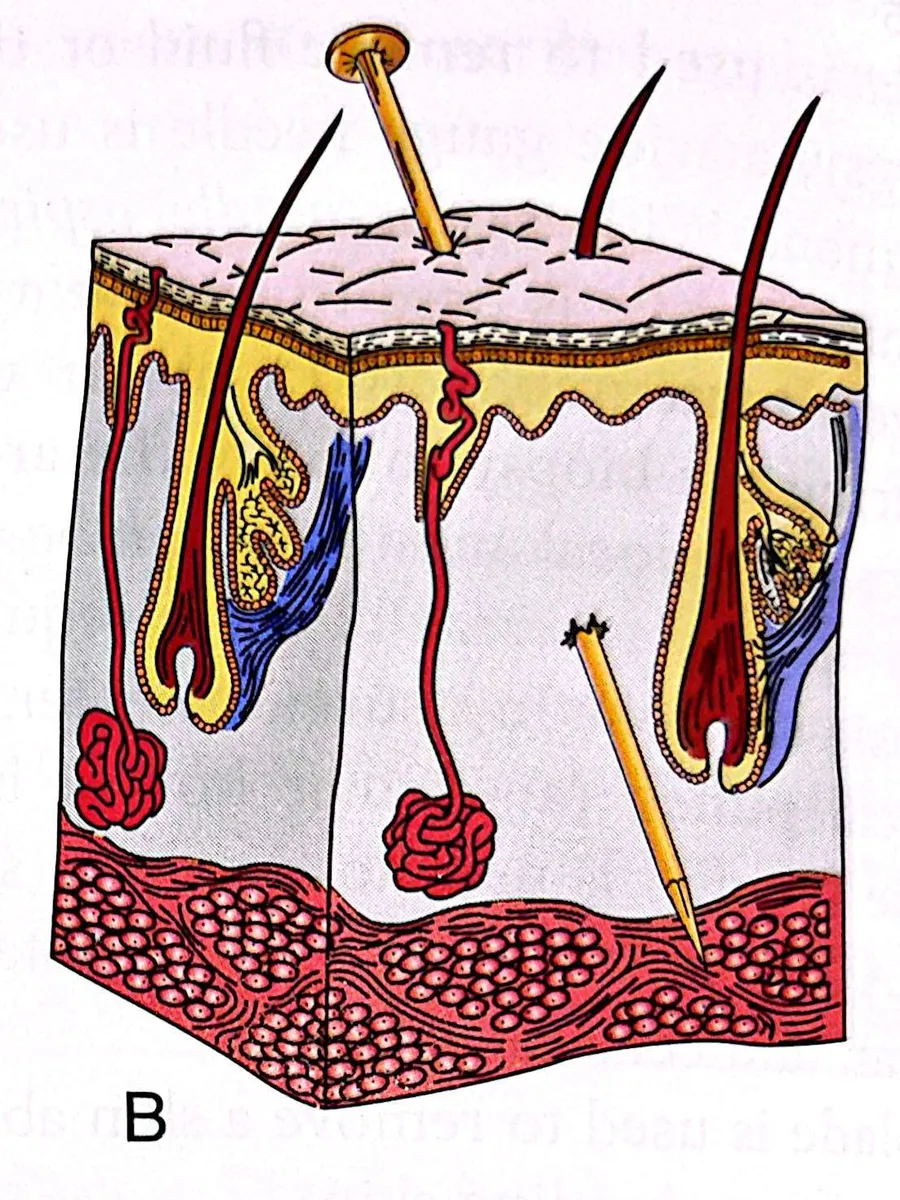 |
abrasion | a superficial wound made by scraping of the skin 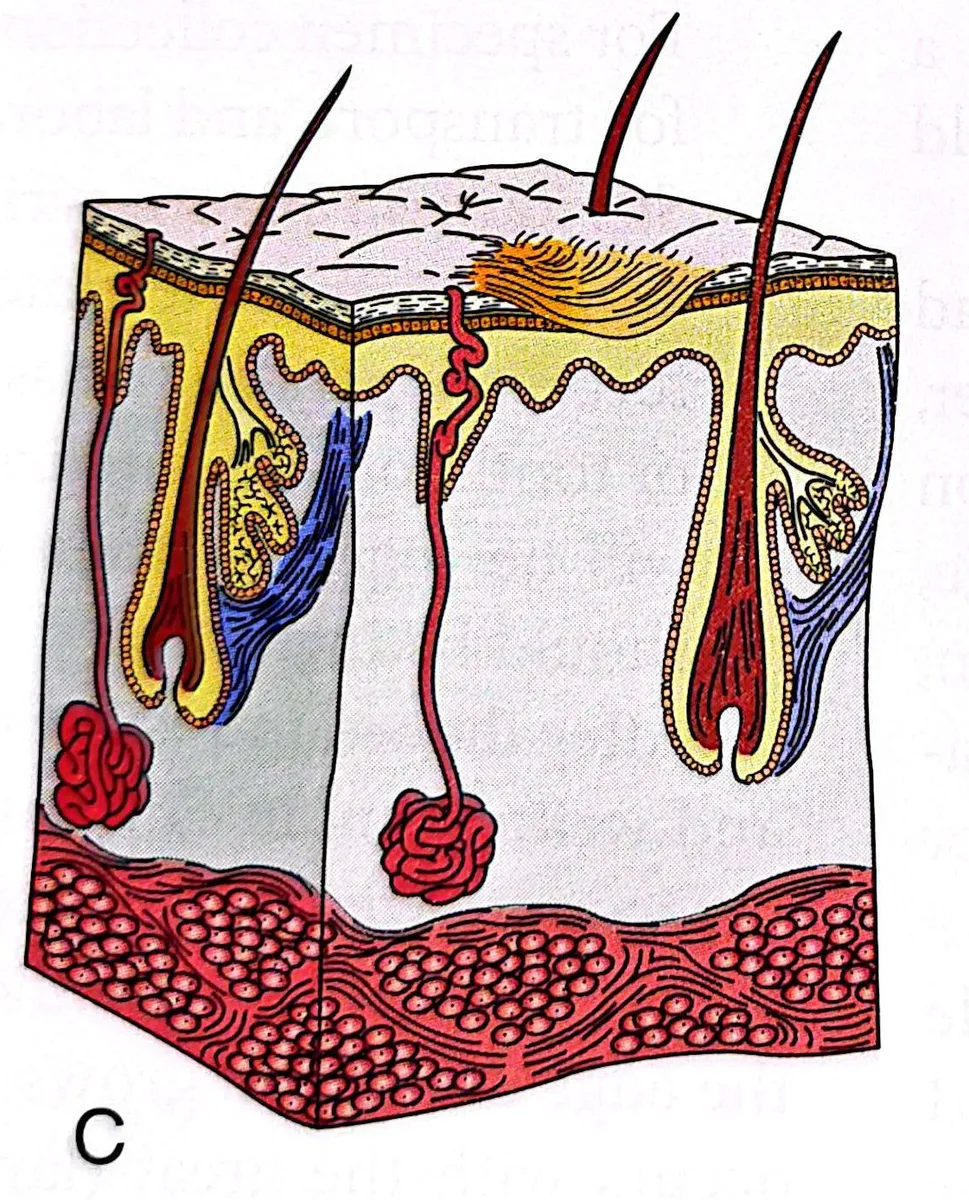 |
avulsion | tissue forcibly torn or separated, caused by accidents 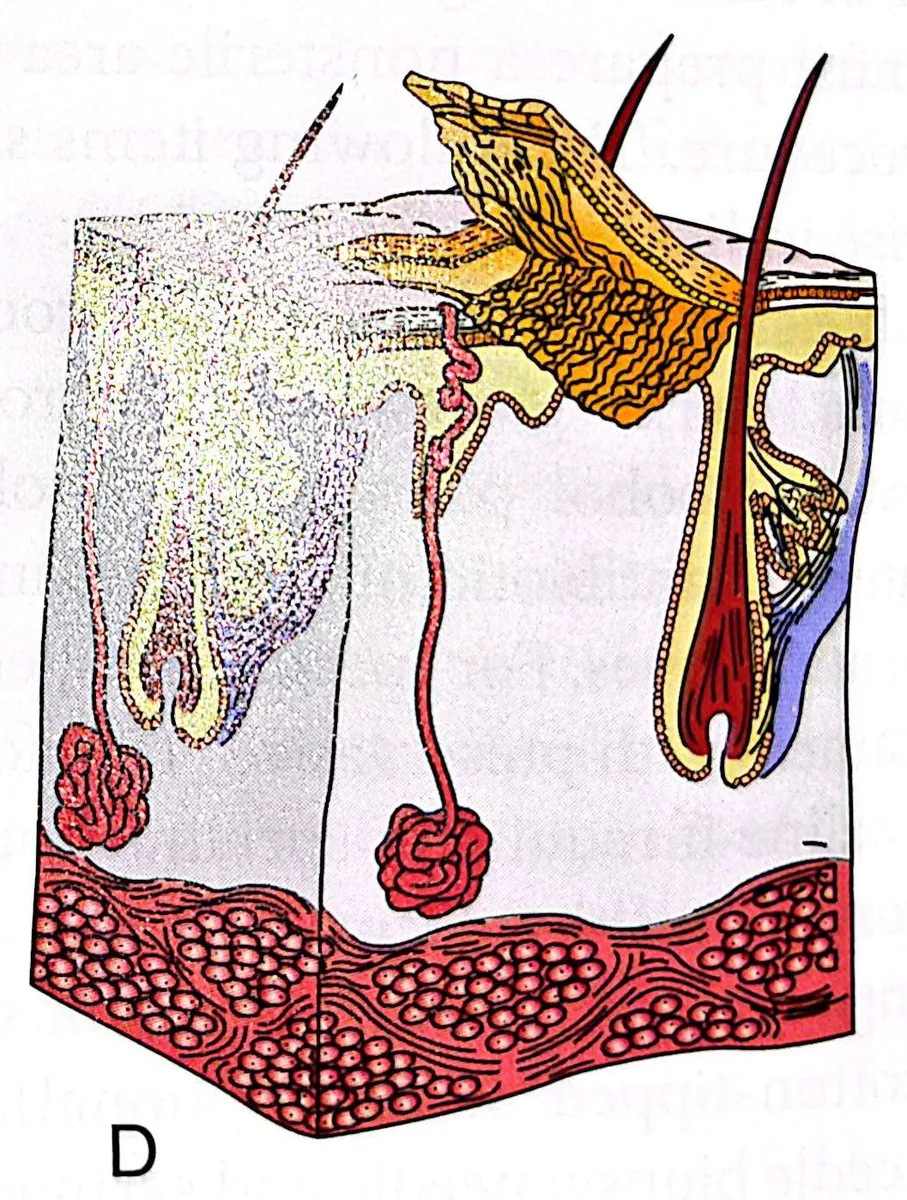 |
surgical incision | a neat, clean cut 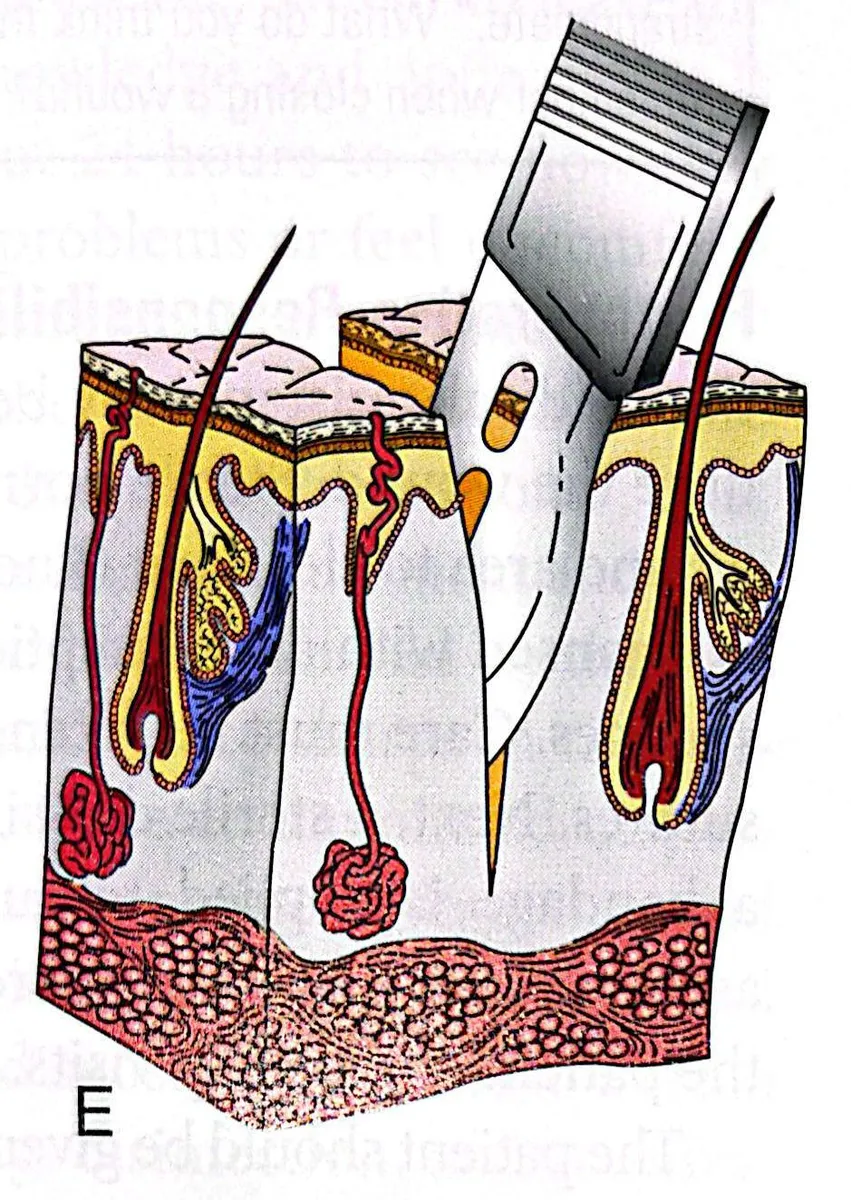 |
hypodermic puncture | an injection under the skin 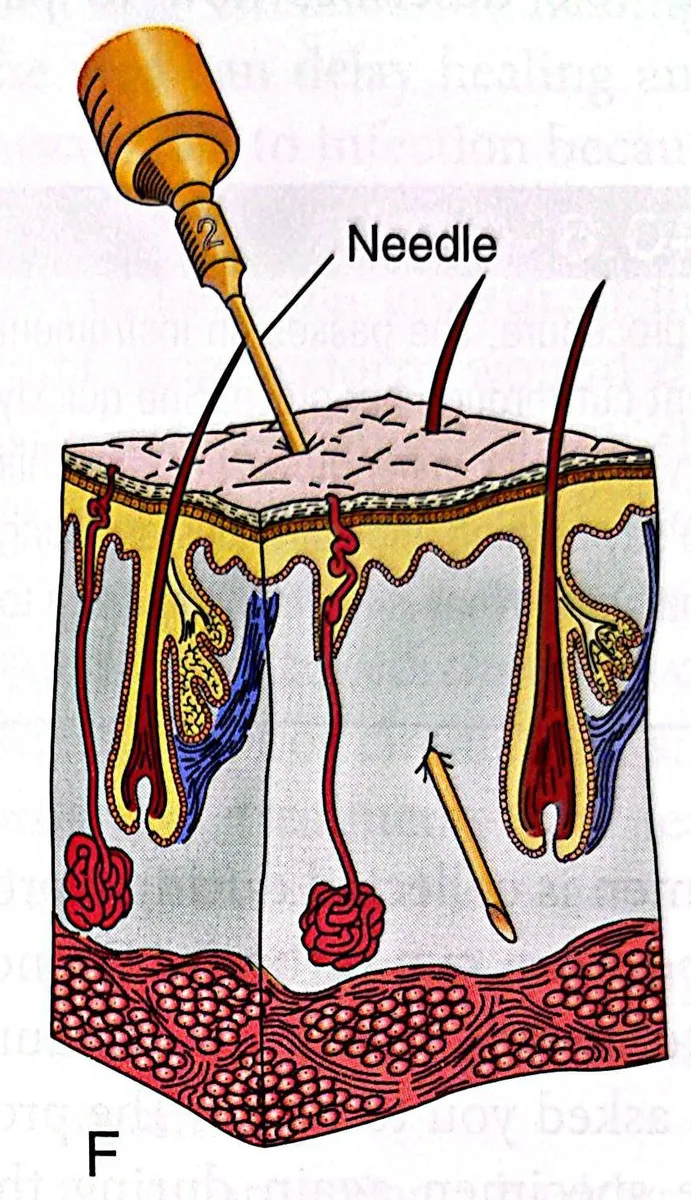 |
contusion | a closed, nonpenetrating wound in which blood from broken vessels accumulates in tissues 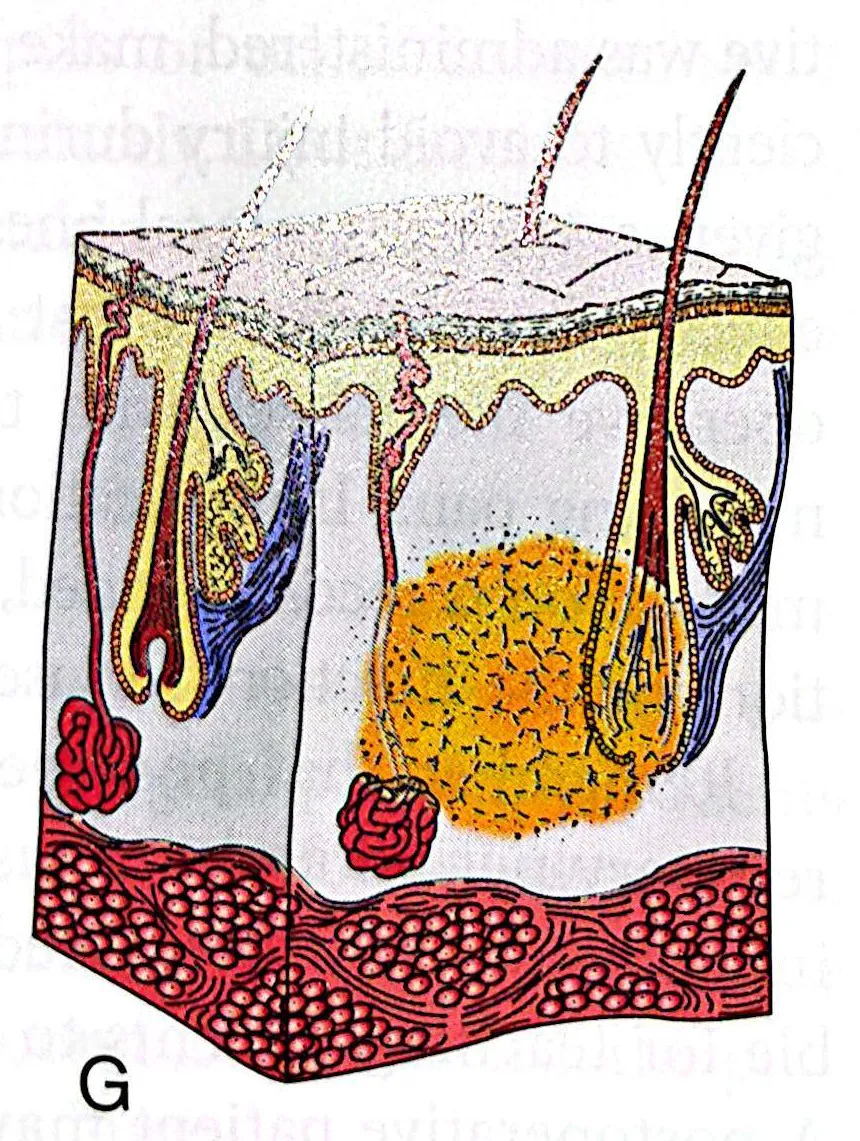 |
incision | a neat, clean cut from sharp objects, such as glass, knives, or metal 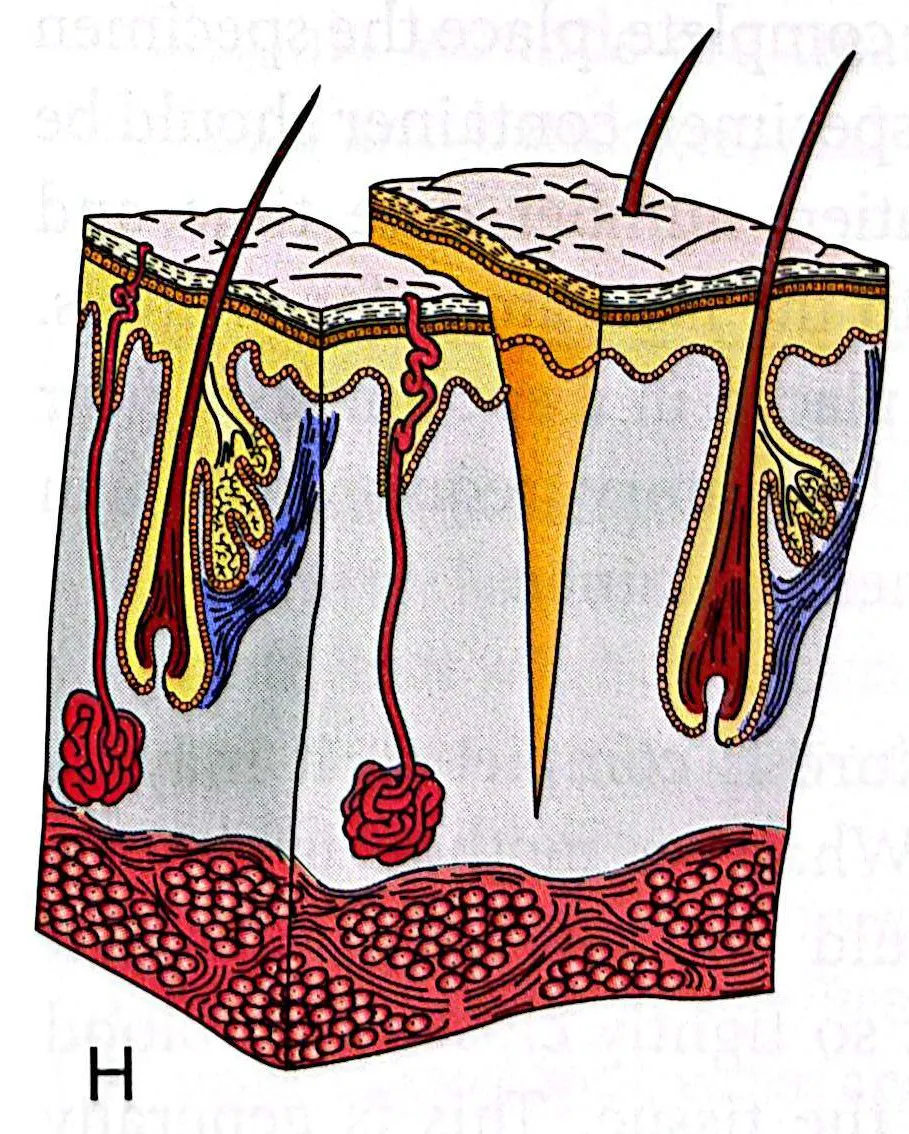 |
hemostasis | blood vessels contract to slow bleeding. blood platelets from a network that acts as a glue to plug the wound. after a cascade of chemical reactions, fibrin is released in to the wound and clotting begins. fibrin continues to collect red blood cells, and the clot dries into a scab. |
inflammatory phase | macrophage clear away bacteria and dead tissue. within 1-4 days, the fibrin threads contract and pull the edges of the wound together under the scab. during this phase, edema, erythema, heat, and pain can occur. |
proliferation phase | lasts 5-20 days. as new tissue of collagen and extracellular matrix form, the wound contracts and seals. a new network of blood vessels must occur. |
remodeling or maturation phase | starts around day 21 and may last for up to a year. the wound fully closes. the collagen fibers lie closer together, creating stronger tissue and reducing scar thickness. |
alginate dressing | nonadhesive pad made from seaweed. forms a gel over the wound when in contact with exudate. |
composite dressing | multilayered adhering dressing that absorbs drainage and provides a bacterial barrier |
foam dressing | soft and highly absorbent. allows moisture to enter the wound but keeps bacteria out. |
gauze sponge and gauze roll | made from 100% cotton. absorbs drainage. economic and all-purpose dressing. |
hydrocolloid dressing | consists of an inner colloidal layer and an outer water-impermeable layer. absorbs wound exudate. impermeable to bacteria. provides a moist healing environment. |
hydrogel dressing | controls the moisture level in the wound, which helps with natural debridement and promotes cell growth. |
medical-grade honey dressing | promotes a healing environment. can assist in the debridement process and inhibits bacterial growth. |
nonadherent pad | does not stick to the wound |
transparent film | an adherent dressing that is impermeable to liquids, bacteria, and water. allows oxygen into the wound. |
sanguineous | contains blood and appears bright red and may be thick in consistency |
serosanguineous | contains serum and blood; appears pink and thinner than sanguineous drainage |
serous | contains serum and appears thin and watery, may be clear or slightly yellow |
seropurulent | contains both serum and pus; appears as a thin watery pus. the color can vary and may include white, green, brown, yellow, pink, and gray. this drainage is usually a sign of infection. |
purulent | contains pus and appears as a thick, cloudy liquid that may be brown, green, yellow, or gray. this type of exudate is a sign of infection. |
roller bandage | a strip of gauze or material is wrapped over a dressing on an extremity or head |
gauze pad bandage | placed over dressings and used to help absorb drainage |
tubular bandage | used for fingers, toes, arms, and legs. helps to keep the dressing in place and may provide bulk to protect the wound. |
micropore paper tape | the adhesive is hypoallergenic and can be used long term without causing irritation |
transpore polyethylene tape | hypoallergenic plastic surgical tape that is translucent and easy to tear |
durable cloth tape | flexible and comfortable tape. it sticks well to skin, but not always the best to secure cloth dressings or bandages. |
electrosurgery or electrocautery | an electrosurgical unit uses a small probe with an electric current running through it to cauterize the tissue. this process seals blood vessels, which minimizes bleeding. |
cryosurgery | involves the use of a very low temperature probe (4 degrees F) to destroy tissue by freezing it on contact. |
laser surgery | a type of surgery used to remove lesions, warts, moles, and cosmetic surgical procedures such as hair removal. |
microsurgery | involves the use of an operating microscope to perform delicate surgical procedures |
endoscopic procedures | a procedure that uses a flexible tube with a camera mounted on it to examine the inside of an organ or cavity. |
joint aspiration or arthrocentesis | a sterile procedure used to remove excess fluid from a joint using a needle. |
therapeutic injections | a procedure which injects joints with medications to help relieve pain |
urinary catheterization | a procedure which inserts a flexible tube into the bladder through the urethra to collect urine |