| Term | Definition |
|---|---|
Accuracy | How close the value is to the true value |
Precision | Consistently repeated measurements with each other |
Percent error | ((Observed - theoretical) / theoretical) * 100 |
Democritus | Atoms
Cheese separation |
John Dalton | Modernized the atom
Sphere atoms |
JJ Thomson | Discovered the electron through the Cathode ray tube experiment. Discovered that the atom is a mass of protons with negative pockets. |
Ernest Rutherford | Discovered the nucleus
Gold foil experiment
Created the nuclear model, electrons orbiting the nucleus |
Robert Millikan | Discovered mass and charge of the electron
Opposites attract
Oil drop experiment
Electrons have negligible mass |
Neils Bohr | Discovered the shells and wavelengths
Each shell has a higher energy level
Energy levels |
Heisenberg and Schrodinger | Quantum model
Determined the mathematical probability of an electron's position in any energy level.
"The more you know where an object is, the less you know about its movement" |
James Chadwick | Discover that protons and neutrons reside in the nucleus. |
Protons | Determine the identity of an element |
Electrons | Responsible for atom behavior |
Neutrons | Stabilizes nucleus |
Atomic Number | Number of protons in nucleus
top left |
Mass Number | Total number of protons and neutrons |
Average Atomic Mass | Average of naturally occuring isotopes
Bottom line |
Number of neutrons = | Mass # - atomic # |
Nuclear force | Stongest force
Keeps nucleus together |
Weak nuclear force | Prevents protons and neutrons from changing/switching identities |
Electromagnetic force | Keeps electrons from being expelled from the atom
weakest |
Planks constant term | 6.626x10^-34 |
Speed of light term | 3.0x10^8 m/s |
Multivariable energy equation | E = (Planks constant x Speed of light)/wavelength |
Wave energy equation | E = (planks constant x Light frequency) |
Particle equation | E = (particle mass x Speed of light^2) |
Speed of light equation | C = (Wavelength x Light frequency) |
Ultraviolet light | High energy
Short wavelength
High damage |
Infrared (red) light | Low energy
High wavelength
Low damage |
Isotopes | dif masses, dif neutrons |
Isotope Name | Element-mass # |
Isotope Symbol | Mass # top left, Element Symbol, atomic # bottom left |
Fusion | 2+ elements into 1
Creates more energy than what's used to start it |
Fission | Big atom split into more
Splits rapidly
Fast reactions
Power a lot but requires energy to start
Hit with neutron (n) |
Alpha Decay | Unstable atomic nucleus
Decreases atomic number by 2 and mass number by 4
only be product |
Beta Decay | High energy neutrons
Neutron in nucleus turns into a proton
Atomic number +1
Mass in unchanged |
Fusion etc. | Positive protons
Positive neutrons
E ++++ |
Fission etc. | Negative proton
Negative neutron
E +++
important particle: n |
D-Decay etc. | -2 protons
-2 neutrons
4, He, 2 |
B-Decay etc. | +1 protons
-1 neutrons
o, e, -1 |
Aufbau's Rule | Lazy electron
Fill in the lowest orbital first |
Pauli's Exclusion Principle | No twins rule
Can't occupy the same space at the same spot |
Hund's Rule | Electrons must fill in individually, in the same direction
Before making pairs
Single before taken |
Nobel gas notation | Stable
Nearest nobel gas
[element] Period (block) ^position in block |
Abbreviated notation | Period (block) position |
Orbital notation | The lot of arrows one |
Electron Configuration | Describes the position and direction of electrons
Orbital then # in |
Quantum Theory | n = energy levels.
The higher the n value, the greater the energy and distance from its nucleus.
Numbers and letters are used to describe the pattern and position of electrons |
Cation | Metals that shed valence electrons to become stable
Positive |
Anion | Non-metals that gain valence electrons to become stable |
ductile | Can be pulled into wires
Electricity |
Substitutional Alloy | Some metallic atoms have been replaced with another metallic atom and form together |
Interstitial Alloy | Smaller metallic atoms in-between larger metallic atoms |
Exothermic | Heat is released from the reaction to the surroundings.
Yields heat |
Endothermic | Heat is absorbed from the surroundings.
Heat in reaction |
Covalent bond | When 2 atoms share a pair of electrons
Share shells
Ends in -ide |
VSEPR | Valence
Shell
Electron
Pair
Repulsion |
Lewis structure | Lines and dots between and surrounding a molecule.
Dots - available valence
Lines - connection (one line counts as 2 |
Octet Rule | Happens in covalent bonds. Provides each atom with its desired electrons, which is usually 8.
|
Resonance | When a covalent bond has multiple positions as to where a double bond can be placed. |
Formal Charge | # Valence Electrons - # Bonds - # Nonbonded Electrons
Used to estimate the distribution of electric charge
Priority over Octet Rule
The lower the formal charge, the better |
Synthesis | Two or more substances react to form a single new substance |
Decomposition | A single compound breaks down into two or more substances |
Combustion | Chemical compound reacting with Oxygen to yield heat/light.
Water and carbon dioxide are the products
|
Oxidation | Process in which an atom or ion loses electrons |
Reduction | Process in which an atom or ion gains electrons |
Redox | An exchange of electrons among elements in a reaction
Single replacements
LEO
GER |
Avogadro's Number | 6.02x10^23 particles/mole |
ICE table | Initial amounts of moles
Change based on mole ratio
Ending amount
Find x by setting it equal to 0 (mols - x = 0) |
Solute | Substance BEING dissolved
Salt |
Solvent | Substance DOING the dissolving
Water |
Unsaturated | Not enough solute to reach pure saturation |
Saturated | Solvents available space is taken up by the solute |
Supersaturated | More solute than the solvent can hold |
Colloid | Solutions with medium-sized particles
Scatters light |
Suspension | Solute will settle if not agitated because of the big particle size |
Serial Dilution | Equal increments of concentration change in each dilution |
Bronsted-Lowry Acid | Donates protons |
Bronsted-Lowry Base | Accepts protons |
Indicator | A substance that allows a color change when a titration is completed |
Titration | Used to find an unknown concentration by adding a known acid to an unknown base. Equivalence and end point must be as close as possible. |
Equivalence point | Two chemicals in a titration are in equal amounts to one another.
All acids concerted to conjugate base |
End point | The point when the indicator changes color |
Titration curve | Y=pH
X=Titration volume |
Molar Mass (g/mol) | Sum of the average atomic masses for all atoms in a molecule |
Group / family | Columns of a periodic table
Verticle
Those elements share the same number of valence electrons |
Period | The rows of a periodic table
1
2
....
7 |
Metalloid | Between metals and non-metals. In the form a staircase |
Energy Level | Represented as n
Top to bottom of periodic table
Shells from inner to outer
Electrons allowed = 2n^2 |
Block | The orbit pattern of an atom
S - H, He, first 2 groups. Spherical pattern
D - Transition metals, set as 1 less row like usual, clovers
P - Right of table, dumb bell shaped.
F - Separated bottom section, set as 2 rows less than usual, complex shapes. |
Atomic Radius | Size of atom
High radius in bottom left
Low radius in top right
(more protons in the nucleus means a stronger connection to nucleus) |
Electronegativity | The ability to attract electrons
Increases top right
Decreases bottom left
Same as ionization energy |
Charge | How close something is to reach a stable level/closest nobel gas |
ionization Energy | How difficult it is to take away an electron
More difficult top right
less difficult bottom left
Same as electronegativity |
Metallic character | Tendency of an atom to lose electrons
Easier to lose bottom left
harder to lose top right
Opposite of ionization and electronegativity |
Rule of Net Zero | Ionic Bonds - Form compounds with neutral charge |
Electrostatic Attraction | A force that pulls in particles with opposite electric charges.
Usually between a cation and an anion |
Conductive | How well an atom conducts electricity when dissolved.
|
Flame Test | A way to determine unknown metallic ions
Excites the electrons to jump energy levels |
Lucky 7 | 7 diatomic particles
H, N, O, F, etc. |
Covalent Bond steps | Symbol, Prefix from subscript, repeat |
Lewis Structure steps | Find valence electrons, center element has the lowest electronegativity, connect one line to each element, find initial amount needed then go from there, and make sure each atom follows octet and have the lowest formal charges. |
Polyatomic Atoms | Composed of multiple atoms held together by covalent bonds.
Singular unit with brackets and charge
# total electrons = Total valence - charge |
Non-polar bond | Electrons are even shared between atoms
Atomic e-neg difference LESS than 0.5 |
Polar bond | Electrons are not evenly shared between atoms
Atomic e-neg difference is GREATER than 0.5 |
Polar ionic bond | Electrons are not shared between atoms
Atomic e-neg difference is GREATER than 1.7 |
VSEPR chart steps | Find bonding regions, find nonbonded electrons, locate on chart |
Molecular Polarity | How a molecule behaves chemically as it is being dissolved |
Molecular Polarity checks | At least 1 polar bond
Molecule is asymmetrical |
Polarity | Atoms with a higher electronegativity attract more bonds and is more negative than its lesser atom. |
Ionic polarity | A big difference in electronegativity causes the higher atom to have the "winner takes all" situation, stealing the electrons from tis lesser counterpart. |
Ionic Bonds 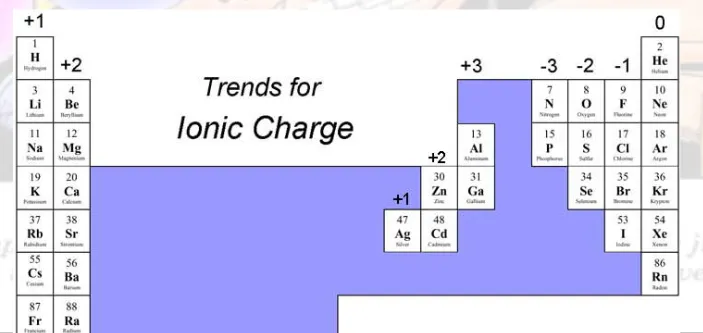 | Metal and a non-metal
|
Ionic Bond properties | Brittle solids
Conductive when dissolved
Soluble in water
High melting and boiling point BECAUSE of multidirectional attraction |
Ionic naming | Cation (base name anion) -ide |
Transition Ionic Naming | Cation (Cation charge in roman numerals) base name anion -ide |
Ionic Substance forms | Solid or Aqueous |
Covalent Substance forms | Solid, Liquid, Gas, Aqueous, etc. |
Metallic Substance forms | Usually solid except for mercury |
Activity Series | One metal will replace another if it is more reactive: Halogens decrease activity as you go down
Single replacement and Double replacement
Top elements increase in oxidation |
LEO | Lose Electrons -> Oxidation |
GER | Gain Electrons -> Reduction |
Acid and Base reactions | Always yield water and salt
Both have neutral pH levels |
Endothermic energy | High activation energy
Energy absorbed
More product made |
Exothermic energy | Low activation energy
Energy released
Little product made |
Endo or Exo?
Melting Ice | Endothermic because it requires heat and energy is absorbed
|
Endo or Exo?
Combustion | Exothermic because heat is released |
Endo or Exo?
Photosynthesis | Endothermic because heat is absorbed to create energy |
Endo or Exo?
Cellular respiration | Exothermic because heat and energy are released by reactions |
Finding limiting reactant | 1. Balance if needed
2. Convert reactants to moles
2. find mole ratios
3. ICE table |
Binary Acids | H(anion)
Hydro (anion) -ic acid |
Oxyacids (polyatomic) | Hydrogen, Oxygen, Anion
Ends -ate, turns to -ic
Ends in -ite, turns to -ous |
Lewis Acid | Accepts electron pair |
Lewis Base | Donates electron pair |
General Acid info | Corrosive to metal
Sour
Conductive |
General Base info | Caustic (Corrosive to organic matter)
Bitter
Slippery |
Weak base/acid | Doesn't separate (dissociate) |
Strong base/acid | Does separate (dissociate) |
[H+] to pH | -log[H+] |
pH to [H+] | antilog - pH |
[H+] to [OH-] | Kw/[H+] |
[OH-] to [H+] | Kw/[OH-] |
Kw | [H+] [OH-] (=1.00x10^-14) |
[OH-] to pOH | -log [OH-] |
pOH to [OH-] | antilog [OH-] |
Molarity | mol/L |
Dilution equation | M1V1 = M2V2 |
Neutralization calculations | MaVa = BaVa |
Boyle's Law | Pressure (X), and Volume (Y). As pressure increases, volume decreases.
Inversely proportionate. |
Charle's Law | Temperature (X) and Volume (Y). As temperature increases, volume increases. Linear |
Gay-Lussac's Law | Temperature (X) and Pressure (Y). As temperature increases, pressure increases. Linear |
Boyle's Equation | P1V1 = P2V2 |
Charle's Equation | (V1/T1) = (V2/T2) |
Gay-Lussac's Equation | (P1/T1) = (P2/T2) |
Combined Gas Law Equation | (P1V1)/T1 = k |
Ideal Gas Law | P(atm)V(L) = n(moles)R(0.082114L*atm/K*mol)T(K)
|
Which blocks are different? | D block has 1 less row
F block has 2 less row |
Special Formal Charge elements | H: 1 bond
O: 2 bonds
N: 3 bonds
C: 4 bonds |