| Term | Definition |
|---|---|
hypersensitivity | what are disorders caused by immune responses? |
autoimmunity, reactions against microbes, and reactions against environmental ags | what are some causes of hyperS diseases? |
type I (anaphylactic), type II (ab mediated cytotoxic), type III (complex mediated), and type IV (cell mediated) | what are the four types of hyperS? |
type I, II, and III | which hyperS is considered immediated (min to hours)? |
type IV | which hyperS is considered delayed (24 to 48 hours)? |
IgE and Th2 | what is the pathologic immune mechanism in type I hyperS? |
IgG, IgM abs against cell surface or ECM ags | what is the pathologic immune mechanism in type II hyperS? |
immune complexes of circulating ags and IgG/IgM | what is the pathologic immune mechanism in type III hyperS? |
CD4 T cells and CD8 T cells | what is the pathologic immune mechanism in type IV hyperS? |
mast cells, eosinophils, and their mediators (vasoactive amines, lipids, proteolytic enzymes, cytokines) | what are the mechanisms of tissue injury and disease in type I hyperS? |
opsonization and phagocytosis, complement and Fc receptor recruitment and activation of leukocytes, abnormal cell fxs | what are the mechanisms of tissue injury and disease in type II hyperS? |
deposition in BV walls and tissues; complement mediated recruitment and activation of WBCs | what are the mechanisms of tissue injury and disease in type III hyperS? |
cytokine mediated inflammation and macrophage activation; direct target cell killing | what are the mechanisms of tissue injury and disease in type IV hyperS? |
type I | commonly referred to as allergies, produce large amounts of IgE to a small concentration of allergen, mast cells, basophils, and eosinophils participate; reaction occurs in minutes; these are all factors of which hyperS? |
sensitization, activation, and late | what are the 3 phases of type I hyperS? |
Th2 cells release IL4,IL13-> B cells produce IgE-> IgE binds to FcεRI on mast cells and basophils-> IgE half life increases to 10 days | in the sensitization phase of type I hyperS, what happens when DCs process the allergen ags and present it to Th cells using MHCII? |
cell signaling and cytokine release-> degranulation of mast cells and basophils-> histamine: smooth muscle contraction, vasodilation, and increased vascular permeability | in the activation phase of type I hyperS, what happens after repeated allergen exposure and cell bound IgE is crosslinked with allergen? |
platelet activating factor, prostaglandin, leukotrienes, and cytokines released-> chronic allergic conditions-> eosinophil recruitment, bronchoconstriction, and mucus secretion | in the late phase of type I hyperS, what happens after additional release of reactant/secondary mediators? |
corticosteroids, allergy immunotherapy, antihistamine, decongestants, and monoclonal abs | what are some treatment methods for type I hyperS? |
allergens administered subcutaneously for 3-5 year; induce immune tolerance (Treg cells) to a specific allergen over time; shift patients IR to the allergen to a Th1 type response and induce development of Tregs | how does allergy immunotherapy help treat type I hyperS? |
percutaneous or intradermal test; neg control diluent, pos control histamine; evaluate skin reaction 15-20min; pos result= appearance of wheal and flare 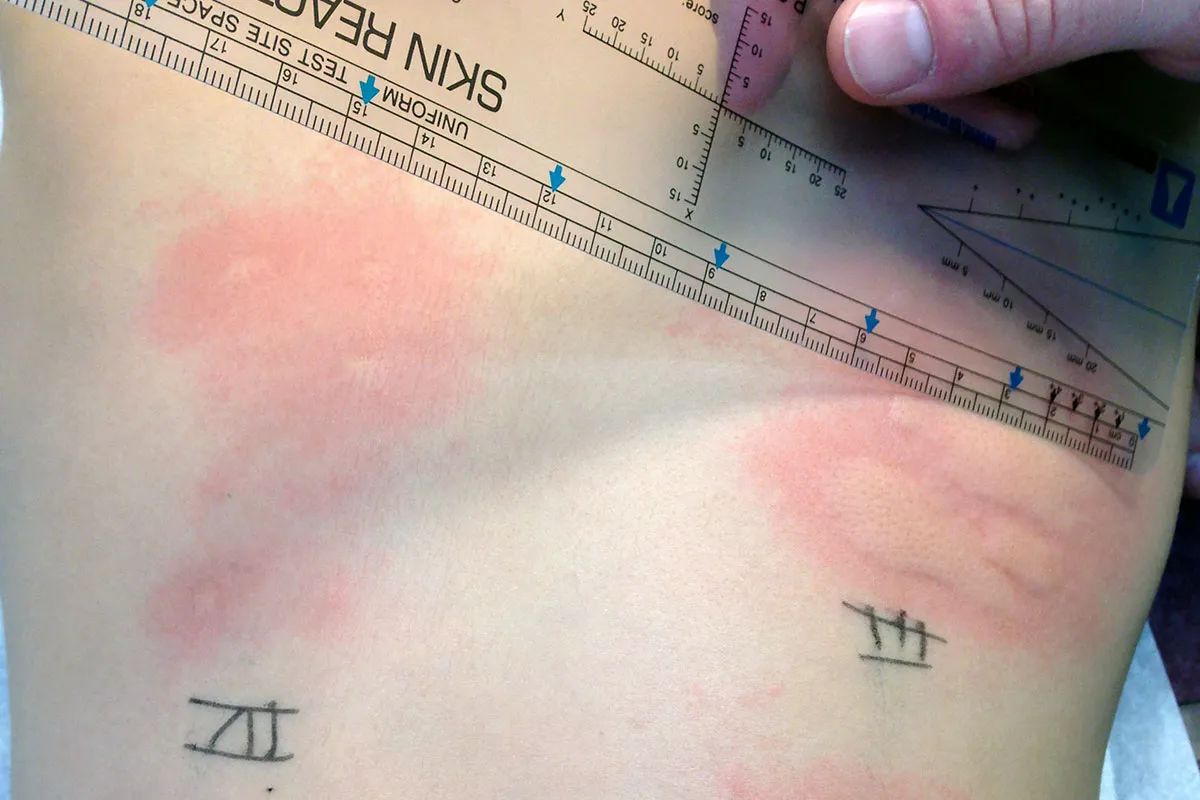 | how does direct in vivo skin testing work for type I hyperS? |
type II | abs bind to cell surface receptors, resulting in cell damage through complement, opsonization, ADCC, inhibition of cell fx, or stimulation of cell fx is all characteristics of which hyperS? |
transfusion rxns, HDN, autoimmune hemolytic anemia, cold agglutinin abs, and paroxysmal cold hemoglobinuria | what are some examples of type II hyperS? |
abs will target donor RBCs leading to intravascular hemolysis within mins or hours after transfusion; can lead to DIC, vascular collapse, and renal failure | what happens after a patient receives incompatible blood in a type II hyperS? |
type III | formation of ag/ab complexes that precipitate in blood, can deposit in tissue causing damage; complement can be activated leading to vasodilation, increased vascular permeability, edema, and neutrophil accumulation are all characteristics of which hyperS? |
glomeruli, vascular endothelium, joint lining, and alveolar membranes | what are some common sites of injury in type III hyperS? |
arthus reaction, autoimmune diseases, RA, and serum sickness | what are 4 type III hyperS disorders? |
humans have received passive immunization with animal serum (horse antivenoms), human makes abs to the animal serum abs; symptoms appear 7-21 days after exposure: headache, fever, vomiting, joint pain, rash, and lymphadenopathy | what is the pathogenesis and clinical presentation of serum sickness? |
type IV | involves Th1 effector cells causing inflammatory reaction and tissue damage; infection or immunization sensitizes an individual and subsequent challenge with an ag from infectious agent elicits a delayed (48-72 hours) reaction manifested by induration with redness and swelling is characteristic of which hyperS? |
intracellular pathogens: tuberculosis, leprosy, leishmaniasis) and contact antigens (poison ivy, metals, nickel, dyes) | what can trigger type IV hyperS? |
granulomas and contact dermatitis | what are two examples of type IV hyperS disorders? |
accumulation of macrophages, fibrosis, and collagen accumulation at the site of injury | what happens in granulomas in type IV hyperS? |
haptens bind cells causing sensitization of Th1 cells; erythema, swelling, papules, peeling, and weeping that can last 3-4 weeks | what happens in contact dermatitis in type IV hyperS? |
type IV | the mantoux PPD (purified protein derivative) test/tuberculin test is an example of which type of hyperS? |
cutaneous-children, skin; systemic-adults, skin, organs, and bones (skin rxn, diarrhea, muscle/joint pain, fatigue); both have increased risk of anaphpylaxis 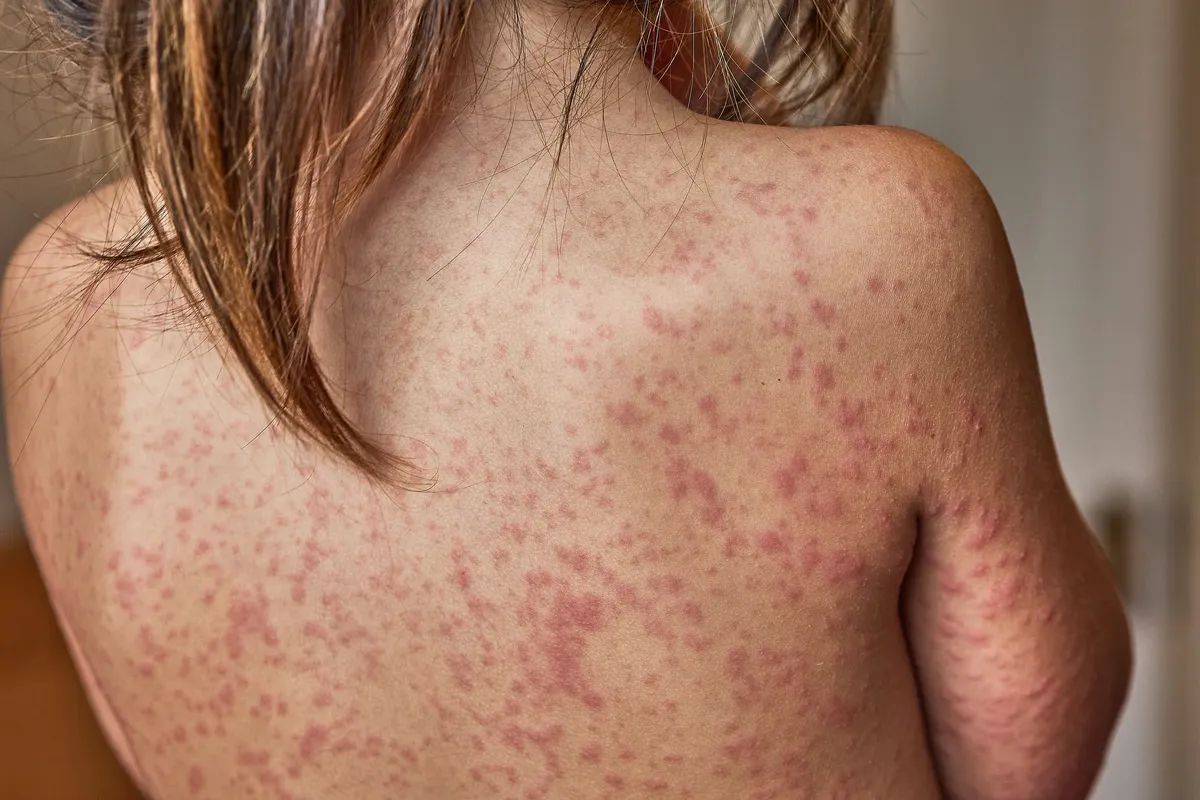 | how does mastocytosis affect children and adults? |
β-tryptase is heparin bound; a transient and rapid increase of serum tryptase within 4 hours of an anaphylactic even is considered evidence of mast cell activation; baseline >20 ng/mL is a minor diagnostic criterion; used to monitor response to cytoreductive therapy in mastocytosis | how does tryptase play a part in diagnosing mastocytosis? |
anti epileptics, reverse transcriptase inhibitors, dapsone, minocycline, allopurinol; tetracyclines (hepatitis); cephalosporins with pleiomorphic clinical manifestations | what are some drugs/medications that can trigger drug and toxin related eosinophilia? |
skin rash, lymphadenopathy, organ involvement, atypical lymphs, and eosinophilia 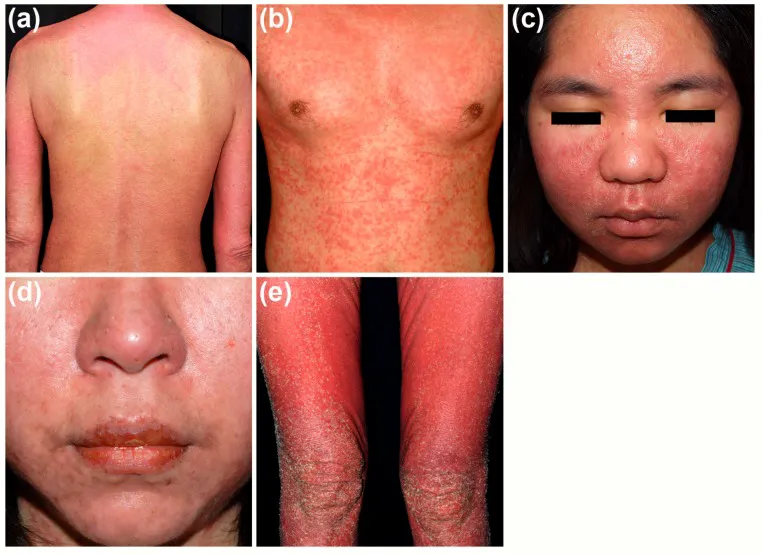 | what are some symptoms of drug and toxin related eosinophilia? |