self tolerance abnormalities, genetics, hormonal influence, tissue trauma, microbial infections, and epigenetics
what are some factors that can cause autoimmune diseases?
| Term | Definition |
|---|---|
self tolerance abnormalities, genetics, hormonal influence, tissue trauma, microbial infections, and epigenetics | what are some factors that can cause autoimmune diseases? |
self tolerance | what is the ability of the body to differentiate self from non-self and not react against self |
central tolerance | what is the self tolerance/immunologic tolerance that occurs in primary lymphoid organs and also occurs during cell development? |
negative selection | what occurs during central tolerance? |
negative selection in central tolerance | what is the elimination of T cells with a strong affinity to self ags in which some self reactive CD4 T cells differentiate into Treg; some B cells with receptors having a strong affinity for self ags are eliminated and some undergo receptor editing? |
peripheral tolerance | what is the self tolerance/immunologic tolerance in which some self reactive lymphs manage to escape to secondary lymphoid organs, lymphs react to self in secondary lymphoid organs are rendered incapapble of reacting with those ag, and anergy mediated by absence of costimulatory signals from an APC or binding to an inhibitory receptor CTLA-4? |
during cell activation | when does peripheral tolerance occur? |
HLA-B27 | which HLA tye is associated with a higher risk of ankylosing spondylitis? |
autoimmunity regulator (AIRE) | what regulates expression of tissue restricted ags in thymic epithelial cells? |
tissue restricted ags are displayed and recognized by immature T cells, leading to the deletion of self reactive T cells | how does AIRE play a role in tolerance and T cell deletion? |
self reactive T cells are not eliminated | what happens in the absence of functional AIRE? |
estrogen tends to direct the IS in favor of Th2 response; leads to more B cell activation | how does hormonal influence affect autoimmunity? |
androgens | what hormone favors Th1 response with CD8 T cell activation? |
cryptic self ags; lymphs are not exposed to them; injury or inflammation can cause release of cryptic ags (lens of eye, sperm, DNA) | how can tissue trauma affect autoimmunity? |
molecular mimicry; microbial ags closely resemble the structure of self ags; cross reactivity with self ags | how can microbial infections affect autoimmunity? |
modifications in gene expression (toxins, pollutants, foods, drugs, aging); citrullination of collagen and RA, glycoylation of myelin and MS | how can epigenetics affect autoimmunity? |
SLE, RA, sjogrens syndrome, scleroderma (systemic sclerosis), spondylarthritis, and antiphospholipid syndrome | what are some systemic autoimmune disease? |
sunlight, drugs (procainamide, hydralazine, isoniazid), and hormones | what are some factors that can cause SLE? |
damage in genes interfere with self tolerance; external triggering of abnormal apoptosis leads to persistent nuclear ags; ab response against self nuclear ags; TLR dependent activation of DCs and B cells by nucleic acid; production of type 1 IFN | what is the pathogenesis behind SLE? |
dsDNA, Sm, and histones | what nuclear ags are targeted in SLE? |
anti-dsDNA and complement deposit in organs (kidney and skin) causing infammation and tissue damage | what causes tissue/organ damage in SLE? |
anorexia, joint pain; butterfly rash; nephritis (deposition of immune complexes); pericarditis, ventricular enlargement, tachycardia; seizure, cognitive dysfunction; anemia | how does SLE present in patients? |
homogenous; SLE | what is this pattern and which autoimmunity is it most commonly found? 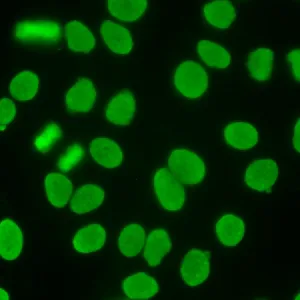 |
coarse speckled (abs against SM and U1RNP); SLE, systemic sclerosis, and mixed connect tissue dz | what is this ana pattern and in which autoimmunity disease is this most commonly found in? 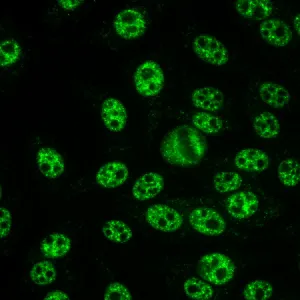 |
centromere; systemic sclerosis, primary biliary cirrhosis, and sjogren syndrome | what is this ana pattern and what autoimmunity is this most commonly found in? 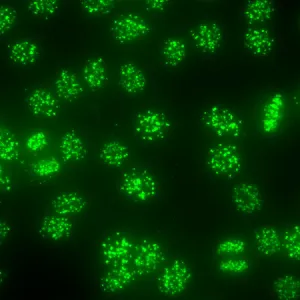 |
nucleolar clumpy (fibrillarin U3RNP); systemic sclerosis | what is this ana pattern and what autoimmunity is this most commonly found in ? 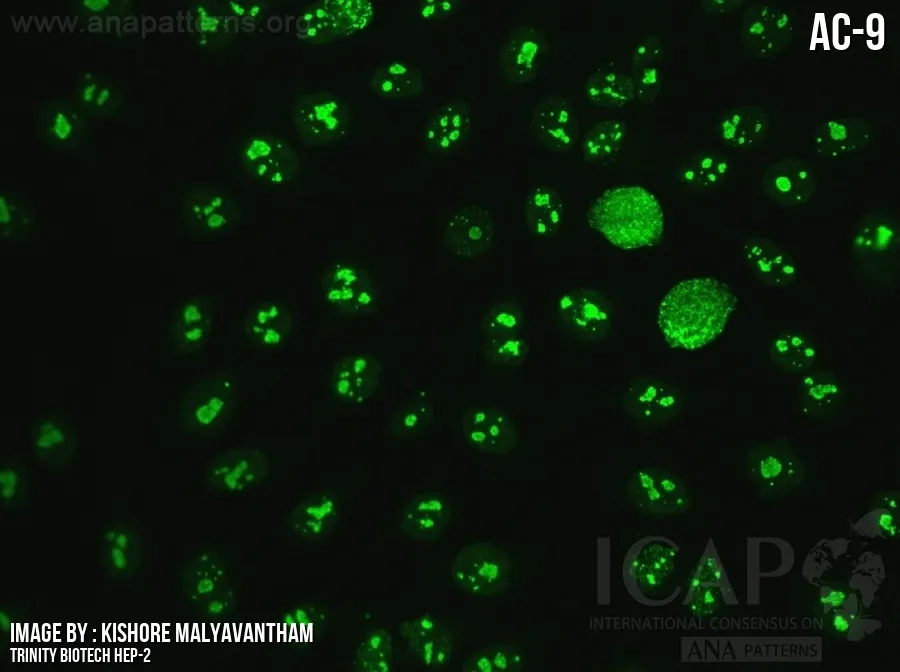 |
nuclear envelope (aka peripheral) (nuclear membrane proteins); autoimmune liver dzs | what is this ana pattern and which autoimmunity is this most commonly found? 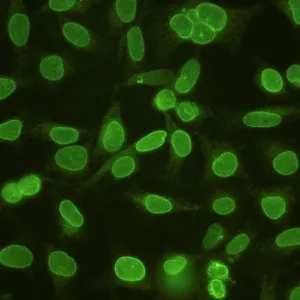 |
rheumatoid arthritis | what inflammatory dz involves small/large joints; inflammation of synovium leading to destruction of cartilage and bone, and is chronic symmetric erosive? |
cellular and humoral immunity | what part of the immune system is involved in RA? |
rheumatoid factors (RF) | what are the autoabs produced by the immune system that react with the Fc portion of their own? |
CCP derived from arginine residues to citrulline during inflammation; CCP induced by environmental stimuli elicit T cell and ab responses; T cells and abs enter joints, respond to self proteins, tissue injury mainly by cytokine secretion and ab dependent effector mechanisms | in the pathogenesis of RA, how does CCP play a part? |
type III hypersensitivity | RF and anti CCP bind to self ags resulting in immune complexes that become deposited in the joints leading to what type of hyperS? |
tendons, joints, bursae; malaise, fever, weight loss; subcutaneous nodules, pericarditis, lymphadenopathy, splenomegaly; presence of RF and anti CCP, low titers of ANA speckled pattern | how does RA present in patients? |
mechanical injury to cartilage; secondary inflammation; primarily knees and hips; cartilage dengeneration, bone spurs, subchondral cysts, minimal inflammation; no serum abs and no organ involvement; 60+ year olds | how does osteoarthritis differ from RA? |
sjogren syndrome | patient presents with dry/itchy eyes, dry mouth, vaginal dryness, dry skin, dry nose/frequent nosebleeds, and frequent coughing. what is this disease called? |
RF, SS-A (Ro), and SS-B (La) | what tests can be ran to confirm a dx of sjogren syndrome? |
external stimuli triggering endothelial injury and plt activation, T and B cell activation-> production of pro fibrotic cytokines-> myofibroblasts produce excess ECM proteins-> fibrosis involving skin and parenchymal organs; self reactive CD4 T cells and B cells escaped tolerance; autoimmune response leads to vascular damage leading to collagen deposition | what is the pathogenesis behind systemic sclerosis (scleroderma)? |
systemic sclerosis | chronic inflammation with widespread damage to small BVs and progressive interstitial and perivascular fibrosis in skin and organs; excessive fibrosis throughout the body and onset of 50-60 y/o is characteristic of what autoimmunity? |
skin involvement at onset with rapid progression to visceral | what is diffuse scleroderma? |
skin of fingers, forearms, and face | what is limited scleroderma? |
hypothalamus make TRH-> pituitary makes TSH-> TSH binds to receptors on thyroid causing Tg to break down-> T3/T4; when T3/T4 low-> TRH increases; when T3/T4 is high-> hypothalamus decrease TRH and pituitary decrease TSH | describe the synthesis of T3/T4 and the endocrine feed back loop |
goiter (enlarged thyroid); autoabs (antiTG, aTPO) and cytotoxic T cells target thyroid tissue; results in hypothyroidism; normal/elevated TSH, low FT4 | describe hashimotos dz |
hashimotos dz | dry skin, decreased sweating, puffy face, eyelid edema, pallor, weight gain, fatigue, brittle hair, and goiter are all symptoms of what autoimmune dz? |
hyperthyroidism; presence of thyroid stimulating Igs (TSIs) which are TSH receptor abs; TSH decreased/null and FT4 increased; aTG, aTPO | describe graves dz |
graves dz | goiter, nervousness, insomnia, depression, weight loss, heat intolerance, sweating, rapid heartbeat, palpitations, and restlessness; exophthalmos are all symptoms of what autoimmune dz? |
result of chronic immune mediated destruction of insulin producing beta cells of the islets of langerhans in the pancreas; 90% of the islets are destroyed by the time clinical manifestations are seen | what is destroyed in type 1 diabetes? |
CTL mediated lysis of islet cells and local production of TNF/IL1; autoabs against islet cells; lymphocytic infiltration of CD4 and CD8 cells; 90-95% have HLA-DR2 or DR4; coxsackievirus infection (molecular mimicry) can cause produce autoabs | what is the pathogenesis of type 1 diabetes? |
type 1 diabetes | complete/nearly complete insulin deficiency;
hyperglycemia and ketoacidosis;
polyuria and polydipsia;
Chronic complications: atherosclerosis, ischemic necrosis, microvascular obstruction, renal damage, visual impairment are all symptoms of what autoimmunity? |
multiple sclerosis | what is the autoimmune dz in which Th1 and Th17 cells react against self myelin ags resulting in inflammation in the CNS with activation of macrophages around nerves in the brain/spinal cord which leads to abnormalities in nerve conduction and neurologic defects? |
clinical presentation (neurological defects), disseminated lesion in white matter by MRI, increased Ig in CSF, oligoclonal banding present in CSF 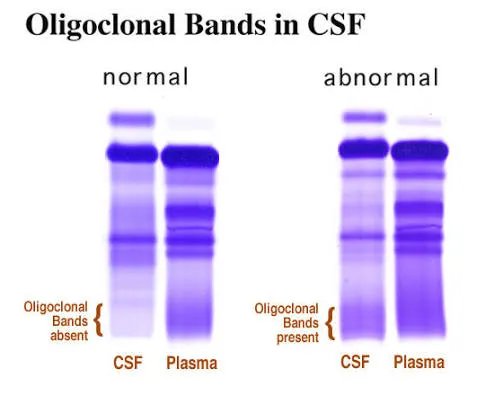 | how can multiple sclerosis be diagnosed? |
adaptive immune response | graft rejection is the result of what immune response? |
histopathologic features: hyperacute, acute, and chronic | how is graft rejection classified? |
hyperacute rejection (blood group ags/abs) | rejection characterized by thrombotic occulsions of the graft vasculature that begins within minutes to hours after host blood vessels are anastomosed to graft vessels and is mediated by preexisting antibodies (alloabs) in the host circulation that bind to donor endothelial antigens |
acute rejection (cellular or ab mediated) | injury to the graft parenchyma and blood vessels mediated by alloreactive T cells and abs;
without immunosuppression, begins several days to a few weeks after transplantation;
with immunosuppression, rejection can occur years after transplantation
|
chronic rejection | major cause of failure of organ allografts; develops insidiously during months or years and may/may not be preceded by clinically recognized episodes of acute rejection; associated with distinct pathologic changes depending on the graft; arterial occlusion, ischemic damage |