Cellular/Molecular Biology Final Study
Created by Navah Hirschmann
| Term | Definition |
|---|---|
Hydrophobic molecules | uncharged non-polar molecules that do not interact well with water |
Hydrophilic molecules | charged polar molecules that interact well with water |
What allows a water droplet to cling to a leaf? | Adhesion |
Amino acids are linked together through, and under what kind of reaction? | peptide bonds & condensation/dehydration reaction |
What kind of reaction is this? 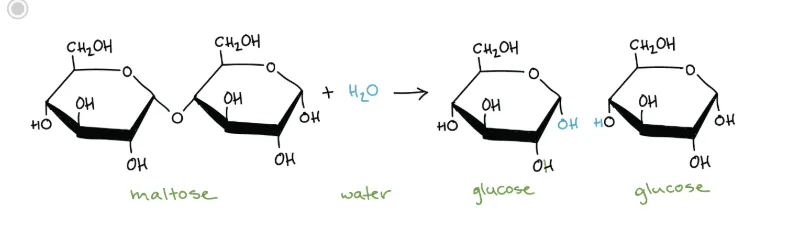 | Hydrolysis reaction |
What is a common type of secondary structure in proteins? | Alpha-helix & beta-sheet |
What bonding is in secondary structure of a protein? | hydrogen bonds |
What functional groups are always present in the structure of an amino acid? | Carboxyl and amine |
What's the backbone structure of an amino acid? | NH2--C--COOH |
What are the 3 main components of a nucleotide? | 1) sugar
2) phosphate
3) nitrogenous base |
What charge does the phosphate group in nucleic acid backbone have? | negative charge |
Is containig Uracil DNA or RNA? | RNA |
What was the Hershey-Chase experiment conclusions? | concluded that DNA, not proteins, are the genetic material that bacteriophage viruses use to infect E. coli |
What level protein structure is this? 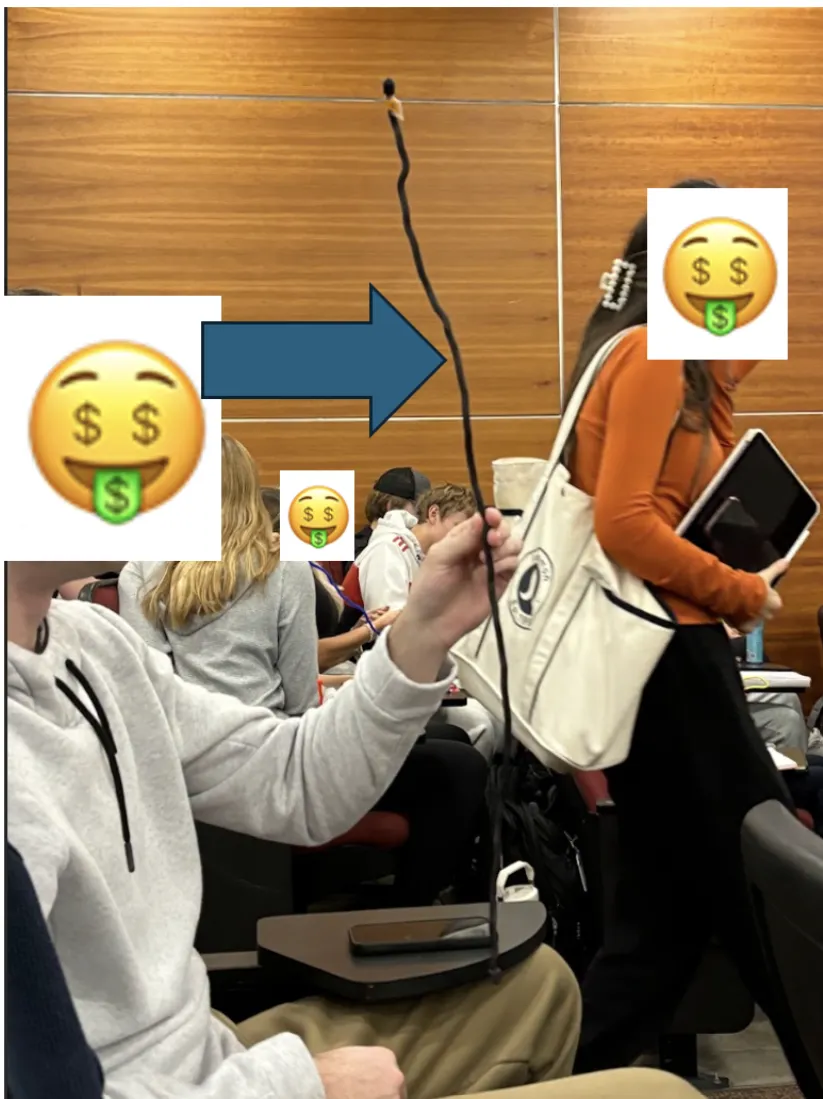 | secondary |
What key piece of evidence did Rosalind Franklin's famous "Photo 51" provide about the structure of DNA? | DNA is a double helix with a consistent helical diameter |
What is the role of helicase in DNA replication? | unwinds the double helix |
Why does DNA polymerase synthesize the lagging strand in short Okazaki fragments? | DNA polymerase can only add nucleotides in 5' to 3' direction, requiring backstitching on the lagging strand |
What is the function of DNA ligase in lagging strand replication | it seals the gaps between Okazaki fragments |
The leading strand is synthesized continuously or discontinuously? | continuously |
A cell is exposed to UV light and develops thymine dimers. What repair mechanism is most likely to fix this damage? | Nucleotide excision repair |
Why is telomerase necessary in eukaryotic cells? | the lagging strand cannot be fully replicated at the 3' end |
True or False? Eukaryotic DNA replication involves multiple origins of replication | True |
What defines this: "the process by which genetic information in DNA is used to synthesize proteins or functional RNA molecules" | Gene Expression |
a section of DNA that holds instructions for building at least one protein | gene |
a mutation where a single nucleotide has been swapped for a different nucleotide | point mutation |
Assuming you get an amino acid for a start codon, how many amino acids long would a complete protein likely be if it used 14 codons. | 13 |
You are given the following DNA sequence from a gene:
5'–ATG TTT CGA TAA–3'
A scientist tells you this is the (non template) (coding) strand.
Which of the following is the correct mRNA transcript?
a) 5'–AUG UUU CGA UAA–3'
b) 3'–UAC AAA GCU AUU–5'
c) 5'–TAC AAA GCT ATT–3' | a) 5'–AUG UUU CGA UAA–3' |
UGAUCAUGAUCUCGUAAGAUAUCAAA
Where does translation begin and what is the first amino acid? | AUG -> Methionine |
A gene mutation changes a codon from UAC to UAA (stop codon). What kind of mutation is this? | nonsense mutation |
If a scientist mutates a template strand of a gene but leaves the non-template strand unchanged, what will happen during transcription? | the mRNA will be altered |
A mutation changes a codon from GGC to GGU, yet the amino acid remains glycine. Why? | The wobble position allows different third bases to still code for the same amino acid |
What enzymatic complex is this? 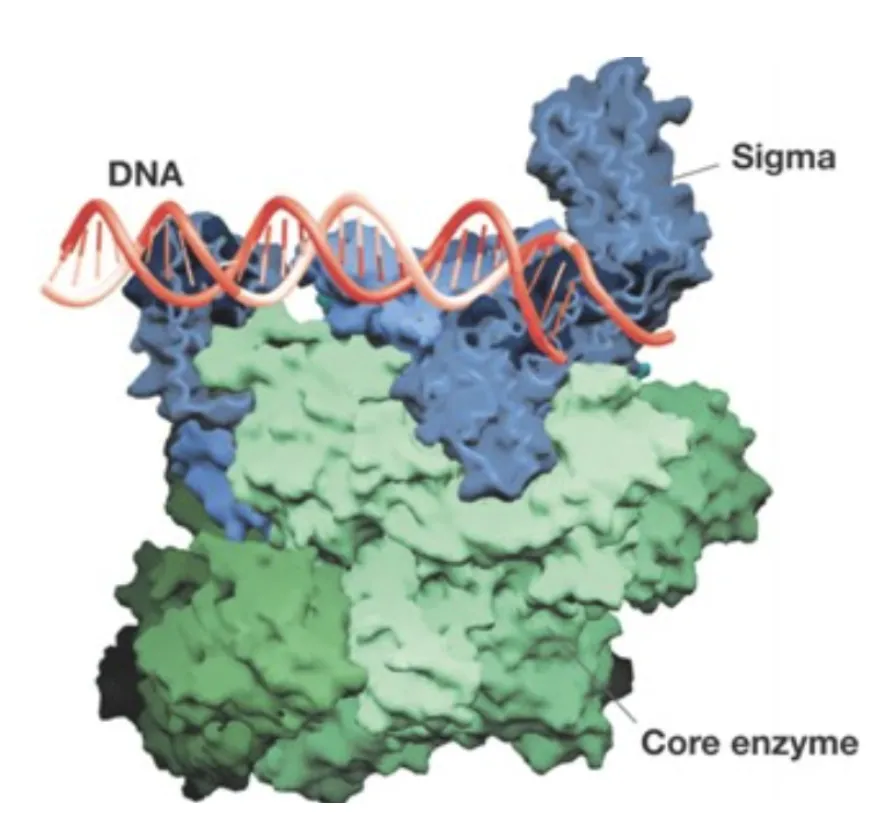 | a holoenzyme |
Where does transcription occur in eukaryotic cells? | the Nucleus |
During elongation, which enzyme synthesizes mRNA | RNA polymerase |
A mutation prevents RNA polymerase from binding to the promoter. What will happen? | transcription will not begin |
If there is a reduction in the production of mRNA, but no effect on tRNA or rRNA, what RNA polymerase is most likely inhibited? | RNA Polymerase II |
What is the role of sigma factors in bacterial transcription? | they help RNA polymerase recognize and bind to promoter regions AND they regulate the expression of different sets of genes |
What does alpha-amanitin affect? | RNA Polymerase II ; blocks mRNA synthesis |
Rho-independent termination relies on what kind of structure | hairpin structure |
True or False? Alternative splicing increases protein diversity without increasing the number of genes | |
Is Exon splicing a common form of alternative splicing? | yes! |
A tRNA with the anticodon 3’-UAC-5’ binds to an mRNA codon during translation. What is the corresponding mRNA codon? | 5’-AUG-3’ |
What is the role of an anticodon? | carries an amino acid to the ribosome |
What phase failed if a cell enters mitosis with unreplicated DNA? | S phase |
After DNA replication, how many chromosomes are present? | same # of chromosomes, each with 2 sister chromatids |
what is the G0 phase? | permanently non-dividing phase |
If cancer cells are dividing uncontrollably, what is malfunctioning? | cell cycle checkpoints |
What stage is affected that would cause the nuclear envelope to not break down? | Prometaphase |
When entering mitosis, the kinetochore proteins fail to form properly. What is the immediate consequence during cell division? | sister chromatids cannot attach to spindle fibers |
As a ribosome moves along an mRNA 5′ → 3′, how is the growing polypeptide synthesized? | it's added to the C-terminus |
Which ribosomal subunit is primarily responsible for binding mRNA during translation initiation? | the small subunit (30S in prokaryotes, 40S in eukaryotes) |
The anticodon 5' UGA 3' would likely correlate to the sequence ______ in the NON-TEMPLATE DNA. | 3' ACT 5' |
In eukaryotes, what synthesizes the rRNA involved in ribosomal assembly? | RNA polymerase I and III |
At which region would regulation of gene expression save the most energy? 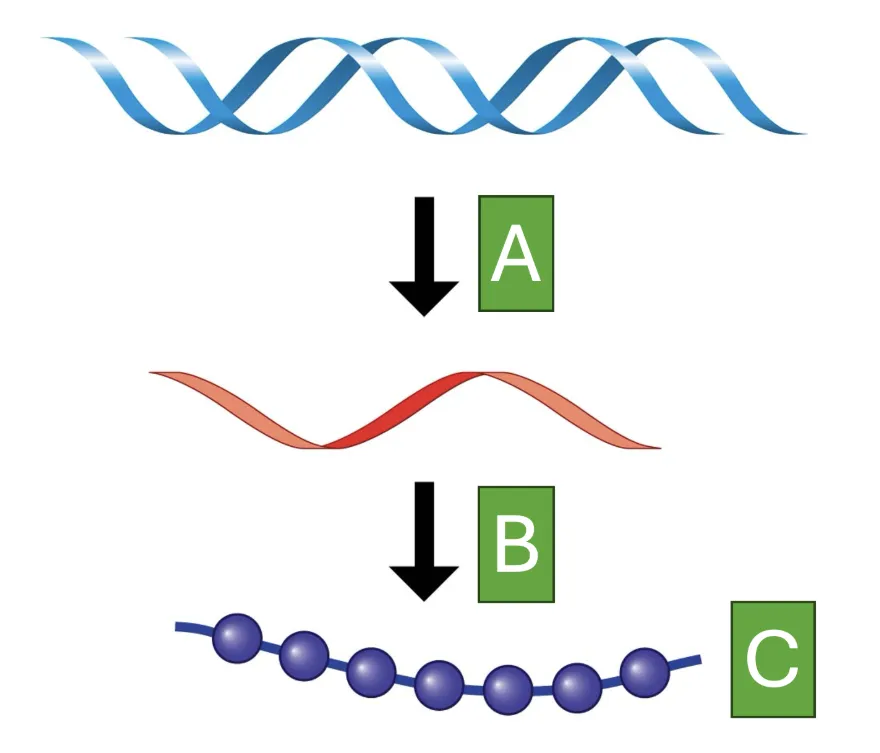 | region A |
How do proteins regulate gene expression in operons? | they interact directly through physical contact with DNA |
What genes are part of the lac operon in E. coli? | 1) lacA
2) lacY
3) lacZ |
What is the primary function of an operon in prokaryotes? | to regulate the expression of multiple related genes in response to environmental conditions |
How is the lac operon regulated? | It is always off unless lactose is present to inactivate the repressor |
What would most likely happen if there were a mutation in the operator region of the lac operon that prevented the repressor from binding? | the operon would be permanently on, leading to continuous production of enzymes even in the absence of lactose |
What is the difference between inducible and repressible operons? | Inducible operons, like the lac operon, are normally off and turned on by a specific molecule, while repressible operons, like the trp operon, are normally on and turned off by a specific molecule |
A bacterial cell is growing in an environment with both glucose and lactose. What is likely happening with the lac operon? | the lac operon is repressed because the cell prefers glucose as its energy source. |
What is the purpose of chromatin remodeling in eukaryotic cells? | to regulate the accessibility of DNA to transcription machinery |
What are epigenetic changes? | reversible, chemical modifications to to DNA or histone proteins that turns genes on/off without affecting the DNA sequence |
A strain of bacteria with a mutation that prevents CAP from binding the lac operon will cause what? | the lac operon will expressed at low levels even when lactose is present and glucose is not. |
Which enzyme is responsible for repositioning nucleosomes to allow access to DNA? | Chromatin-remodeling complexes |
What is the consequence of a drug that prevents chromatin from loosening? | decreased gene expression |
A mutation prevents the addition of acetyl groups to histones. What is the likely outcome? | chromatin will remain tightly packed |
Which might be considered mechanisms that contribute to epigenetic inheritance or regulation of gene expression. (select all that apply)
1) RNA interference
2) DNA methylation
3)Histone modification
4)Changes in the nucleotide sequence | 1, 2, and 3 |
What is the function of RNA interference (RNAi)? | to degrade specific mRNAs to prevent translation |
Why is it beneficial that the lac operon is slightly 'leaky'? | allows a small amount of lactose metabolism enzymes to exist |
What is the main effect of microRNA binding to mRNA? | mRNA is destroyed/translation is blocked |
Which is NOT a primary function of lipids in cells?
Structural component of membranes
Hormone signaling
Enzymatic activity
Energy storage | Enzymatic activity |
Why are many foods solid at room temperature? | high levels of saturated fatty acids |
Where is the location of cholesterol | embedded within the lipid bilayer |
What would the fat in a Twinkie first be broken down into? | fatty acids and glycerol |
What arrangements could this be labeled as? 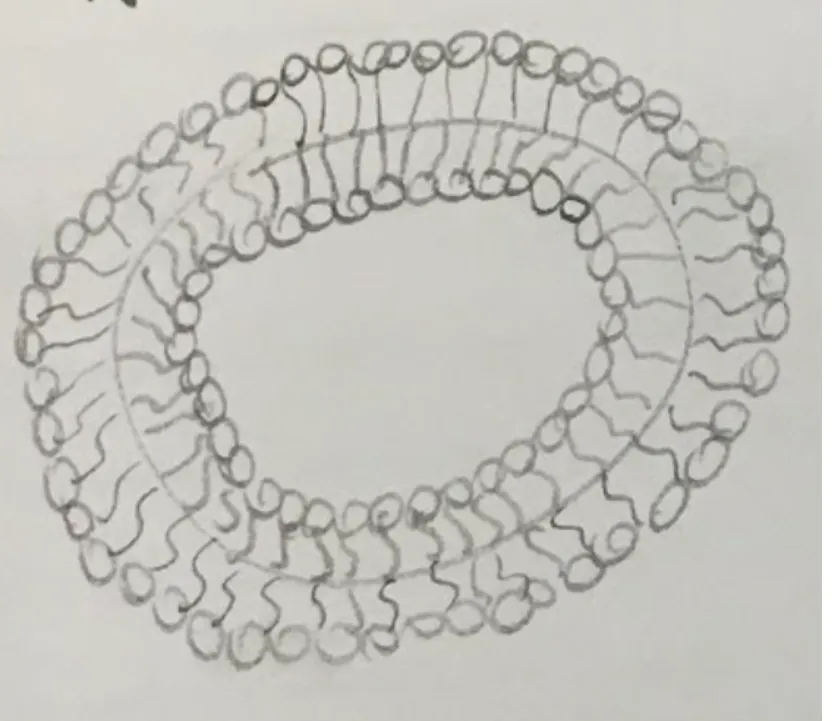 | liposome and vesicle |
What type of transport requires a membrane protein but NO energy for transport | facilitated diffusion |
What happens to an animal cell placed in a hypotonic solution? | it swells and bursts |
Which membrane would be least permeable to glycerol? 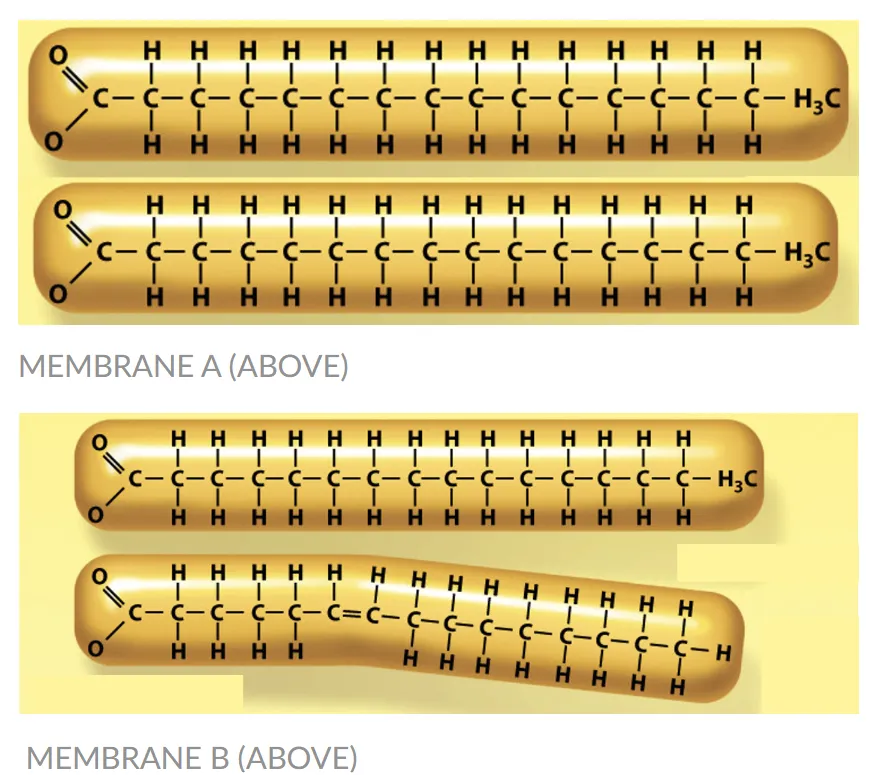 | Membrane A |
Osmosis is the diffusion of what in what direction? | areas of high concentration to areas of low concentration |
A cell is using the sodium-potassium pump to maintain ion gradients. Later, it uses the sodium gradient to transport glucose into the cell. What type of transport is the glucose-sodium movement? | secondary active transport |
The sodium potassium pump is a what? | an antiporter utilizing primary active transport |
What contributes to the specificity of integral membrane proteins? | 1) shape of the binding site in the protein
2) size of molecule its attempting to pass through
3) charge or polarity of the molecule |
What is the sequence of organelles in the secretory pathway? | Rough ER → Golgi apparatus → Vesicles → Plasma membrane |
What are 3 features of a prokaryotic cell? | 1) cell membrane
2) ribosomes
3) cell wall |
Where else can proteins be produced in eukaryotic cells | mitochondria and chloroplast |
What attributes of mitochondria and chloroplasts support the idea that they originated from free-living bacteria | - they contain their own circular DNA (chromosomes)
- they are similar in size to modern bacteria
- they replicate independently
- they possess their own ribosomes |
In photosynthetic eukaryotes, double stranded DNA is found in which of the following locations? | 1) the nucleus
2) chloroplasts and mitochondria |
A toxin disrupts protein folding inside the cell. Which organelle is most directly affected? | Rough ER |
Motor proteins help move vesicles around the cell using networks of... | microtubules |
During which phase would a cell make a copy of its genes to be equally apportioned to daughter cells? | the S phase |
Which checkpoint has cells making sure that all chromosomes have been copied and are undamaged? | G2 |
If a cell has 10 unreplicated chromosomes, how many replicated chromosomes does it have after S phase? | 10 |
A cell exits G1 and enters S phase only if.. | growth factors are present, DNA is intact, and size/nutrients are sufficient |
What happens if DNA damage is detected at the G1 checkpoint? | cell pauses for repair or undergoes apoptosis |
What's the consequence of a mutation in the p53 gene? | cells continue dividing despite DNA damage |
True or False? tumor suppressors normally slow or stop the cell cycle | True |
A diploid cell (2n=6) undergoes meiosis. How many chromosomes will each gamete have? | 3 |
what is in the image? 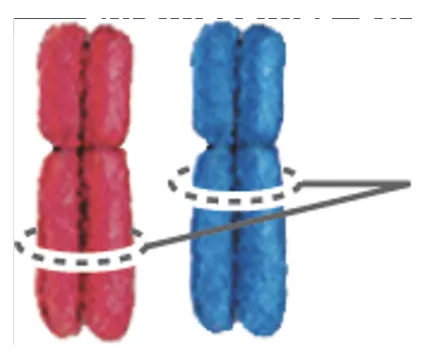 | homologous chromosomes |
When would you see crossing over to occur? | Meiosis 1 |
at what point do cells FIRST become haploid during meiosis? | end of Meiosis 1 |
What is the most likely outcome if nondisjunction occurs during meiosis II? | all resulting gametes will have an abnormal number of chromosomes |
A cell starts at 2n=4.
After DNA replication, how many chromosomes and chromatids are present? | 4 chromosomes, 8 chromatids |
A cell starts as 2n = 4.
After mitosis, how many chromosomes and how many chromatids make up each chromosome? | 4 chromosomes, 1 chromatid |
A cell starts as 2n = 4.
After meiosis I, how many chromosomes are present in each cell and the resultant cells are... | 2, haploid |
A cell starts as 2n = 4.
After meiosis II, how many chromosomes are present in each cell and how many total cells are produced from the original cell? | 1 chromosome, 2 cells |
what individual would have NO barr bodies? | XY individual |
Why are carbohydrates the first energy source to typically be used? | they are easier and faster to break down for ATP production |
Some animals can digest cellulose. Why? | their microbiome contains organisms that can break β-1,4 linkages |
What linkage would you expect to find at a branch point in glycogen or amylopectin? | α-1,6-glycosidic linkage |
The polysaccharide used for structural rigidity is... | cellulose |
What kind of reaction is this? 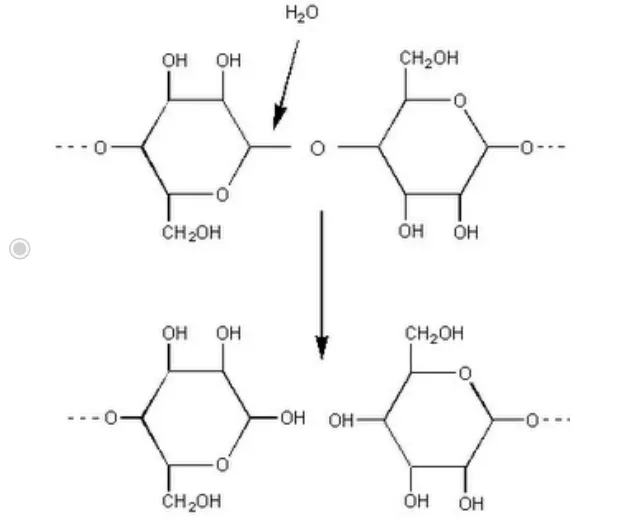 | hydrolysis |
If a reaction happens very slowly in a cell, what is the most likely reason? | it has high activation energy |
True or False? Enzymes make non-spontaneous reactions spontaneous. | False, enzymes lower activation energy only |
A molecule in a pathway becomes NADH, what does this indicate? | it gained electrons |
A molecule has high amounts of C-H bonds. What can you infer? | it has high potential energy and can release energy when oxidized |
A sodium-potassium pump moves ions against their gradient. How is this possible? | ATP hydrolysis provides energy to drive the process |
If substrate concentration increases, reaction rate will: | increase until enzymes become saturated |
A reaction has ΔG < 0 but still occurs very slowly.
Why? | it has a high activation energy barrier |
In the reaction below, which molecule is oxidized?
Glucose → CO₂ | glucose |
A cell suddenly experiences a drop in ATP levels and a rise in ADP levels.
What would you expect to happen to enzymes involved in ATP production? | they would increase in activity due to reduced feedback inhibition |
True or False? Rubisco has one active site | false, it has multiple |
Phosphofructokinase (PFK) is inhibited when ATP levels are high.
What is the benefit of this regulation? | prevents unnecessary breakdown of glucose when energy is sufficient |
Why does the inner mitochondrial membrane have folds? | to increase surface area for ETC and ATP synthase |
What process is most directly affected if a bacterial cell is poisoned with a compound that disrupts its plasma membrane? | oxidative phosphorylation |
Glucose → NADH/FADH₂ → proton gradient → ATP
This is the flow of energy in what process? | cellular respiration |
How many ATP are we using in two turns of the Calvin cycle to make one glucose? | 18 |
What condition STOPS ATP production? | H+ concentration equal on both sides of membrane |
Why is glycolysis considered "ancient"? | works without oxygen in cytosol |
A glucose is broken down, what happens to its carbon atoms? | they lose electrons and become oxidized |
What does fermentation regenerate to keep glycolysis running when oxygen is limited? | NAD+ |
What step produces the MOST ATP per 1 glucose? | oxidative phosphorylation |
What features are shared by both mitochondrial and chloroplast ETCs? | 1) ATP synthase
2) use of proton gradient
3) membrane-bound protein complexes |
During intense exercise or sustained strained efforts, muscle cells switch to fermentation.
What is the main limitation causing this shift? | lack of oxygen |
Why is oxygen critical for aerobic respiration? | oxygen accepts electrons at the end of the ETC |
What type of light carries the most energy?
Red or Blue? | Blue (short wavelength) |
What is the region that ATP must be available to power carbon fixation reactions (in the Calvin Cycle)? | the stroma |
Lactate helps regenerate what to keep glycolysis running? | NAD+ |
Why do facultative anaerobes switch to fermentation? | oxygen is not available as a final electron acceptor |
What are 3 direct products of light reactions? | 1) NADPH
2) O2
3) ATP |
If a plant mutant lacks carotenoids, what is the consequence? | reduced protection from reactive oxygen species |
What is the primary goal of exciting an electron in chlorophyll? | transfer it to an electron acceptor |
What is produced when water is split in Photosystem II? | oxygen |
What is the consequence of a toxin punching holes in the thylakoid membrane? | ATP production stops due to loss of proton gradient |
In noncyclic electron flow, electrons ultimately move from: | Water --> NADP+ |
True or False? Non-cyclic electron flow is a light-independent pathway. | False. It's DEPENDENT |
What is the consequence of a mutation disabling Photosystem II but leaves Photosystem I functional? | oxygen production stops |
Where does H+ accumulate during light reactions? | thylakoid lumen |
Why might a plant increase cyclic electron flow? | to generate additional ATP without making NADPH |
What are 2 reasons why Rubisco is inefficient? | 1) it can bind O2 instead of CO2
2) O2 competes with CO2 at the active site |
In Engelmann’s experiment, aerobic bacteria clustered around certain wavelengths of light.
What does this indicate? 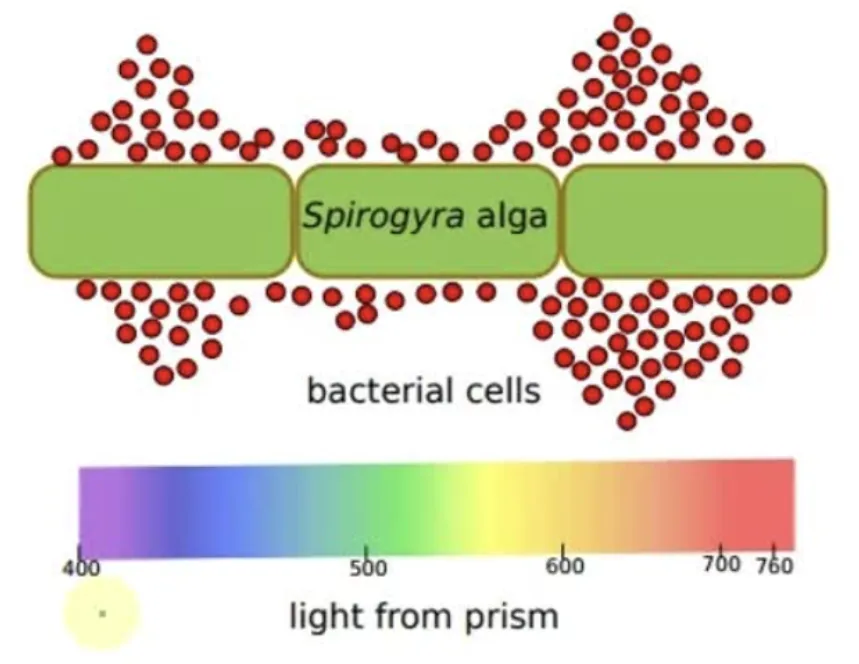 | these wavelengths produced the most oxygen |