How does naming a plant work?
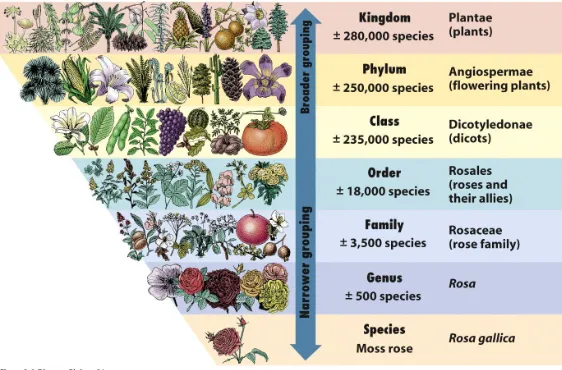
We use binomial nomenclature. A plant is identified by Genus + species. The Genus is written with a capital and in italics. The species is not written with a capital but still in italics (hand-written, with a streep eronder). Family ends with -aceae
| Term | Definition |
|---|---|
How does naming a plant work? | We use binomial nomenclature. A plant is identified by Genus + species. The Genus is written with a capital and in italics. The species is not written with a capital but still in italics (hand-written, with a streep eronder). Family ends with -aceae |
What is a taxon? | A taxonomic group/rank. E.g. family, genus and species are all taxa. Singular: Taxon, plural: taxa |
How can plant macrofossil data be presented? | A) presence/absence -> you simply record whether a taxon is found.
B) Quantitative data -> you record how many remains or what percentage they represent (This gives you information about abundance). |
What are percentage diagrams? And what are the problems? | Shows the percentage of different plant taxa through a sediment profile.
Problems:
A) What should be included in the macrofossil sum?
B) Some plants can be over-represented, waterplants preserve better. Some plants naturally produce a huge number of seeds. |
How do you interpret plant macrofossil data? | 1. Taxonomy; level of identification matters
2. Exotic taxa; an exotic taxon is a plant found in the fossil assemblage that is not part of the modern local vegetation.
3. Extinct taxa; the plant might have disappeared since the archaeological period.
4. Plant ecology; plant fossils can act as a proxy for past environments. Proxy is something we use as evidence for something we cannot directly observe. |
What is taphonomy? | The processes that happen to biological remains from the time they are produced until they become part of a fossil/archaeological assemblage. |
What is the taphonomic process? | 1. Living plant
2. production of seed/leaves etc.
3. potential macrofossils
4. dispersal
5. biological and physical sorting
6. deposition
7. fossil/archaeological assemblage |
What are the advantages of macrofossils reconstruction? | Often identified to species level -> precise ecological/environmental information. Usually not transported far -> remains represent nearby vegetation -> good for reconstructing local environments. |
What are the disadvantages of macrofossils reconstruction? | Limited transport -> not good for regional vegetation reconstruction. Macrofossils are produced in relatively small quantities. Concentrations of macrofossils can differentiate through a profile. |
What is ethnobotany? | The study of how people of a particular culture and region make use of indigenous plants. |