Special Creation
A view on the history of life
-Species do not change
-Lineages do not split
-Each species is separately created
-Earth and life are young
| Term | Definition |
|---|---|
Special Creation | A view on the history of life
-Species do not change
-Lineages do not split
-Each species is separately created
-Earth and life are young |
Descent with Modification | A view on the history of life
-Species change over time(microevolution)
-Lineages split and diverge(speciation)
-New life-forms derive from older forms(macroevolution)
-All life-forms are related(common ancestry)
-Earth and life are old |
Microevolution | Changes in gene frequencies and trait distributions that occur within populations and species |
Speciation | The process whereby an ancestral species give rise to a pair of daughter species |
Macroevolution | Large evolutionary change, usually in morphology; typically refers to the evolution of differences among populations that would warrant their placement in different genera or higher level taxa |
Vestigial Structure | A useless or rudimentary version of a body part that has an important function in other, closely allied, species |
Fossil | Any trace of an organism that lived in the past |
Fossil Record | The worldwide collection of fossils |
Law of Succession | The general pattern of correspondence between fossil and living forms from the same local |
Transitional Forms | Give us a way to test specific hypotheses about macroevolution by making predictions that we can confirm or refute by digging for fossils |
Homology | The study of likeness
"The same organ in different animals under every variety of form and function" |
Non-homologous | Example- Dolphins/Whale vs Sharks
They move differently, up and down vs side to side |
Geologic Time Scale | |
Radiometric Dating | A technique that uses unstable isotopes of naturally occurring elements |
Natural Selection | A difference, on average, between the survival or fecundity of individual with certain phenotypes compared with individuals with other phenotypes
1. The individuals within a population differ from one another.
2. The differences are, at least in part, passed from parents to offspring.
3. Some individuals are more successful at surviving and reproducing than others.
4. The successful individuals are not merely lucky; instead, they succeed because of the variant traits they have inherited and will pass to their offspring. |
Adaptation | A trait that increases an organism's fitness relative to individuals lacking it |
Transitions | In DNA, a mutation that substitutes a purine for a purine or a pyrirnidine for a pyrimidine. |
Sister Species | The species that diverged from the same ancestral node on a phylogenetic tree |
Phylogeny/Phylogenetic Tree | A diagram showing the history of divergence and evolutionary change leading from a single ancestral lineage to a suite of descendants. In other words, it depicts a group of organisms' genealogical relationships as they are understood according to Darwin's theory of descent with modification from common ancestors. |
Parsimony | A criterion for selecting among alternative patterns or explanations based on minimizing the total amount of change or complexity |
Synapomorphy | A shared, derived character; in a phylogenetic analysis, synapomorphies are used to define clades and distinguish them from outgroups |
Homoplasy 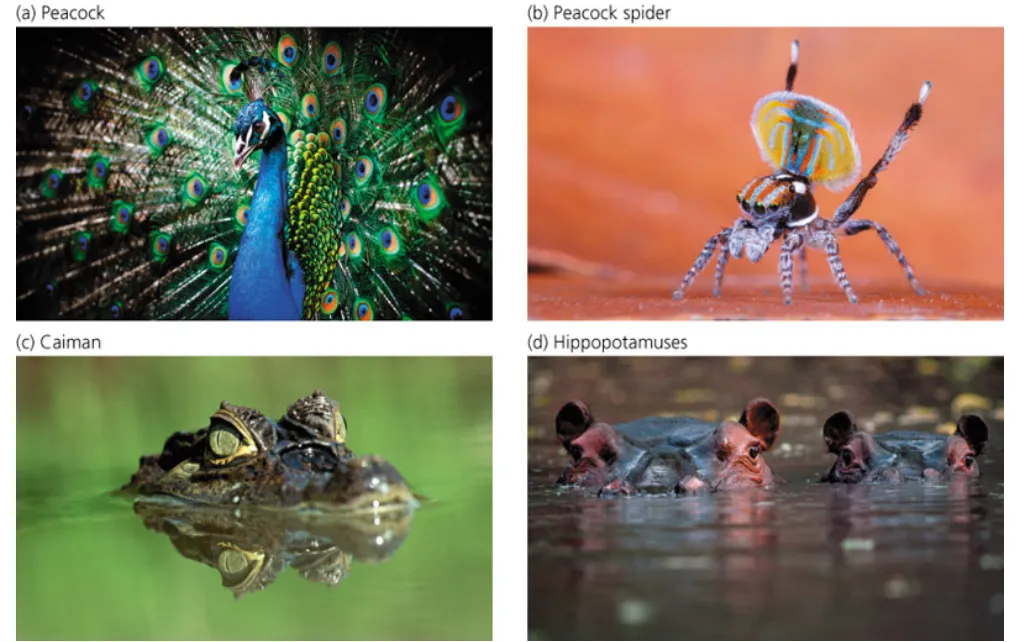 | Similarity in character states due to convergence and/or reversal |
Monophyletic | Also known as a clade, consists of an ancestor and all of its descendants |
Paraphyletic | A group consisting of an ancestor and some, but not all, of its descendants |
Polyphyletic | A group that contains some, but not all, of its descendants, and that also excludes its ancestor |