Market Orientation
An approach to marketing that bases its decisions on customers needs. Carries out market research to create its product.
| Term | Definition |
|---|---|
Market Orientation | An approach to marketing that bases its decisions on customers needs. Carries out market research to create its product. |
Market Orientation (Advantaged/Disadvantages) | Advantages:
- business have an increased confidence that products will sell well
- a business can respond a lot quicker to changes in the market
- can challenge new competitors
Disadvantages:
- can be expensive to carry out market research
- can be time consuming
- changes in customers needs/wants frequently, hard to meet everyones needs |
Product Orientation | An approach to marketing that focuses on what it can produce and hopes the customers will like it. Innovative products that can tempt consumers |
Product Orientation (Advantaged/Disadvantages) | Advantaged:
- High quality products
- Succeed in markets where change is slow, and business has a good reputation
- Has control over its activities
Disadvantages:
- Very risky because no market research is done
- Can be costly if product fails
- Only good in some industries |
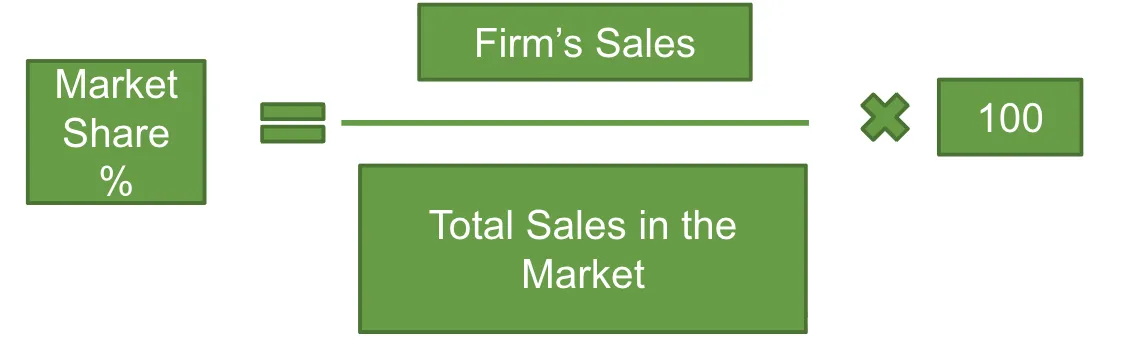
Market Share | This is the percentage of one firms share of the total sales in a market
 |
Market Growth | The percentage change in the market size over a given period of time. Based on either market volume or value  |
Market Leadership | When a business has the largest market share in a given market |
Market Leadership (Advantaged/Disadvantages) | Advantages:
- Able to advertise that they have the most popular product in the market
- Can negotiate and bargain with supplies and banks
- Recruitment of high class employees
Disadvantages:
- Puts pressure on business to preform at the highest standard
- The media often scrutinize the market leaders and seek out mistakes
- Market share does not mean increases in profabiltiw or sales- expensive to maintain |