| Term | Definition |
|---|---|
Modernism | art produced by those committed to the avant-garde idea of art |
Avant-Garde | artists who thought of themselves as leading the way for other artists by producing something stylistically new |
Expressive | alteration of the formal and/or representational elements of art to convey something about the subject |
Expressionism | alteration of the formal and/or representational elements of art to convey the feelings of the artist |
The Degenerate Art Exhibition (1937) 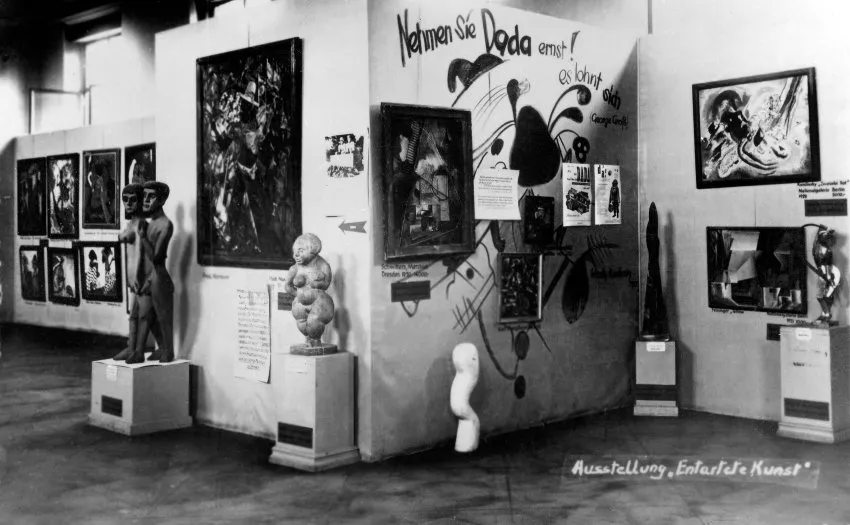 | the exhibition of avant-garde art organized by the Nazis in 1937 to make fun of it |
Concerning the Spiritual in Art | Kandinsky's book on the spiritual effects of color |
Abstract Art | nonrepresentational art |
Abstraction | the simplification of a subject to its formal essence |
Formalism | the careful arrangement of the representational and or formal elements in art (shape, line, color, etc) for aesthetic effect |
Assemblage | sculpture made by putting together preexisting parts |
Filippo Marinetti | the father of Futurism |
Socialist Realism | realism in the service of Communism in both literature and the visual arts |
Seurat, Sunday Afternoon on the Island of the Grand Jatte (the Grande Jatte), 1884-86, Neo-Impressionism 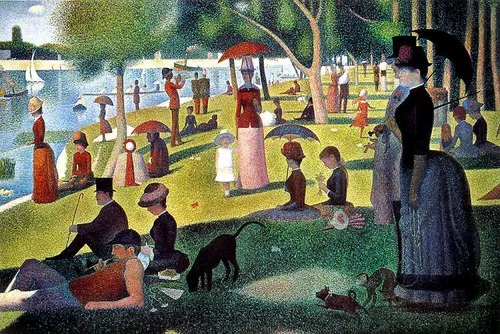 | - Superego painting of civilized people
- Painting for the public to encourage behavior like the little girl
- Expressive |
Gauguin, Where do we come from? Where are we? Where are we Going?, 1897, no category 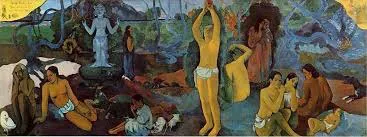 | - Artist doesn’t like living in civilized society; we should be as much like animals as possible (Id: wants/instincts)
- Image of the Garden of Eden
- Avant-Garde: colors are stylistically new - Expressionism |
van Gogh, the Olive Grove, 1889, Post-Impressionism 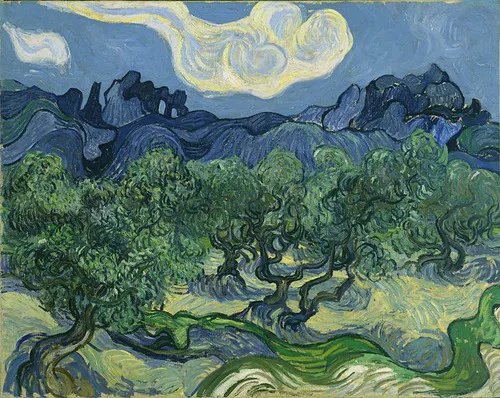 | - Expressionism (one of the fathers)
- Excited to be outside and painting again - manic painting – overly excited, painting for himself |
Munch, the Scream, 1892. Post-Impressionism 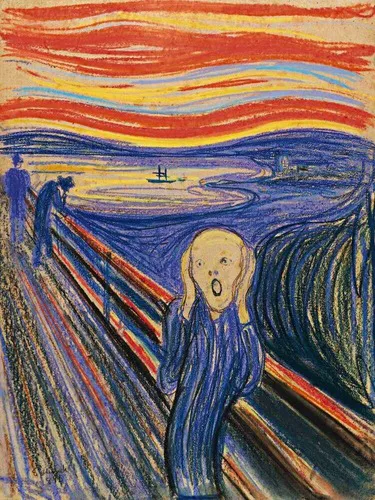 | - Expressionism (one of the fathers)
- The color of the sunset reminded him of the blood surrounding his family's tuberculosis, causing him to have PTSD or a breakdown; realization of his feelings
- Painting for himself |
Derain, Charing Cross Bridge, 1905, Fauvism 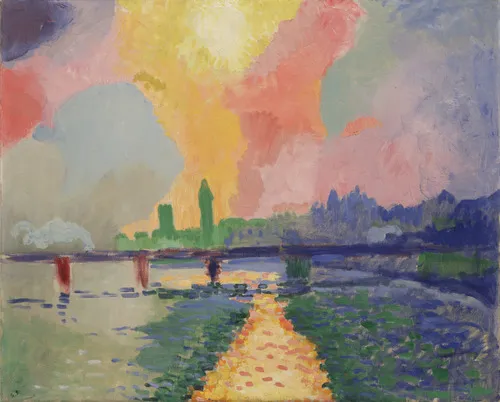 | - Expressionism - painting the colors he feels
- Example of Fauvism: children's envy in the form of primitivism; subjective to how he feels
- For you to be encouraged to be more childlike |
Matisse, Landscape at Collioure, 1905, Fauvism 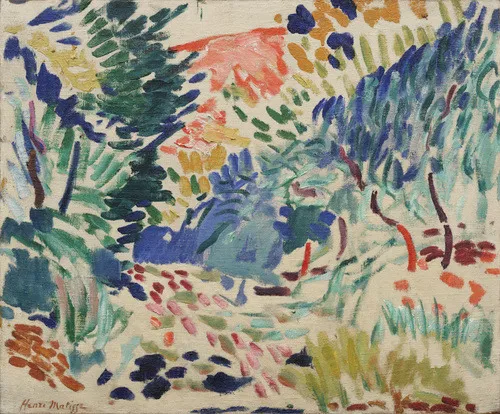 | - Expressionism
- A call to be more childlike |
Matisse, Joy of Life, 1905, NOT Fauvism or no category 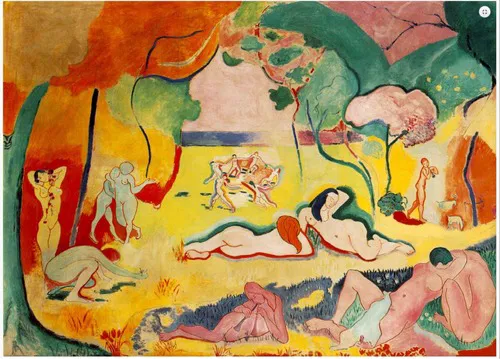 | - Expressive
- Image of Arcadia
- Purpose: to sooth/relax you, allowing you to imagine yourself in the world
- For: every mental worker and himself - tells you how they feel
Context: he was a nervous man who didn't like expressionism |
Kirchner, Nudes Playing under a Tree, 1909, The Bridge 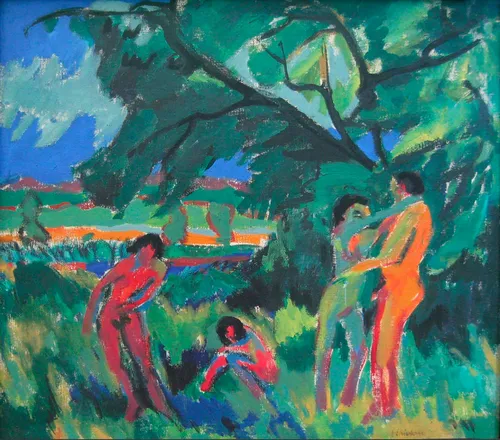 | - Lack of clothing was the primitive way of life -instinctual, the need to be more natural
- Celebration of the life of instinct in how it's painted and what is painted |
Kirchner, Girl under a Japonese Umbrella, 1909, The Bridge 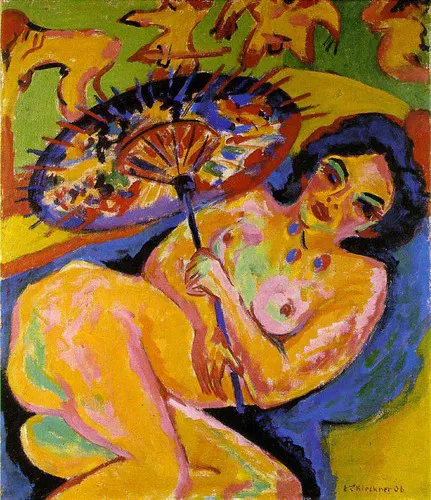 | - Expressive (how she feels about the artist) & Expressionism (how the artist feels about her) |
Kandinsky, Improvisation 26, 1912, The Blue Rider 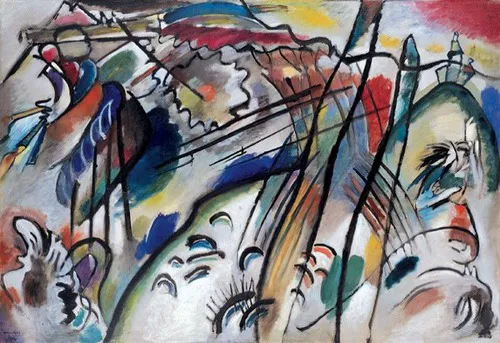 | - Using color to cause vibrations or awaken your soul - spiritual revival
- Blue is the color that speaks to the soul
- Non-Representational/Abstract |
Schiele, Self Portrait Masturbating, 1911, Viennese Expressionism 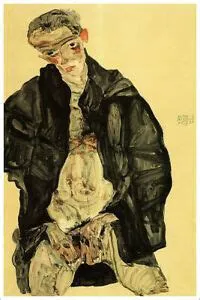 | - Expressionism - the expression on his face doesn’t show pleasure/enjoyment, it shows sadness while looking at the viewer (he wants the viewer to save/help him) |
Schiele, Reclining Nude with Legs Spread, c. 1912, Viennese Expressionism 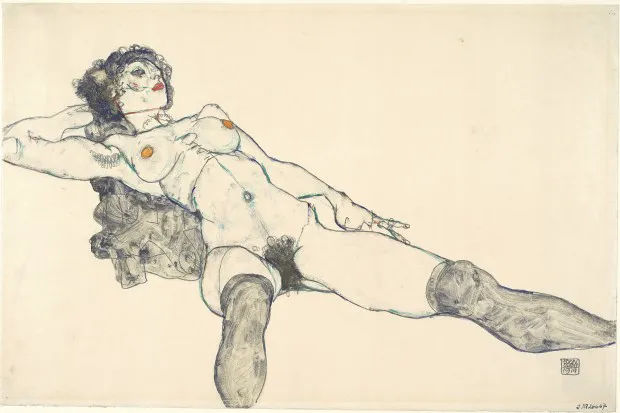 | - Nude female, reclining, challenges viewers to think about the sexuality and representation of women, making it about what is true (they are sexual creatures and that belongs to them, they’re strong, shows respect) |
Cezanne, Mont Sainte Victoire with Large Pine, 1887, (Neo) Impressionism 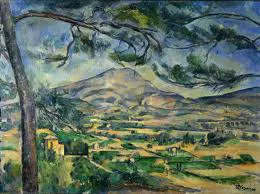 | - Focuses on the moving tree and still mountain, static & dynamic; key to his work is opposites
- The subject of his work is the truth of nature; rabbit-duck painting; nature is the tension of opposites |
Brancusi, Torso of a Young Girl, c. 1922. no category 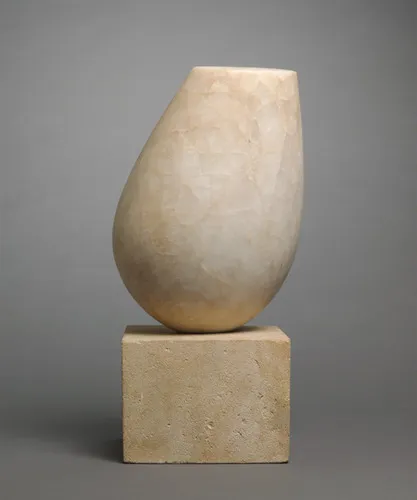 | - Avant-Garde: taking the female body and turning it into a single shape - it’s a curve
- “What is real is not the exterior form but the idea, the essence of things”
- Conceptual art, the idea of the female; abstraction |
Brancusi, The Kiss, c. 1912 no category 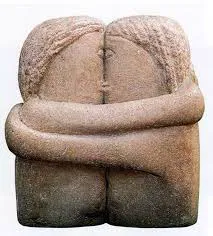 | - Inspiration from the famous subject by Rodin
- Two things becoming one: two abstracted figures connecting into the final sculpture - the idea of a kiss is the union of two people becoming one; conceptual |
Picasso, Self-Portrait, 1901, Blue Period 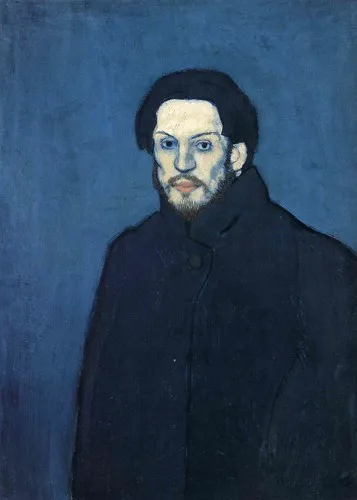 | - Expressionism?: "This is how I feel inside"
- Sad, underfed, struggling, image of weakness, he’s not happy |
Picasso, Self-Portrait, 1906, Primitive Period 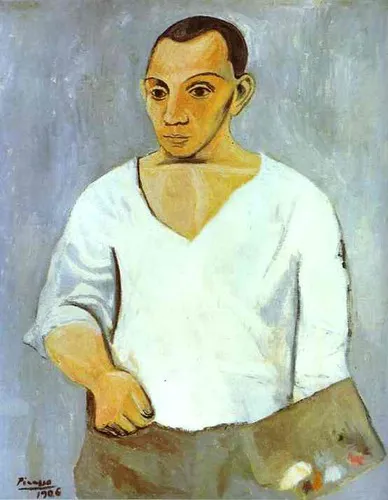 | - Expressive: "This is the new way I want to show a face"
- Context: he steals the Iberian head for inspiration; what it means to be Spanish - the head is rough, crude, and strong
- Looking at early art, turns to strength; lines in painting are expressive, the curves are strong – the hand is a fist, the arm is strong;
- Representational – he’s gotten over his depression/he’s changed |
Picasso, Desmoiselles d'Avignon, 1907, Primitive Period 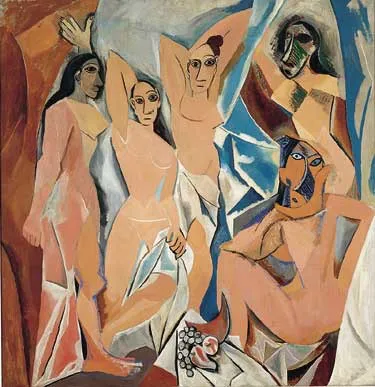 | - Expressive; Avant-Garde
- For the artist - what he believes is true about women (they are dangerous and will hurt you, they aren’t soft, submissive, or weak, they are the enemy); about women and sex
- Purpose: the masks, a sense of taking control beyond truth to control the enemy |
Braque, Viaduct at l'Estaque, 1909, Cubism 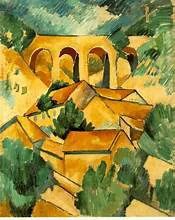 | - Formalism: houses arranged to create a particular compositional structure – inverted pyramid on a pyramid, an effect of harmony |
Picasso, Ma Jolie, 1911-12, Cubism 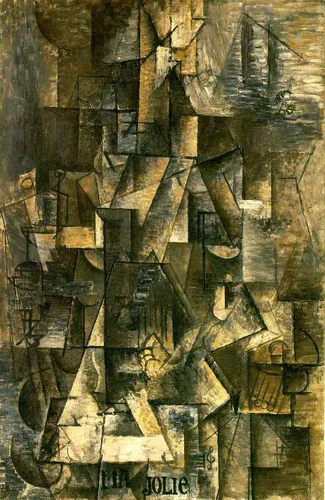 | - Formalism: tension between order and disorder that is resolved in favor of order, which is aesthetically pleasing because we like things to be in order
- Doesn’t address the general public, but it addresses small, educated, sophisticated, knowledgeable audiences - art for the lucky few
- What is it? It’s just a painting; they're taking line and light (shading) to build a painting |
Picasso, Still Life with Bottle of Suze, 1913, Synthetic Cubism 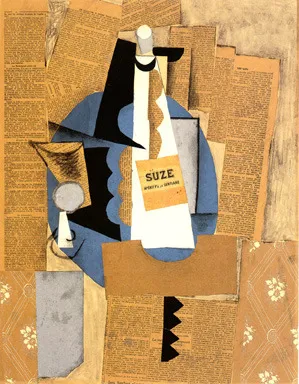 | - Things glued together to suggest a subject
- Art for an elite – a puzzle you have to solve; on a table is a bottle of Suze, a glass, and a newspaper – the viewer sitting at the table; provides the viewer with peace, tranquility, and order (a retreat from the world)
- Subject matter (suggestive) in a new way – Avant Garde: use of collage; represents a taste for quiet paintings |
Boccioni, Dynamism of a Cyclist, 1913, Futurism 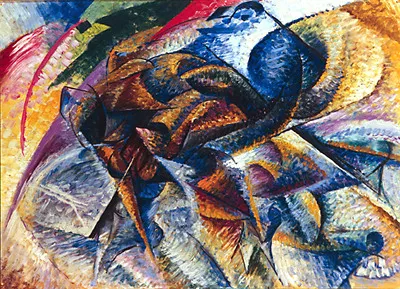 | - Wheels turning, colors being used expressively; works from the inside out
- For the artist and viewer to make you feel excited/like you are on the bike going too fast; Telling us how exciting it is to go fast |
Carra, The Funeral of the Anarchist Galli, 1910-11 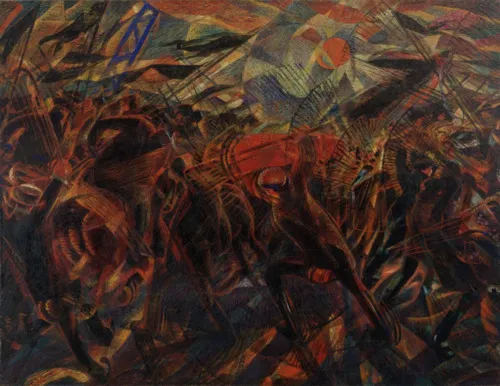 | - Timelapse image of a battle between the police and anarchist; you don’t know which side the artist is on – it doesn’t matter because he enjoys the battle
- The colors are expressive - they show rage, blood, and violence; celebration of hostility – it's exciting |
Goncharova, The Cyclist, 1913, Cubo-Futurism 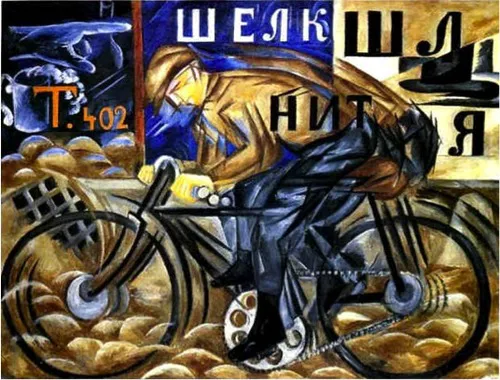 | - Her version of Boccioni’s painting (he wanted it to represent something fun)
- The key is what’s behind it: billboards advertising things; it represents a celebration of modern progress – not as an experience, but as a symbol
- Russian version of Futurism |
Malevich, Suprematist Composition, 1915, Suprematism 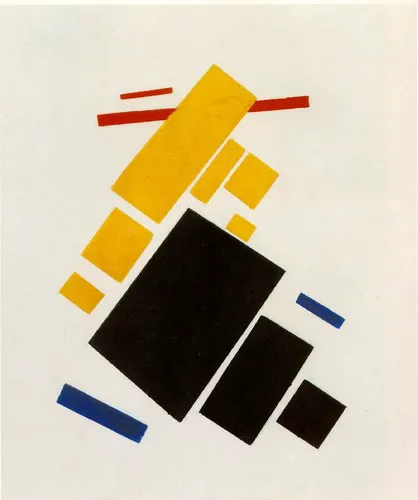 | - Formalism - the artist isn't trying to say anything, he's just providing aesthetic pleasure, and Avant-Garde
- For an elite middle-class audience |
Rodchenko, Worker's Club, 1925, Constructivism 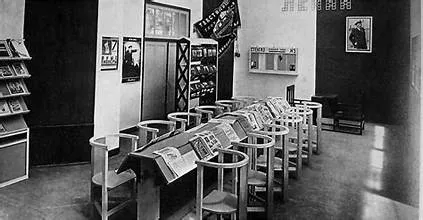 | - For educated workers (they want them to develop their minds) - establishes a workers' revolution
- A practical work of art |
Rodchenko, Pioneer Girl, 1930, Socialist Realism 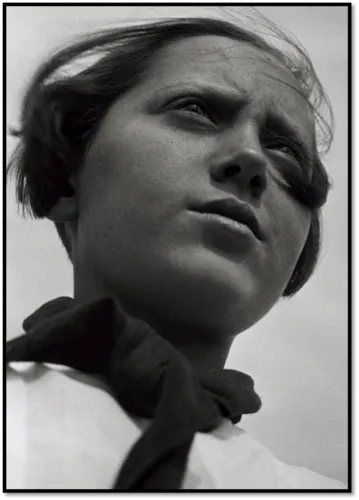 | - For girls to promote a sense of pride in the Communist party/how they should be
- Looking up to someone/looking forward = admiration/looking into the future
- Photograph is reproducible – more effective |
Gabo, Column, 1922, Constructivism 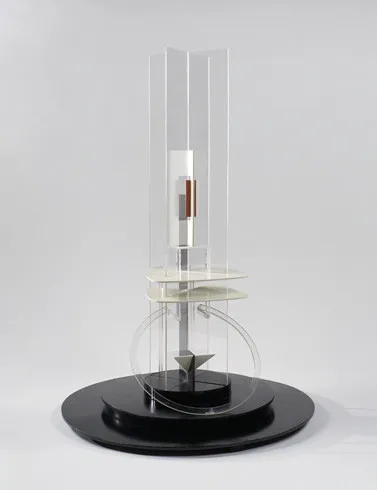 | - Formalism – no subject, just materials
- To inspire university students to be smarter - meant to help construct the Russian citizen who would construct the utopian states
- The column is meant to be contagious – you would catch inspiration to be like the sculpture (to trigger the student’s genius) |