| Term | Definition |
|---|---|
What is not true of homologous chromosomes? | Both chromosomes come from one parent |
What is true of homologous chromosomes? | They contain the same amount of DNA and have the same genes along their length |
How many homologous pairs does the parent cell of a diploid cell with 12 chromosomes have? | 6 |
How many sister chromatids does the parent cell of a diploid cell with 12 chromosomes have? | 24 |
How many chromosomes does the parent cell of a diploid cell with 12 chromosomes contain after interphase? | 12 |
At which point in the parent cell of a diploid cell with 12 chromosomes does DNA replication occur? | S phase during inyerphase |
Is interphase part of either mitosis or meiosis? | No |
Homologous chromosomes pair occurs during | Meiosis 1 |
Homologouschromosomes separate each other during | Meiosis 1 |
Crossing over occurs during | Meiosis 1 |
Independent assortment occurs during | Meiosis 1 |
Sister chromatids separate from each other during | Mitosis and meiosis 2 |
Two processes that lead to genetic variation during meiosis are | Crossing over and independent assortment |
Protists have prokaryotic or eukaryotic cells? | Eukaryotic |
What structure is responsible for moving the chromosomes into a new arrangement? | Spindle fibers |
How does the chromosomal content compare to the parent cell at G1 that you started with? | It is identical to the parent cell |
Interphase in an Onion | 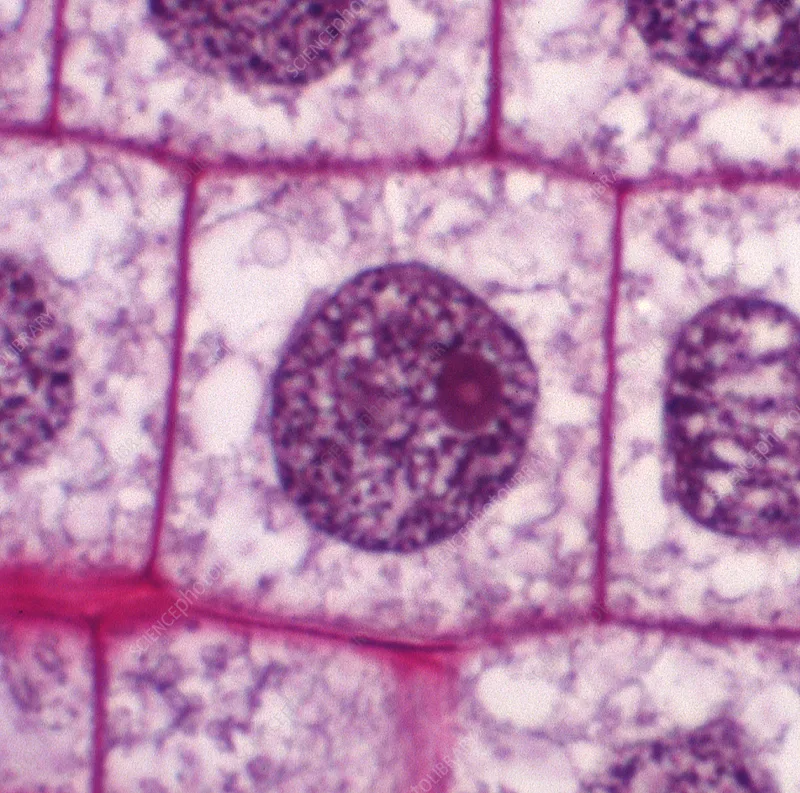 |
Prophase in an Onion | 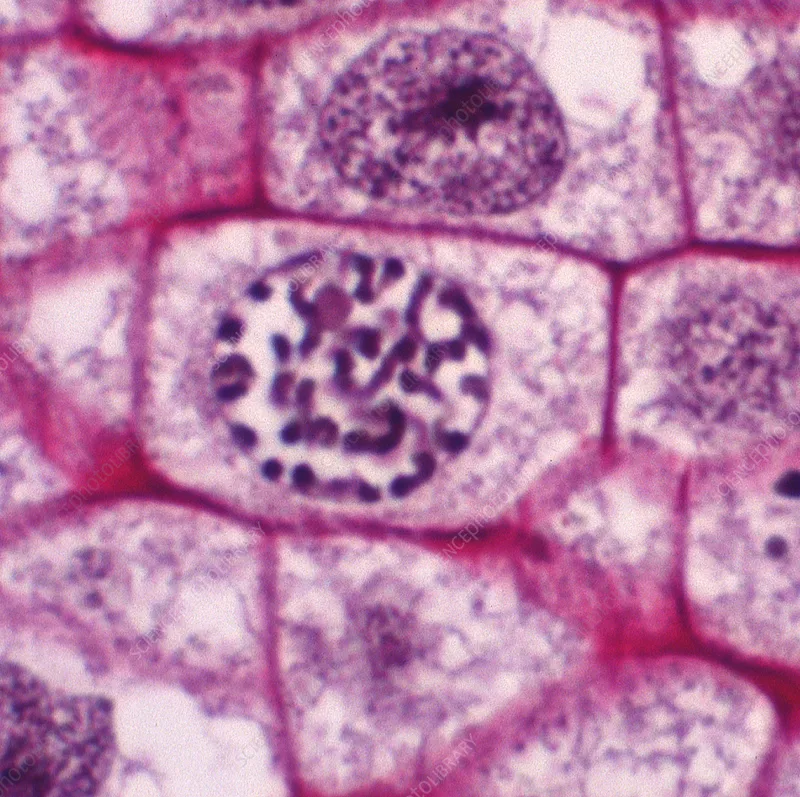 |
Metaphase in an Onion | 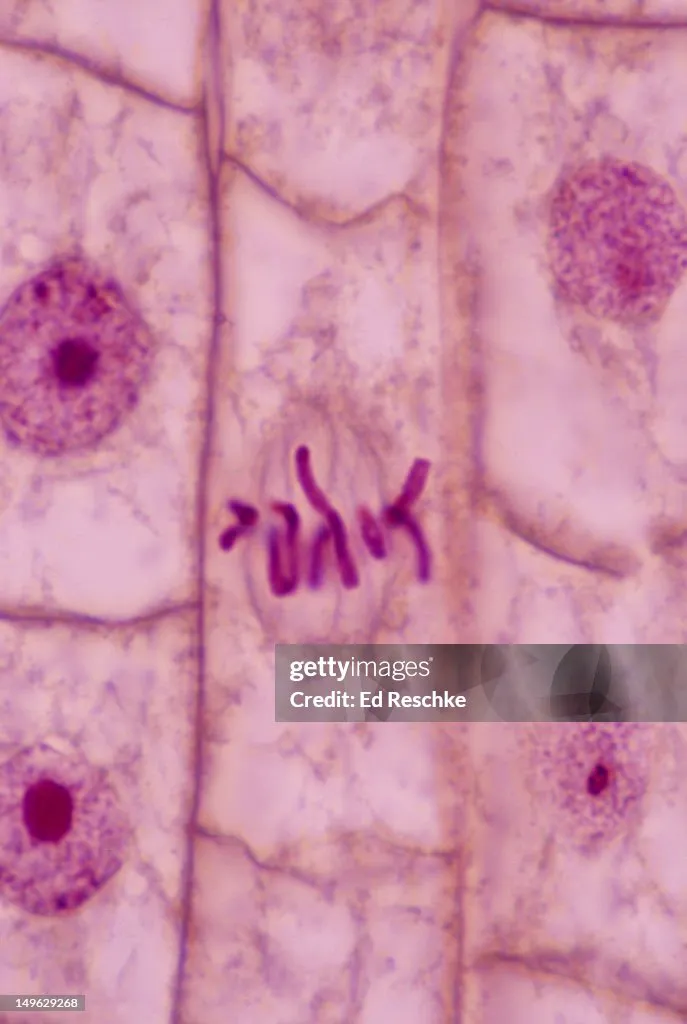 |
Anaphase in an Onion | 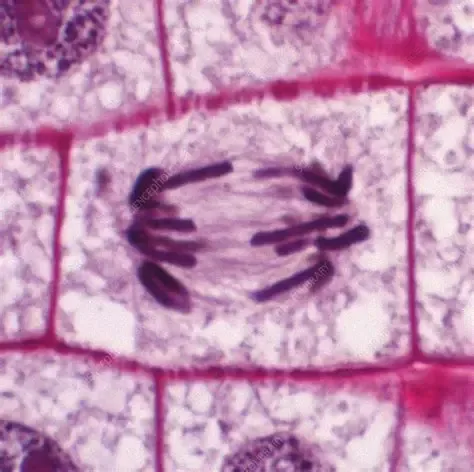 |
Telophase in an Onion | 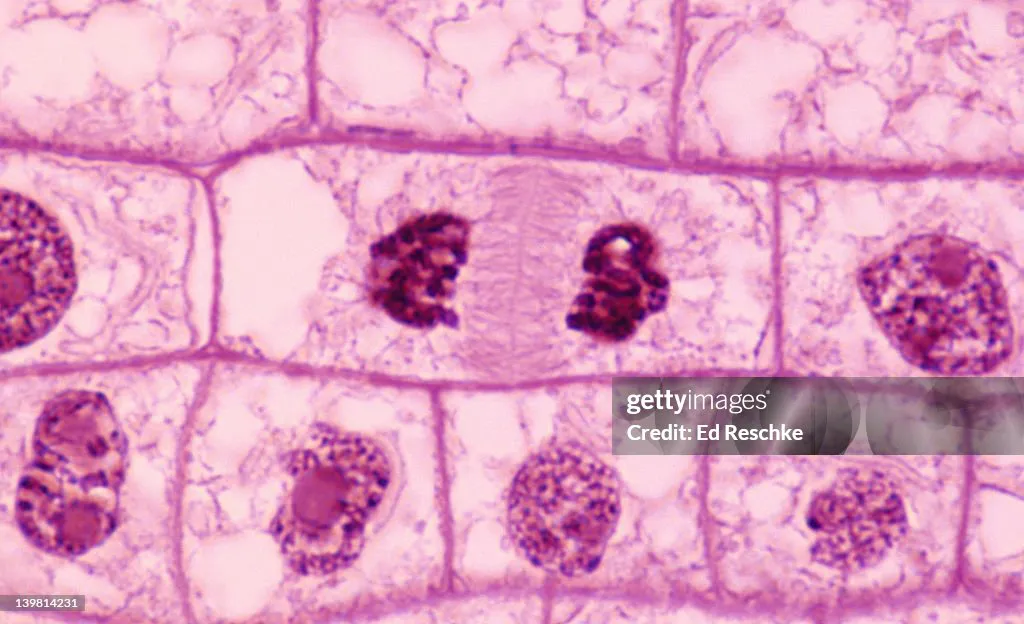 |
Interphase | G1, G2, S phase (DNA Replication) |
Prophase in Mitosis | Chromosomes condense, centrosomes radiate microtubules and migrate to opposite poles, microtubules attach to chromosomes |
Metaphase in Mitosis | Chromosomes align in center of cell |
Anaphase in Mitosis | Sister chromatids (which become individual chromosomes when the centromere splits) separate and travel to opposite poles |
Telophase in Mitosis | Nuclear envelope re-forms and chromosomes decondense |
Meiosis | The germ cells in humans give rise to gametes through this, and create genetically unique daughter cells |
Mitosis | Body cells reproduce through this, and create genetically identical daughter cells, aesexual reproduction |
Cytokinesis | The full split of the two new cells |
Sexual Reproduction | Organisms produce haploid cells called gametes (egg or sperm), each parent contributes one set of chromosomes in their egg or sperm, haploid gametes fuse during fertilization |
First Step in Prophase 1 of Meiosis 1 | Chromosomes first become visible as thin threads, DNA replication is already complete |
Second Step in Prophase 1 of Meiosis 1 | Homologous chromosomes continue to condense and undergo synapsis (gene for gene pairing) |
Third Step in Prophase 1 of Meiosis 1 | Each pair of homologous chromosomes forms a bivalent, each chromosome consists of two sister chromatids |
Fourth Step of Prophase 1 of Meiosis 1 | The chromosomes continue to shorten and thicken and the chiasmata between non-sister chromatids become apparent (crossing over) |
Fifth Step of Prophase 1 of Meiosis 1 | The nuclear envelope begins to break down |
Prophase 1 (later phase) of Meiosis 1 | Chiasmata present, spindles attach to kinetochores on chrmosomes |
Metaphase 1 of Meiosis 1 | Homologous pairs line up in center of cell, with bivalents oriented randomly with respect to each other |
Anaphase 1 of Meiosis 1 | Homologous chromosomes separate, but sister chromatids do not separate |
Telephase 1 of Meiosis 1 | Daughter cells are ready to move into prophase 2 |
Meiosis 2 | Same as mitosis, ends with 4 different combinations of chromosomes |