Seleucus I Nicator
King who reigned from 312 to 281. Alexander the Great's general who founded the Seleucid empire which is the remnants of the Persian empire. One of the successful successors who creates a dynasty. He swaps wives with his son and has son co-rule to create a successful transition of power. He is killed by Ptolemy Kronos on the beach of Macedonia.
| Term | Definition |
|---|---|
Seleucus I Nicator | King who reigned from 312 to 281. Alexander the Great's general who founded the Seleucid empire which is the remnants of the Persian empire. One of the successful successors who creates a dynasty. He swaps wives with his son and has son co-rule to create a successful transition of power. He is killed by Ptolemy Kronos on the beach of Macedonia. |
Antiochus I Soter | Seleucid king from 281-261 BC. Son of Seleucus I. Struggles against the Galations but wins a major battle against getting respect as a ruler, does not get rid of the Galations. Seleucid king during the 1st Syrian War. Marries his father's wife, was diagnosed with love sickness. |
Stratonice | Queen of the Seleucid empire. Died in 254. Wife of Seleucus then the wife of her step-son, Antiochus I. Produced the heir for the Seleucid throne. |
First Syrian War | War during the 270s. First war over Koile Syria. Ptolemy II wants Koile Syria so no one can invade Egypt and Antiochus I wants Koile Syria because Syria is the center of the Seleucid empire. Sources are unclear on who won but it's assumed to be the Ptolemies because they remain in Koile Syria. |
Tetrapoleis | (Antioch, Apamea, Laodicea, Seleucia Pieria) The political centers of the Seleucid empire. Antioch is the day to day political center. Seleucia Pieria is the acropolis and where Seleucid kings are buried. Apamea is farmland and where the elephants and horses are kept. 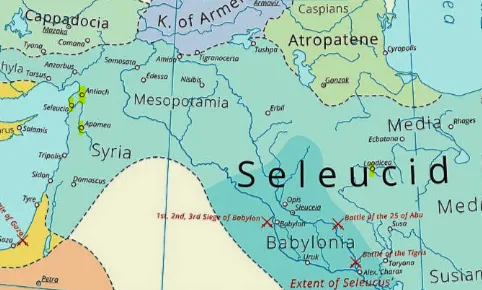 |
Polis | City-states that self governor under the king but they have rights. |
Ptolemy II Philadelphus | Ptolemaic king who reigns from 282 to 246. Focus on supporting cultural works such as the Library of Alexandria. He fights in the 1st and 2nd Syrian War and presumably wins both. Controversially marries his full sister, Arsinoe II. |
Library of Alexandria | Started as a Museion and scholars are paid to create work reflecting Greek culture and it expands over time. Had a vast collection of books but unlikely it had only one copy of anything. The story around a lot of ancient works being lost in it's burning is probably false. Created by Ptolemy II. |
Arsinoe II Philadelphos | Queen of the Ptolemaic dynasty and wife sister of Ptolemy II. Unclear if they had sexual relation since there was no children. Probably a political arrangement because she had control over land in the Aegean due to a previous marriage. |
Incest | A taboo even in ancient times but mainly only regarding parent/child and sibling relationships. Only exception is royalty to flex their exceptionality. Used as a political tactic and to create purity of lineage. Mainly done by the Ptolemies. Egyptians accepted it but the Greeks were disgusted. |
Diadem | A symbol of royal power started by Alexander the Great. A leaf crown that nearly every Hellenistic king wears in their coinage. |
Second Syrian War | War from 260-253. Treaties are viewed as treaties between kings not states. So when Antiochus I dies, his son, Antiochus II attempts to take Koile Syria from Ptolemy II. Again unclear who won but Ptolemy II remains in Koile Syria and he sends his daughter to marry Antiochus II. |
Antiochus II | Seleucid king who reigns from 261 to 246. Starts the 2nd Syrian War and presumably loses that war. |
Chremonidean War | War from 268-61. Antigonus Gonatus (Antigonid Macedonia) vs. Athens. backed by Ptolemy II. Athens loses bad and they lose their navy and a stronghold is put on their navy port. The major Ptolemaic navy loses to the small Antigonid navy and Sparta cannot do much. Some people regard this as "the end of the Greek polis", not true. The polis have just been weakened. |
Aetolian League | One of the major Koinons. Rid the Gouls out of Delphi and control the council at Delphi. Federal sancturary is at Thermos (temple of Apollo) Strategos control the Ekklesia and are elected. Most important is they conduct collective military action. 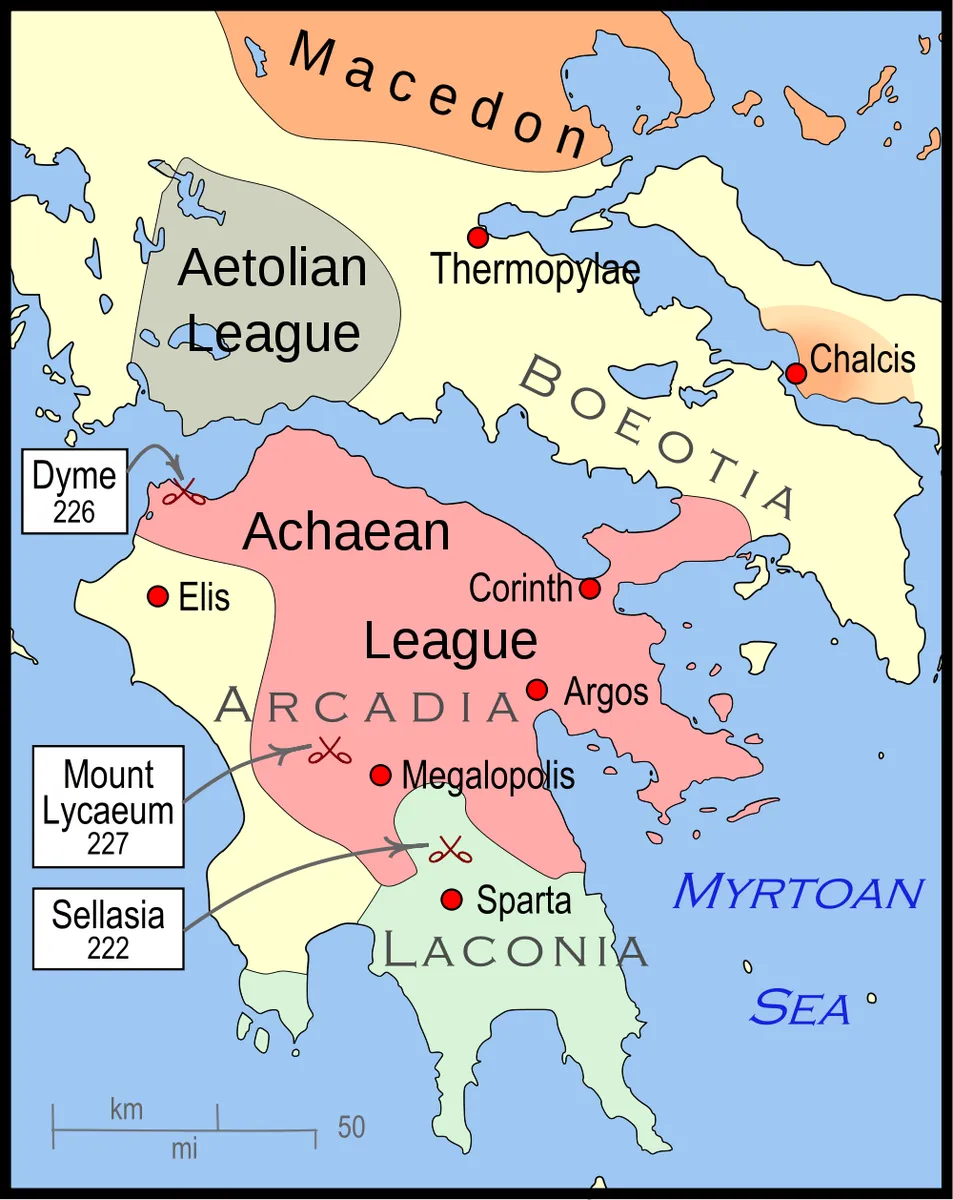 |
Achaean League | One of the major Koinons. Home of Polybius. The most successful attempt of Greek city-states at federalism which balanced need for collective action with the desire for local autonomy. |
Fetters of Greece | (Acrocorinth, Demetrias, Chalchis) The big three stronghold of Greece that are controlled by the Antigonid Macedonians until the Romans. Acrocorinth is an important crossroads between land and sea. Demetrias is a great port. 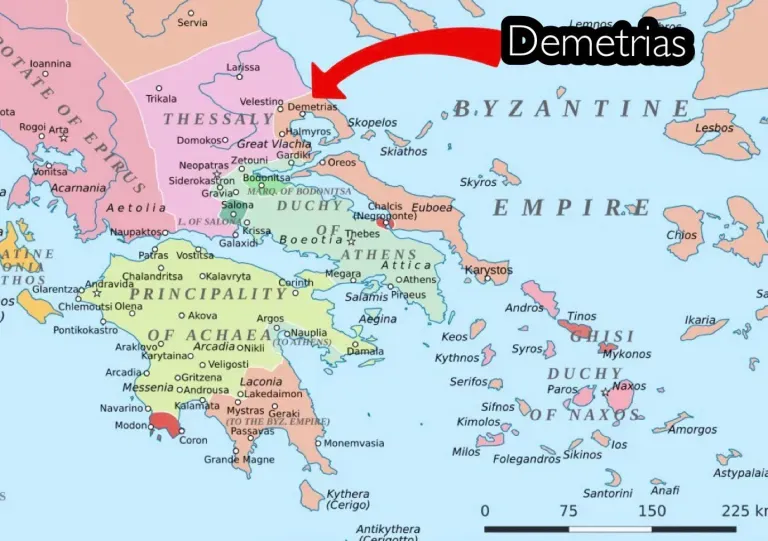 |
Antigonus Gonatus | Antigonid king who reigns from 277/72-239. Winner of the Chremonidean War through great naval victories against Ptolemy II. |
Rhodes | Truly the only successful geopolitical polis player keeping their democratic independence by creating a big navy. This navy allows them to handle pirarcy in the Mediterranean allying themselves with everyone, especially the Ptolemies. 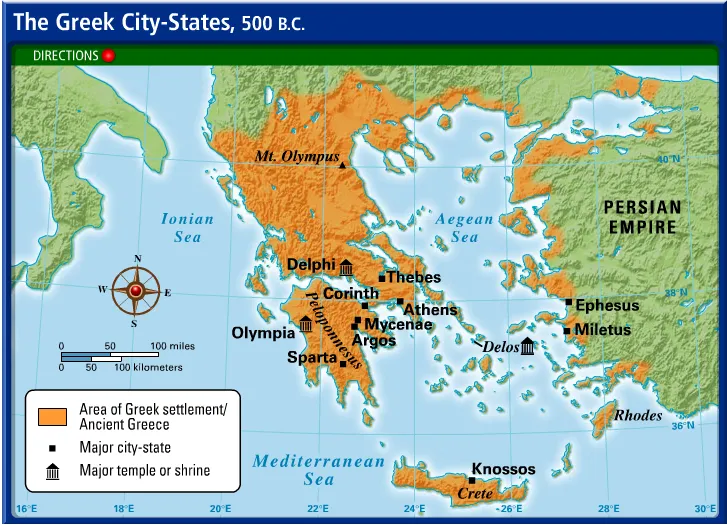 |
Colossus of Rhodes | A symbol of the immense wealth this Greek polis obtained during the Hellenistic era due to their important and powerful navy. It was destroyed by an earthquake. |
Laodice I | Seleucid Queen. Mother of Seleucus II and Antiochus Hierax. Gurantees that her son Seleucus II is the legitmate ruler of the Seleucid empire by having Antiochus II's other wife, Bernike and her infant killed. But then supports her other son Antiochus Hierax when he challenges Seleucus II for the throne. She dies of old age. |
Seleucus II | Seleucid king who reigned from 246-226. Badly loses the third Syrian war but wins the War of the Brothers against his mother and brother to ensure his position as the king. |
Antiochus Hierax | Son of Laodice I and Antiochus II and brother to Seleucus II. Rebels against his brother's rule with the support of his mother but loses the war of the brothers. |
Ptolemy III Euergetes | Ptolemaic king who reigned from 246-222. Wins the third Syrian war with great victories. His phalanx gets as far as Babylon yet is forced to retreat due to an Egyptian revolt. Yet he holds onto Koile Syria and now Seleucia Pieria. Ruler during the peak of Ptolemaic military power. |
Third Syrian War/Laodicean War | War from 246-241. Antiochus II and Ptolemy II die around the same resulting in their heirs (Seleucus II and Ptolemy III) to start a war over Koile Syria. Ptolemy III's faction invades up to Bablyon forcing Seleucus II and Laodice I (his mother) to flee to Antoila. Yet they return when Ptolemy III retreats to handle an Egyptian revolt. Ptolemy III holds onto Koile Syria and now Seleucia Pieria. |
Seleucus III | Seleucid king who reigned from 226-223. Son of Seleucus II and Laodice II. Upon his accession, he immediately began military preparations to reconquer the territories in Asia Minor that had broken away from the empire under Antiochus Hierax in 240 BCE and were subsequently annexed by Attalus I of Pergamon. In 223 BCE, he was assassinated in Asia Minor by courtiers during a campaign against Attalus I of Pergamon. His brother Antiochus subsequently ascended the throne. |
Antiochus III | Seleucid king who reigned from 222 to 187. Brother of Seleucus III and son of Seleucus II and Laodice II. A militarily active ruler, he restored much of the territory of the Seleucid Empire, before suffering a serious setback, towards the end of his reign, in his war against the Roman Republic. Declaring himself the "champion of Greek freedom against Roman domination", he waged a four-year war against Rome beginning in mainland Greece in the autumn of 192 BC before being decisively defeated at the Battle of Magnesia. He died three years later on campaign in the east. He referred to himself as "the Great." |
Seleucus IV | Seleucid king who reigned from 187 to 175. Son of Antiochus III and Laodice III. After the lost at the Battle of Magnesia, he upholds the Treaty of Apamea and robs temples to pay dues to the Romans. |
Antiochus IV | Seleucid king who reigned from 175 to 164. Son of Laodice III and Antiochus III, brother of Seleucus IV. Ascended to the throne while Seleucus IV's son was a hostage in Rome. Notable events during his reign include his near-conquest of Ptolemaic Egypt, his persecution of the Jews of Judea and Samaria, and the rebellion of the Jewish Maccabees. |
Laodice III | Queen of the Seleucid empire and wife of Antiochus III. Mother of Seleucus IV and Antiochus IV. Served as regent while her husband was on military campaigns. From Pontus. |
Euboea | Queen of the Seleucid empire and second wife of Antiochus III. This marriage resulted in the first wife, Laodice III, being pushed to the side in the royal court. From Chalcis. |
Demetrius I | Antigonid king who reigned from 239 to 229. Son of Phila and Antigonus Gonatus. On his accession, he faced a coalition of enemies which included the two great leagues. Usually rivals, the Aetolian and Achaean Leagues now became allies against the Macedonian power. He succeeded in dealing this coalition severe blows, wresting Boeotia from their alliance. |
Antigonus Doson | Antigonid king who reigned from 229 to 221. Half cousin to Demetrius I. Came to power because Demetrius I's son was too young. Started as regent buut impressed the court with his leadership so they called him king. Stopped the Spartan rebellion. |
Philip V | Antigonid king who reigned from 221 to 179. Son of Demetrius I. Won the Social War against the Aetolian League. Lost both of the Macedonian wars against Rome yet aided Rome in their war against the Seleucids. |
Perseus: 179-168 | Antigonid king who reigned from 179 to 168. Son of Philip V. His defeat against the Romans in the Third Macedonian war effectively ended the Antigonid dynasty and Macedonia as an independent entity. |
Pyrrhic Wars | Wars from 280 to 275. Was a conflict fought by Pyrrhus of Epirus and his allies against the Roman Republic, supported by its allies, and Carthage. Fought mainly in Magna Graecia and Sicily, Pyrrhus first intervened at the invitation of the Italiote Greeks against Roman expansion. However, his aims in the war became oriented towards establishing hegemony over southern Italy and Sicily. Initially meeting some success, his aims were left unfulfilled after his campaign in Sicily stalemated against Carthaginian resistance and Rome forced his withdrawal from Italy in 275 BC. The first major conflict involving Rome and one of the Hellenistic powers, Rome's victory showed its emergence as a major Mediterranean power. |
Battle of Raphia | A battle in 217 during the 4th Syrian war between the forces of Ptolemy IV Philopator, king and pharaoh of Ptolemaic Egypt and Antiochus III the Great of the Seleucid Empire. It was one of the largest battles of the Hellenistic kingdoms and of the ancient world, and determined the sovereignty of Coele-Syria. |
Ptolemy I Soter | Hellenstic king who reigned from 306 to 282 and one of Alexander the Great's generals. One of the winners of thee wars of the successors by obtaining Egypt. |
Ptolemy IV Philopater | Ptolemaic king who reigned from 222 to 204? Son of Ptolemy III. Associated with being lazy and unfit to rule. Almost lost the fourth Syrian war and died during the Egyptian Revolt of 206 to 204. |
Ptolemy V | Ptolemaic king who reigned from 204 to 180. Son of Ptolemy IV. He was too young to rule initially so there was a series of failed regents and revolts. When he ruled, he lost Koile Syria in the 5th Syrian War and parts of Egypt due to Egyptian revolts. |
Cleopatra I Syra | Ptolemaic queen who reigned from 195 to 176. Daughter of Antiochus III and Laodice III. Wife of Ptolemy V and is considered to be a co-ruler. Served as regent during her son's rule until she died. |
Cleopatra VII | Ptolemaic queen who reigned from 48 to 31. THE Cleopatra. She served as absolute monarch. Allied herself with Cesear and then allied herself with Mark Anthony during the Roman civil war which proved futile when he lost and then upon her death, Egypt became a Roman province. Ending the Hellenistic period. |
Attalus I | Hellenistic king who reigned from 241 (ish) to 197. First ruler of the Attalid dynasty in Pergamon. Aided the Romans during the first and second Macedonian wars. Gained some territory during these wars. Continually fought the neighboring Seleucids. Funded culture and the arts in Pergamon and Greek cities. |
Eumenes II | Attalid king who reigned from 197 to 159. Son of Attalus I. He continued to aid the Romans in their wars against Macedonia and the Seleucids resulting in Pergamon receiving more treaties. The Romans suspected him of aiding Perseus of Macedon so they tried to replace him with his brother Attalus II but he proved his good faith and continued to rule. |
Attalus II | Attalid king who reigned from 159 to 138. Son of Attalus I and brother of Eumenes II. Helped gain territory as a military commander. Continued the Pergamon tradition of aiding Rome and he was a patron of the arts and sciences. |
Attalus III | Attalid king who reigned from 138 to 133. Son of Eumenes II and nephew of Attalus II. He was uninterested in ruling and left Pergamon to the Roman Republic and he had no male children so the Attalid dynasty ended when the Roman adhered to his will and took Pergamon. |
Pyrrhus of Epirus | He became king of Epirus in 306 BC at the age of 13, but was dethroned by Cassander four years later. He saw action during the Wars of the Diadochi and regained his throne in 297 BC with the support of Ptolemy I Soter. He co-ruled Macedon together with Lysimachus after driving out Demetrius in 288 BC. In 284 BC, he was driven out of Macedon by Lysimachus. During the eponymous Pyrrhic War of 280–275 BC, he fought Rome at the behest of Tarentum, scoring costly victories at Heraclea and Asculum. He proceeded to take over Sicily from Carthage, but after some initial success, he was soon driven out and returned to Italy where he lost all his gains after the Battle of Beneventum in 275 BC. He seized the Macedonian throne from Antigonus II Gonatas in 274 BC and invaded the Peloponnese in 272 BC. The Epirote assault on Sparta was thwarted, however, and he was killed during a street battle at Argos. |
Zeuxis | was a general and official in the service of the Seleucid king Antiochus III the Great at the end of the 3rd century BC. He led the royal forces in Mesopotamia against the rebel Molon, served as the governor of cis-Tauric Asia Minor from 213 BC onwards, and was a general at the Battle of Magnesia. After that defeat he went to Rome to negotiate a peace. |
Polybius | The Achean historian who is our main source for the Hellenistic age. He lived in Rome and wrote during some of events as they were occurring. He aided Demetrius I escape of Rome and he is literally everywhere. |
Agis IV of Sparta | Spartan king who reigned from 245 to 241. He engaged in the reforms; cancellation of debts, redistrubition of land, restoration of the agoge, and restoration of the original syssitia. His ambitious reforms led to his execution. |
Cleomenes III of Sparta | Spartan king who reigned from 235 to 222. Attempted to continue the reforms of Agis IV and was successful. Unfortunately, Sparta was getting too strong and Macedonia invaded resulting in him fleeing to Egypt and committing suicide. |
Nabis of Sparta | The last independent Spartan king who reigned from 207 to 192. During the Second Macedonian War, he sided with King Philip V of Macedon and in return he received the city of Argos. However, when the war began to turn against the Macedonians, he defected to Rome. After the war, the Romans, urged by the Achaean League, attacked him and defeated him. He then was assassinated in 192 BC by the Aetolian League. He represented the last phase of Sparta's reformist period. |
Aratus of Sicyon | Achaean statesman. He was elected strategos of the Achaean League 17 times, leading the League through numerous military campaigns including the Cleomenean War and the Social War. After conquering the Acrocorinth, he pursued the Achaean League's expansion. When the Spartan king Cleomenes III conquered the Achaean cities of Argos and Corinth, he succeeded in securing an alliance with his own erstwhile enemy Antigonus III Doson of Macedon. Cleomenes III was defeated at the Battle of Sellasia by the joint Achaean and Macedonian forces. During the Social War against the Aetolian League, he became one of the prime advisors of the new king of Macedon, Philip V. He died in 213 BC, allegedly poisoned by Philip. |
Philopoemon | Achaean statesman. From the time he was appointed as strategos in 209 BC, he helped turn the Achaean League into an important military power in Greece. He won various battles expanding Achaean influence and his subjugation of Sparta made the league the most influential in the Peloponnese. |
Theocritus | Greek poet from 300 to 260. He invented Ancient Greek pastoral poetry. |
Demetrius of Phaleron | He had been a distinguished statesman who was appointed by Cassander, the King of Macedon, to govern Athens, where he ruled as sole ruler for ten years. During this time, he introduced important reforms of the legal system, while also maintaining pro-Cassander oligarchic rule. When he was exiled he wrote a lot of literary criticism in Alexandria. |
Hannibal | The great Carthaginian general and statesman who led Carthage against the Romans in the Second Punic War, one of the greatest generals in ancient Western history. |
Judas Maccabee | was a Jewish priest (kohen) and a son of the priest Mattathias. He was an early leader in the Maccabean Revolt against the Seleucid Empire, taking over from his father around 166 BCE, and leading the revolt until his death in 160 BCE. The Jewish holiday of Hanukkah ('Dedication') commemorates the restoration of Jewish worship at the Second Temple in Jerusalem in 164 BCE after he removed all of the statues depicting Greek gods and goddesses and purified it. |
Jonathan Maccabee | was one of the sons of Mattathias and the leader of the Hasmonean dynasty of Judea from 160 to 143 BCE. |
Titus Quinctius Flamininus | was a Roman politician and general instrumental in the Roman conquest of Greece |
Lucius Scipio | was a general and statesman of the Roman Republic. He was the son of Publius Cornelius Scipio and the younger brother of Scipio Africanus. He was elected consul in 190 BC, and later that year led (with his brother) the Roman forces to victory at the Battle of Magnesia. |
Scipio Africanus | was a Roman general and statesman who was one of the main architects of Rome's victory against Carthage in the Second Punic War. Often regarded as one of the greatest military commanders and strategists of all time, his greatest military achievement was the defeat of Hannibal at the Battle of Zama in 202 BC. |
Aemilius Paullus | was a consul of the Roman Republic, as well as a general, who conquered the Antigonid kingdom of Macedon during the Third Macedonian War. |
Scipio Aemilianus | was a Roman general and statesman noted for his military exploits in the Third Punic War against Carthage and during the Numantine War in Spain. He oversaw the final defeat and destruction of the city of Carthage. He was a prominent patron of writers and philosophers, the most famous of whom was the Greek historian Polybius. In politics, he opposed the populist reform program of his murdered brother-in-law, Tiberius Gracchus. |
Sulla | was a Roman general and statesman of the late Roman Republic.[8] He came to prominence for his military exploits and was the first general during the late republic to march on Rome and win a civil war. After purging his opponents, he assumed the dictatorship, sought to strengthen the republican system through constitutional reforms, and resigned his plenary powers after their enactment. |
Pompey the Great | was a Roman general and statesman who was prominent in the final decades of the Roman Republic. As a young man, he was a partisan and protégé of the dictator Sulla, after whose death he achieved significant military and political success. |
Julius Caesar | was a Roman general, statesman, and author who was the dictator of the Roman Republic almost continuously from 49 BC until his assassination in 44 BC. A member of the First Triumvirate, he led the Roman armies through the Gallic Wars and defeated his political rival Pompey in Caesar's civil war. He consolidated power and proclaimed himself dictator for life in 44 BC, helping create the political conditions that led to the collapse of the Roman Republic and the emergence of the Roman Empire. For his role in these events, he is regarded as one of history’s most influential figures. |
Battle of Paneion | A battle in 200 between Seleucid and Ptolemaic forces as part of the Fifth Syrian War. The Seleucids were led by Antiochus III the Great, while the Ptolemaic army was led by Scopas of Aetolia. The Seleucids achieved a complete victory, annihilating the Ptolemaic army and conquering the province of Coele-Syria. |
Battle of Cynoscephalae | was an encounter battle fought in Thessaly in 197 BC between the Roman-Aetolian army, led by Titus Quinctius Flamininus, and Antigonid Macedon, led by Philip V, during the Second Macedonian War. It was a decisive Roman victory and marked the end of the conflict. |
Battle of Pydna | took place in 168 BC between Rome and Macedon during the Third Macedonian War. The battle saw the further ascendancy of Rome in the Hellenistic world and the end of the Antigonid line of kings. |