Photosynthesis
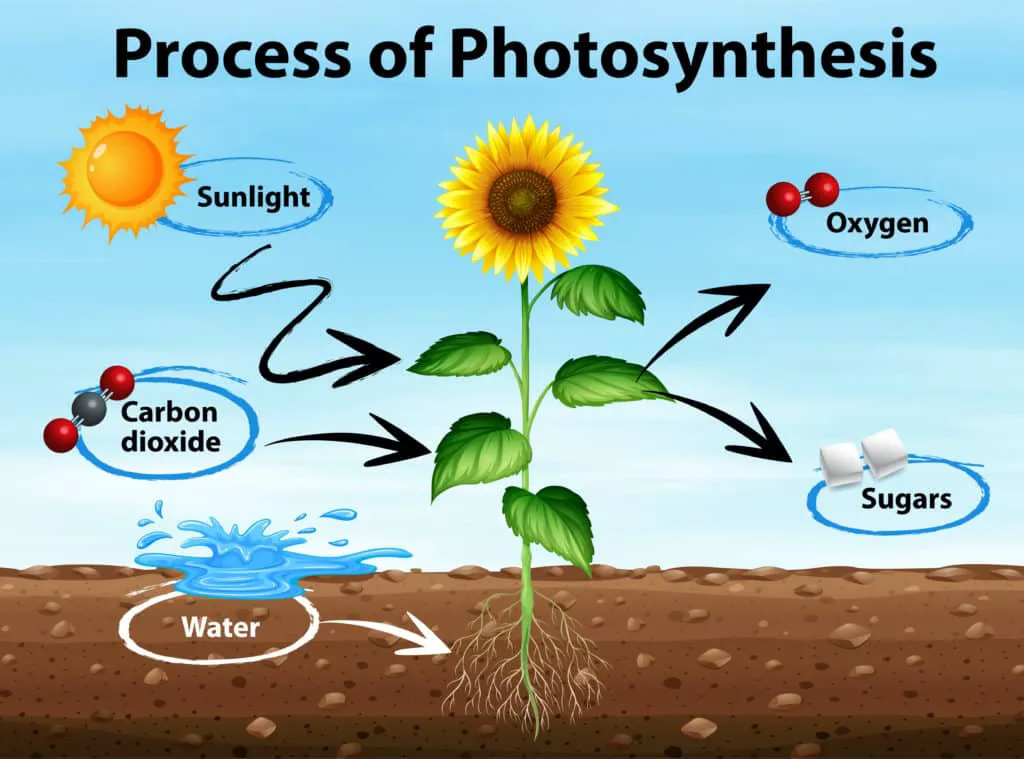
A metabolic pathway that is the process of using sunlight to make glucose, a two stage process
Light-dependent Reactions (LDR)
▪ Requires Light
▪ Produces ATP and NADPH
▪ Occurs in the thylakoid membranes
Light-independent Reactions (LIR)
▪ Uses ATP and NADPH as energy
▪ Produces glucose
▪ Occurs in the stroma
| Term | Definition |
|---|---|
Photosynthesis | A metabolic pathway that is the process of using sunlight to make glucose, a two stage process
Light-dependent Reactions (LDR)
▪ Requires Light
▪ Produces ATP and NADPH
▪ Occurs in the thylakoid membranes
Light-independent Reactions (LIR)
▪ Uses ATP and NADPH as energy
▪ Produces glucose
▪ Occurs in the stroma
|
Summary reaction of photosynthesis | 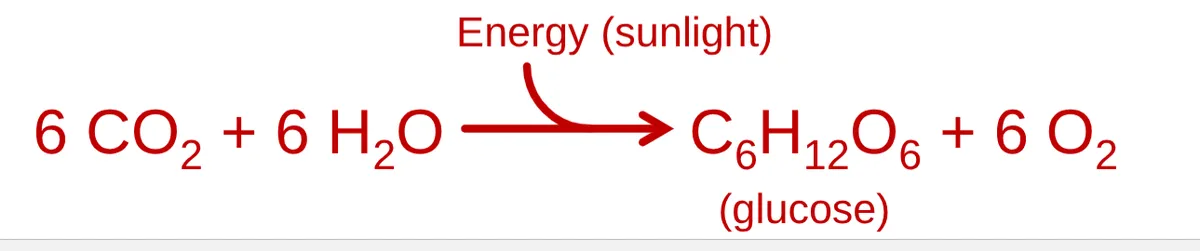 |
Chloroplast | A plastid that has the functions of photosynthesis and storage
|
Parts of chloroplast | Thylakoid, granum(stack of t), outer and inner membrane, stroma, stroma thylakoids, and thylakoid space |
Thylakoid | Part of chloroplast in the thylakoid membrane system, light-dependent reactions occur here |
Stroma | Part of chloroplast, Photosystem 1 occurs mostly here, Light-independent reactions occur here, the final step of ETC2 occurs here, ATP-synthase generates ATP here, Calving Cycle occurs here
|
Light-dependent reaction(LDR) | Requires light, produces ATP and NADPH, and occurs in the thylakoid membrane |
Light-independent reaction(LIR) | Uses ATP and NADPH as energy, produces glucose, and occurs in the stroma
|
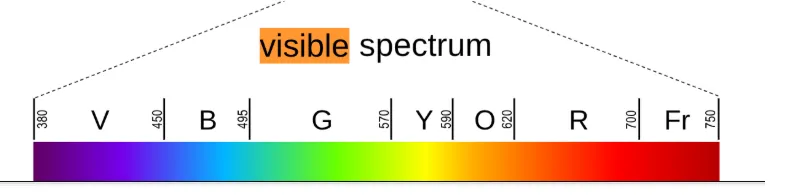
Electromagnetic spectrum | It is the only part our eyes can detect
Ranges from 380 nm (violet) to 750 nm (far-red)
 |
Wavelength | 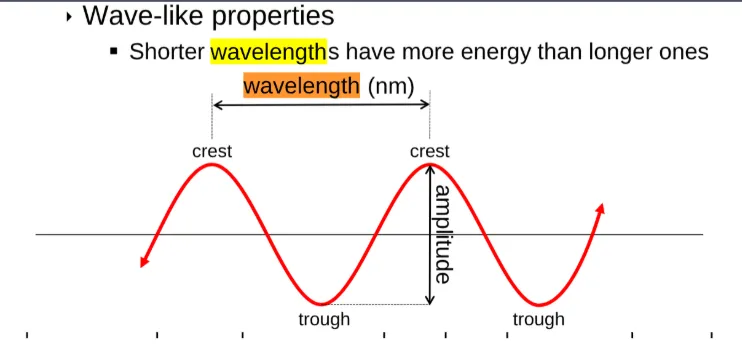 |
Photon | Particles of light that have zero mass, photon energy is inversely related to wavelength |
Pigments (photopigments) | Substances that absorb light, pigment color is determined by wavelengths that
are not absorbed, unabsorbed wavelengths are reflected or transmitted
|
Ground state | The lowest energy state 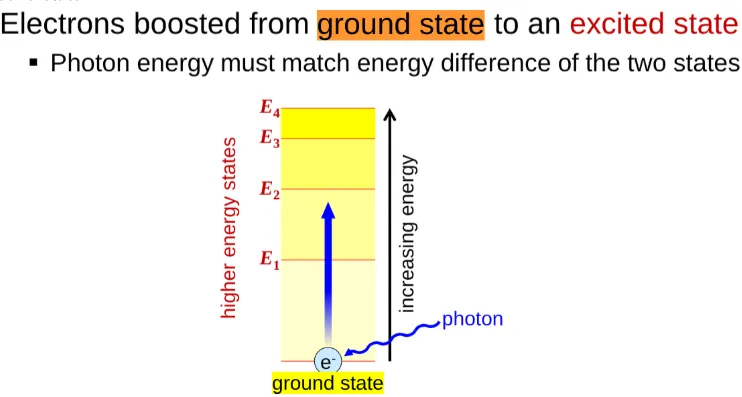 |
Fluorescence | Release of a less energetic photon |
Chlorophylls | Chl-a, b, c, and Bacteriochlorophylls |
Chl-a | Primary pigment in plants |
Chl-b | Accessory pigment in plants |
Chl-c | Accessory pigment in algae |
Bacteriochlorophylls | Pigment in bacteria |
Phycobilins | Cyanobacteria & red algae |
Carotenoids | Accessory pigments(Carotenes (e.g., β-carotene, lycopene, Xanthophylls),
Also function as anti-oxidants
|
Carotenes | B-carotene, lycopene
|
Absorption spectrum | The wavelengths absorbed by a pigment |
Action spectrum | The wavelengths used by a specific process |
Photosystem complexes | A large protein-pigment supercomplex
|
Reaction center | A special pair of chl-a molecules, plus associated proteins, enzymes, and ETC
|
Antenna complexes | Surrounds the reaction center, pigment-binding proteins hold pigments in place
|
Light-harvesting complexes(Lhc) | External to other complexes, smaller and lack a reaction center |
Photosystem I (P700 reaction center) | Found mostly in stroma thylakoids
P700 reaction center
Lacks O-evolving center
|
Photosystem II (P680 reaction center) | Found mostly in grana thylakoids
P680 reaction center
Has O-evolving center
|
Photolysis | The splitting of water by photosystem 2 |
Oxygen-evolving (water-splitting) Complex | Splits water molecules generating electrons, H+, and oxygen (O2)
|
Non-cyclic photophosphorylation | A light-dependent reaction |
Cyclic photophosphorylation | Light-independent Reaction that requires ATP and NADPH
▪ More ATP is used than NADPH
▪ This results in a build-up of excess NADPH |
Electron Transport Chain (ETC1 & ETC2)
| Occur in non-cyclic photophosphorylation, |
Pheophytin | The primary electron acceptor (PEA) for PSII |
Plastoquinone (PQA & PQB)
| A mobile, lipid-soluble electron carrier molecule embedded within the thylakoid membrane of chloroplasts |
Plastoquinol (PQBH2)
| The fully reduced, proton-rich form of plastoquinone |
Plastocyanin (PC)
| A small, water-soluble, copper-containing protein located on the lumenal side of the thylakoid membrane |
Cytochrome Complex | A massive, multi-subunit integral membrane protein complex embedded within the thylakoid membrane |
A1 (phylloquinone) | A tightly bound, lipid-soluble electron carrier molecule located within the core of Photosystem I (PSI) |
Fe-S Protein Complex | An array of 3 iron-sulfur proteins bound to PSI |
Ferredoxin (Fd) | Allows for chemiosmosis to continue producing ATP |
FNR (ferredoxin-NADP+ reductase) | The final enzyme in the electron transport chain of light-dependent photosynthetic reactions |
NADPH/NADP+ | Form the primary coenzyme system responsible for transferring reducing power in anabolic (building) biological reactions |
ATP-synthase | Molecular rotary motor embedded in the thylakoid membrane that synthesizes ATP from ADP and inorganic phosphate |
Calvin Cycle | The term for light-independent reactions that converts CO2 into G3P and has three stages, Carbon Fixation Stage, Reduction Stage, and Regeneration Stage. This cycle occurs in the stroma of the chloroplast
|
Carbon Fixation Stage | The first stage in the Calvin Cycle where CO2 is added to RuBP and Two molecules of PGA (3-phosphoglycerate) are formed |
Ribulose 1,5-bisphosphate (RuBP) | A 5-carbon sugar |
Rubisco (RuBP carboxylase/oxygenase)
| Catalyzes RuBP |
3-Phosphoglycerate (PGA)
| A three-carbon organic molecule that serves as the crucial first stable intermediate product of carbon fixation in the Calvin Cycle |
1,3-bisphosphoglycerate (1,3-PGA)
| Serves as the short-lived structural bridge inside the Calvin Cycle that connects the carbon fixation stage to the sugar reduction stage. |
Photorespiration | (also known as the oxidative photosynthetic carbon cycle) is a wasteful metabolic pathway that occurs in plants when the enzyme Rubisco accidentally fixes molecular oxygen instead of carbon dioxide |
Phosphoglycolate
| A 2-C molecule, used in photorespiration |
C3 Photosynthesis
| The metabolic pathway for carbon fixation,l not very effective in harsh weathers |
C4 Photosynthesis
| An advanced evolutionary upgrade to the standard C3 pathway designed to completely bypass the wasteful process of photorespiration |
PEP-carboxylase | Binds CO2 to PEP to make oxaloacetate, occurs during C4 Photosynthesis |
Kranz Anatomy | C4 plants often exhibit Kranz anatomy
▪ Spatial separation of C4 pathway and Calvin Cycle
This has evolved independently many times
|
Bundle Sheath Cells
| Specialized plant cells that form a tightly packed protective layer around the vascular bundles (the phloem and xylem veins) inside a leaf |
Mesophyll Cells | Specialized, chlorophyll-rich parenchyma cells located in the interior of a plant leaf, positioned between the upper and lower epidermal layers |
Crassulacean Acid Metabolism (CAM) | A photosynthetic pathway in some succulents |
Stomata | open at night and close during the day in CAM |
How many ATP are required to make one glucose molecule by photosynthesis? | 18 |
Cyclic photophosphorylation allows for the continued production of which molecule? | ATP |
How many carbon dioxide molecules must pass through the Calvin cycle to make one glucose molecule? | 3 |
For each surplus G3P molecule made by the Calvin cycle, how many more ATP are used than NADPH? | 3 |
C4 plants increase the efficiency of photosynthesis by doing what? | Actively moving carbon dioxide into the bundle-sheath cells |
Where does the Calvin Cycle occur | In the Stroma of the Chloroplast |
How many G3P molecules are required to reform the RuBP used in the Calvin cycle? | 5 |
Cyclic photophosphorylation allows for the continued production of which molecule? | ATP |
A plant with Kranz anatomy would most likely be doing what? | C4 photosynthesis |