PHD Immunodeficiencies and Immunoproliferative Disorders Exam 2
Created by leonardwells
immunodeficiency
disorders in which a part of the immune system is missing or dysfunctional is called?
| Term | Definition |
|---|---|
immunodeficiency | disorders in which a part of the immune system is missing or dysfunctional is called? |
congenital; genetic defects, manifest early in life; 1 in 500 newborns in the US | what are primary immunodeficiencies? |
acquired; not inherited diseases, develop as a result of malnutrition, cancer, immunosuppressive medications, microbial infections, radiation | what are secondary immunodeficiencies? |
group of related dzs that affect T and B cell fx but with different causes | what are severe combined immunodeficiencies (SCID)? |
ADA (adenosine deaminase) deficiency; mutations in ADA gene | what is the autosomal recessive deficiency in SCIDs? |
ADA is required for purine metabolism; complete lack of T, B, and NK cells and reduced serum Igs; defective ADA leads to buildup of deoxyadenosine to toxic levels-> T and B cells die | what is the pathogenesis of ADA deficiency/mutation in the ADA gene? |
ADA converts deoxyadenosine to deoxyinosine which is used in DNA synthesis | what is the function of normal ADA? |
Digeorge syndrome; 22q11.2; deletion of TBX1 (t box 1) gene 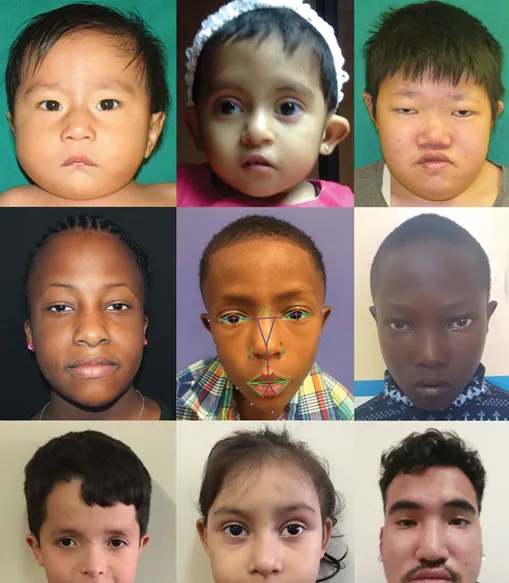 | this deletion eliminates genes required for thymus and parathyroid gland development; patient present decreased T cell production due to an absent or poorly developed thymus and abnormal Ca homeostasis; what is this condition? |
wiskot aldrich syndrome | X linked immunodeficiency with eczema and thrombocytopenia |
abnormal CD43 caused by mutated WAS-> defective actin polymerization and signal transduction in lymphs and platelets | what is the pathogenesis of wiskott aldrich syndrome? |
presents in first 5 years of life; thrombocytopenia, dysfunctional plts, eczema, low IgM/IgG, and normal/elevated IgA/IgE | how does wiskott aldrich syndrome present in patients? |
defective AT gene resulting in defective kinase activity involved in DNA repair and cell cycle control; faulty TCR and Ig rearrangement | what is the pathogenesis of ataxia telangiectasia (AT)? |
ataxia telangiectasia; involuntary movements and dilated vessels around face and neck | autosomal recessive syndrome that affects the nervous system and immune system; what is this disease called? |
transient hypogammaglobulinemia | a condition in which infants present with low Ig levels at 5-6 months or longer, normal cell mediated immunity and IgM/IgA, but mostly IgG affected. what is this condition called? |
9-15 months of age; after one year of age | when do Ig levels return to normal levels in transient hypogammaglobulinemia? |
X linked bruton's tyrosine kinase (Btk) deficiency | a patient presents with no plasma cells in lymphoid tissue, normal T cells and pre B cells in BM, small tonsils/adenoids, and lack circulating mature CD19 B cells with lack of all Ig classes. what is this immunodeficiency called? |
deficient Btk which participates in VH gene rearrangement thus B cells cant form mature B cells; arrested differentiation at the pre B cell stage | what is the pathogenesis of Btk deficiency? |
LYST | what is the lysosomal trafficking protein? |
chediak higashi syndrome | a patient's blood smear reveals giant lysosomes in neutrophils, lymphs, and monos. the patient has an increased susceptibility to infections, albinism, and lysosomal abnormalities in nerve cells and platelets. what is this immunodeficiency? |
LYST mutation; defective phagosome-lysosome fusion in neutrophils and macrophages | what is the pathogenesis of chediak higashi syndrome? |
chronic granulomatous disease (CGD) and leukocyte adhesion deficiency (LAD) | what two congenital defects prevent effective killing of pathogens and are characterized by abnormalities of phagocytic cells? |
chronic granulomatous disease (CGD) | the disease in which 70% of cases are X linked with recurrent suppurative infections, pneumonia, osteomyelitis, draining adenopathy, liver abscess, dermatitis, and hypergammaglobulinemia is called? |
alterations of multiple genes that result in defective NADPH oxidase leading to faulty oxidative burst; inability of neutrophils to produce reactive forms of oxygen | what is the pathogenesis of chronic granulomatous disease? |
nitro tetrazolium blue slide test | what test could be ordered to confirm a preliminary diagnosis of CGD? |
free oxygen radicals reduce NBT to formazan which forms a blue/black precipitate; no ROS=no precipitate (CGD); ROS present= precipitate | how does the nitro tetrazolium blue (NBT) slide test work in patients with/without CGD? |
gp91phox coded by CYBB | a defect in which NADPH oxidase structure is X linked and the cause of CGD in 65% of patients? |
bacterial infections (S. aureus, B. cepacian, S. marcescens), fungal infections; abscess formation in lungs, liver, spleen, bones, or skin 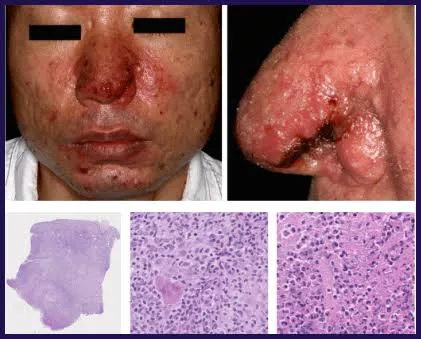 | patients with CGD are susceptible to what kind of infections and present with what common clinical symptom? |
leukemias, lymphomas, and plasma cells dyscrasias/monoclonal gammopathies | what are 3 lymphoid malingancies? |
leukemia | which lymphoid malignancy originates from the hematopoietic cells in the BM which migrate to the peripheral blood? |
lymphoma | which lymphoid malignancy forms solid tumors that arise in lymph nodes? |
plasma cell dyscrasia/monoclonal gammopathy | which lymphoid malignancy is a plasma cell malignancy that involve BM, lymphoid organs, and other non lymphoid tissue? |
ALL, CLL, and hairy cell leukemia | what are 3 immunoproliferative leukemias? |
hodgkin lymphomas and non-hodgkin lymphoma | what are 2 immunoproliferative lymphomas? |
monoclonal gammopathy of undetermined significance (MGUS), multiple myeloma, waldenstrom macroglobulinemia, and heavy chain diseases | what are 4 immunoproliferative plasma cell dyscrasias? |
acute leukemia | what type of leukemia presents with malignant cells that multiply rapidly in the BM and crowd out normal hematopoietic precursors, and is rapidly progressing and can become fatal in weeks or months? |
chronic leukemia | what type of leukemia involves mature cells and is slow progressing? |
acute lymphoblastic leukemia (ALL) | what leukemia is characterized by the presence of poorly differentiated precursor cells (blasts) in BM and peripheral blood, can infiltrate soft tissues, and common in children? |
CD10 (other markers, TdT, HLA-DR, CD79a, CD19, CD22, and CD35); B cell origin | what is the common ALL antigen? |
CLL/small lymphocytic leukemia (SLL) | which leukemia is negative for CD10? |
CLL/SLL | what leukemia may involve B,T, or NK cells, most common in adults >50, and is compatible with long survival? |
single malignant clone derived from a mature B lymphocyte that is dysfunctional; accumulates in BM, blood, and lymphoid organs | what is the pathogenesis of CLL/SLL? |
lymph node enlargement, anemia, and thrombocytopenia | even though it presents with various nonspecific symptoms, what can a patient with CLL/SLL present with? |
deletion/mutation of 17q and/or TP53 | what is the genetic abnormality that causes CLL/SLL? |
hairy cell leukemia | which leukemia presents with infiltration of the BM and spleen without lymph node involvement, seen in adults >50, and cells have irregular cytoplasmic projections? |
CD103 and CD123; BRAF-V600E mutation | what markers are and mutations are diagnostic of hairy cell leukemia? |
it causes a hyperactive kinase which leads to constant cell proliferation without a stimulus | why does the mutation of the BRAF-V600E gene cause hairy cell leukemia? |
hodgkin lymphoma (HL) | what lymphoma is associated with EBV infection, young adults and elderly, and peripheral lymph node involvement? |
classic HL and nodular lymphocytic predominant HL (NLPHL) | what are the two types of hodgkin lymphomas? |
reed sternberg cells; classical HL | a lymph node biopsy was taken from a patient and the pathologist found this. what are these cells and what disease are they associated with? 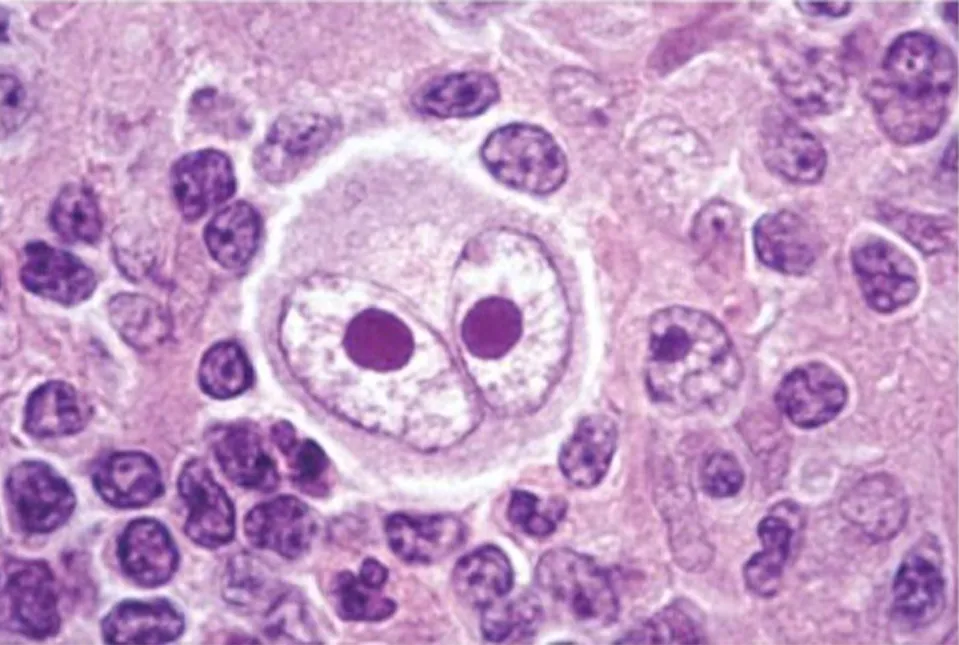 |
popcorn cells; nodular lymphocytic predominant HL (NLPHL) | a lymph node biopsy was taken from a patient a the pathologist found this. what are these cells and what disease are they associated with? 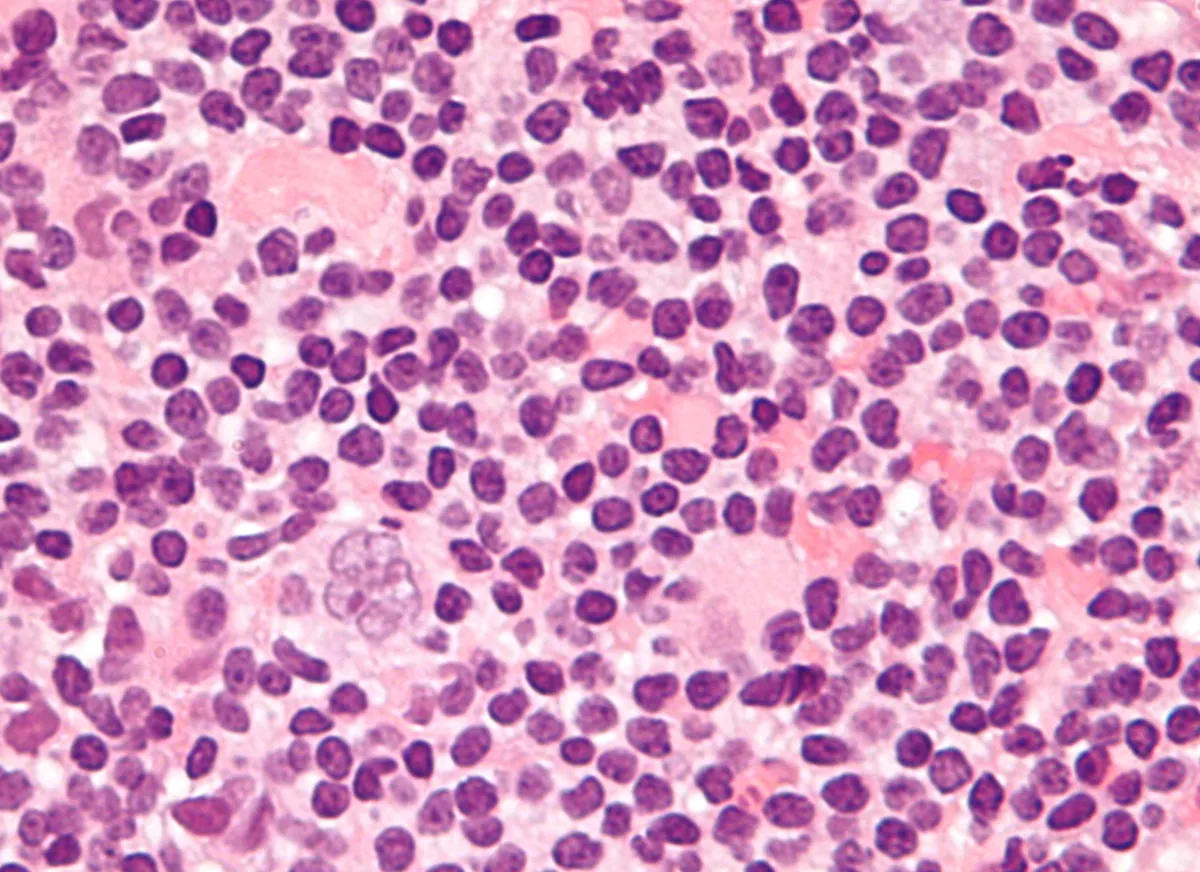 |
NHL | NHL 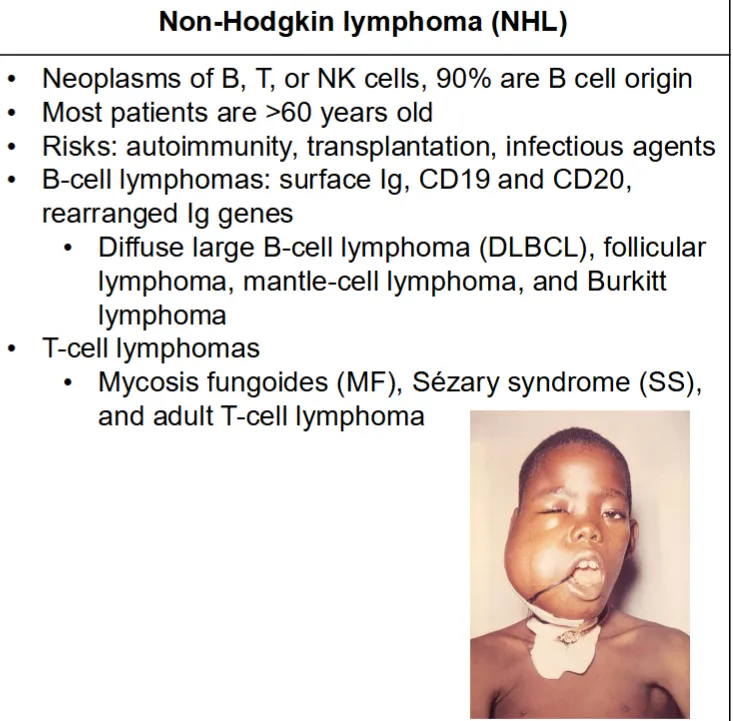 |
multiple myeloma | what immunoproliferative disease is characterized by excess plasma cells in BM, monoclonal Ig in plasma/urine, and lytic bone lesions? |
excess kappa and lambda light chain production in blood; bence jones proteins in urine; CD38, 56, 138, and 20; | what are the markers present in multiple myeloma? |
increased calcium (hypercalcemia), renal failure (neuropathy), anemia (thrombocytopenia, neutropenia, hemorrhaging, bruising), and lytic bone lesions; CRAB | what are signs and symptoms of multiple myeloma? |
infections, autoimmunity, liver dz, and immunodeficiency | for a serum protein electrophoresis, what conditions would you see a polyclonal increase? 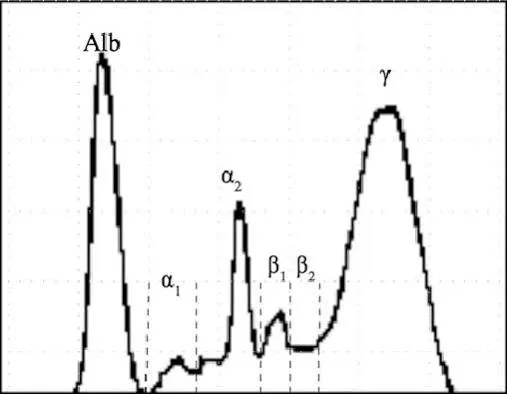 |
plasma cell dyscrasia and myeloma | for a serum protein electrophoresis, what conditions would you see a monoclonal increase? 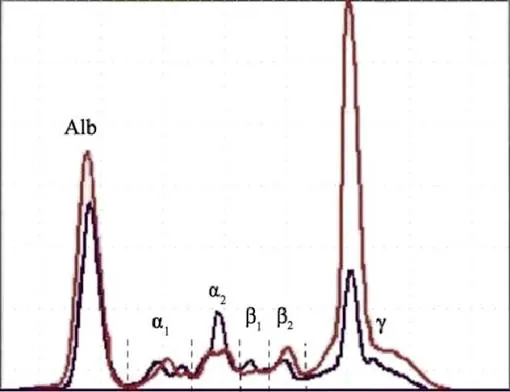 |
serum immunofixation electrophoresis (SIE) | these images are examples of what kind of test? 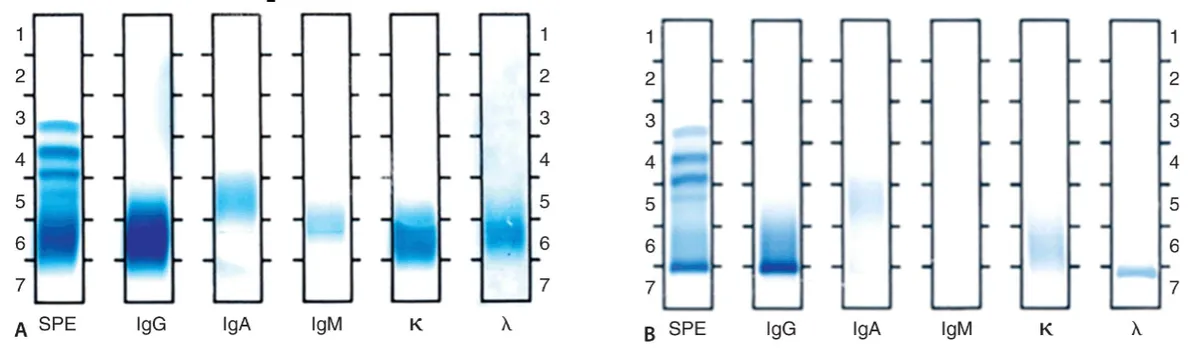 |
monoclonal gammopathy | this SIE pattern can be interpreted as what condition? 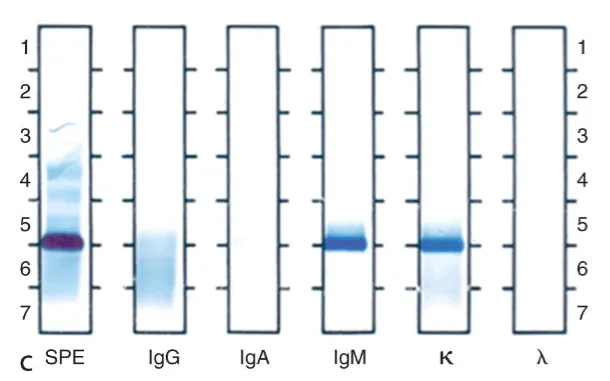 |
abnormal fusion of the BCR gene on chromosome 22 with ABL1 gene on chromosome 9 producing t(9;22)(q34;q11); philadelphia chromosome | what is the genetic hallmark of CML? |
BCR-ABL1 fusion noted as an abnormally short chromosome 22; leads to tyrosine kinase enhancing growth and proliferation of precursor myeloid cells via downstream pathways (RAS, RAF, JUN, MYC, STAT) | what is the pathogenesis of CML? |
philadelphia chromosome; CML | in this image of a FISH analysis, the red and green signals are chromosomes. the arrows point to where the two chromosomes meet. this can be labelled as what? 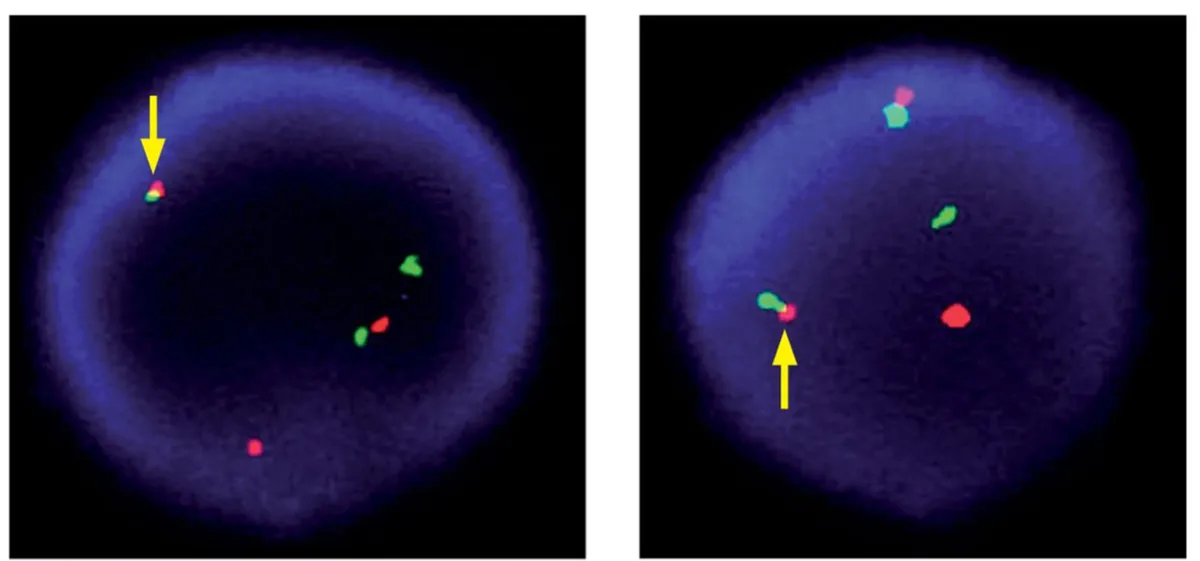 |