The Double Helix
For information transfer in living material, specific pairing we
have postulated immediately suggests a possible copying
mechanism for the genetic material
The continuity of life is based on heritable information (in the form of DNA). The combination of unity and diversity can only be understood in light of evolutionary processes
| Term | Definition |
|---|---|
The Double Helix | For information transfer in living material, specific pairing we
have postulated immediately suggests a possible copying
mechanism for the genetic material
The continuity of life is based on heritable information (in the form of DNA). The combination of unity and diversity can only be understood in light of evolutionary processes |
Molecular Biology | our understanding of:
• the origins of living organisms
• human evolution
• variations in human behaviour
• the causes of human diseases and mental health disorders |
Chromatin | combination of DNA and proteins that make up the contents of
the nucleus of a cell. Chromatin condenses into chromosomes |
chromosome | Each chromosome contains a single continuous piece of DNA. 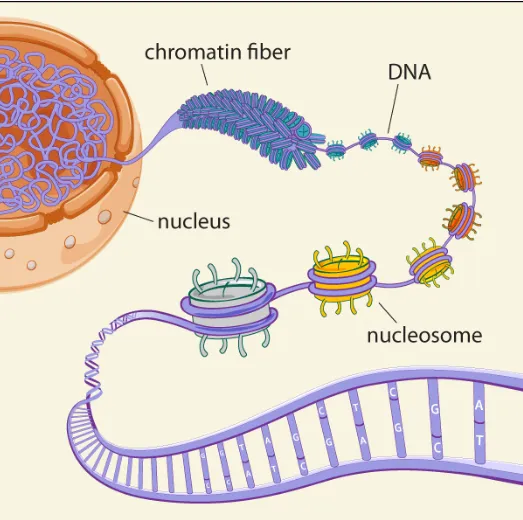 |
Genome | Equals the sequence of one full copy 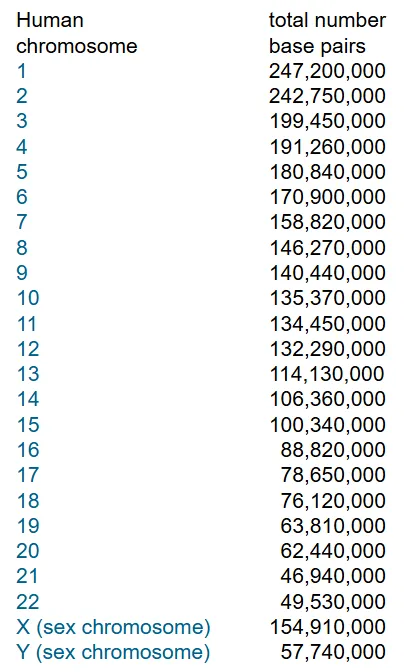 |
Components of DNA | Four nucleotide types:
Adenine
Guanine
Cytosine
Thymine |
Hydrogen bonds (electrostatic) | Adenine forms a bond with Thymine
Cytosine bonds with Guanine |
Replication | DNA replication is semi-conservative.
In replicating, one half of the old strand is kept in the new strand. This reduces copy errors 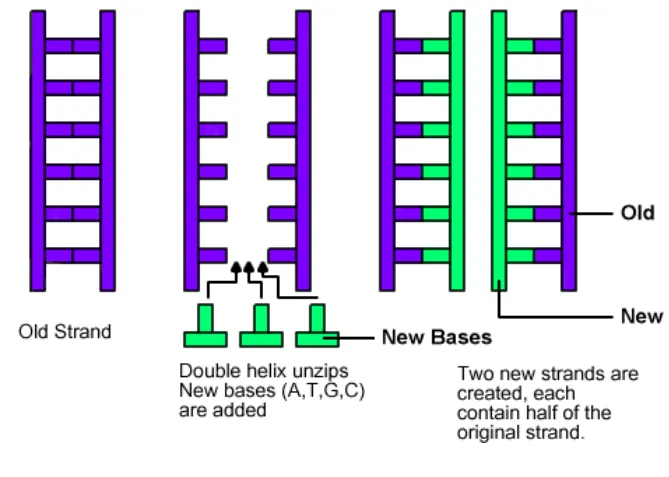 |
The Central Dogma of Molecular Biology | information cannot be transferred back from protein to either protein or nucleic acid 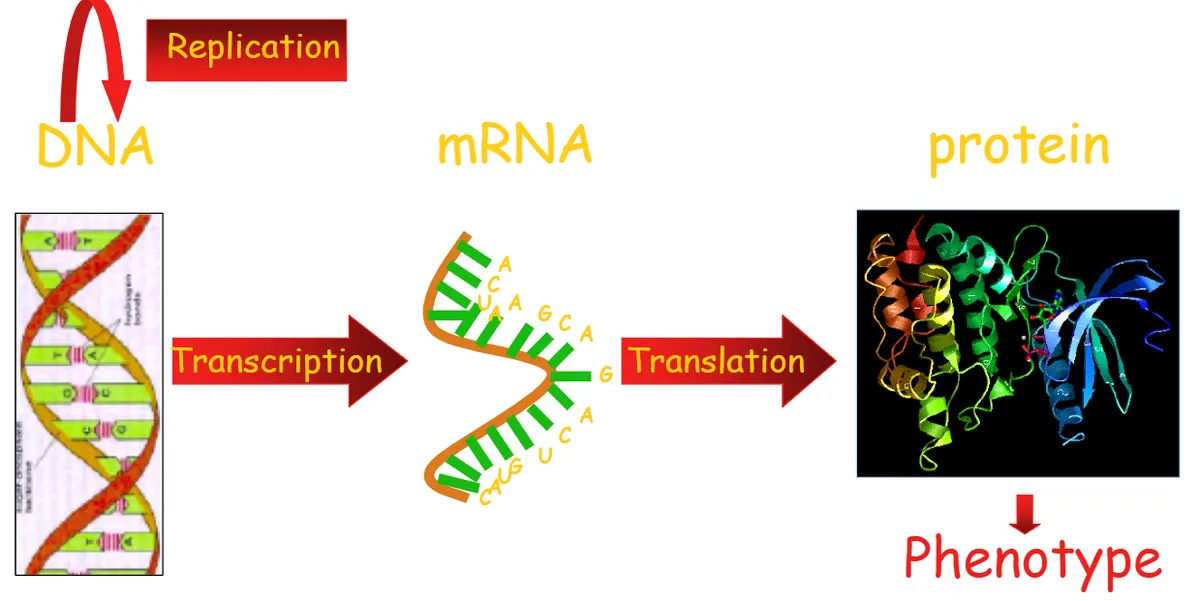 |
RNA: Ribonucleic acid | Transfer the genetic code needed for the creation of proteins from the nucleus to the ribosome
RNA strands are continually made, broken down and reused. |
DNA | Long-term storage and transmission of genetic information
DNA is protected in the nucleus, as it is tightly packed |
RNA codon table - Marshall Nirenberg | 4 bases, 3 per codon = 43 = 64 codons, 20 amino acids
UUU - phenylalanine
AAA - lysine
CCC - proline
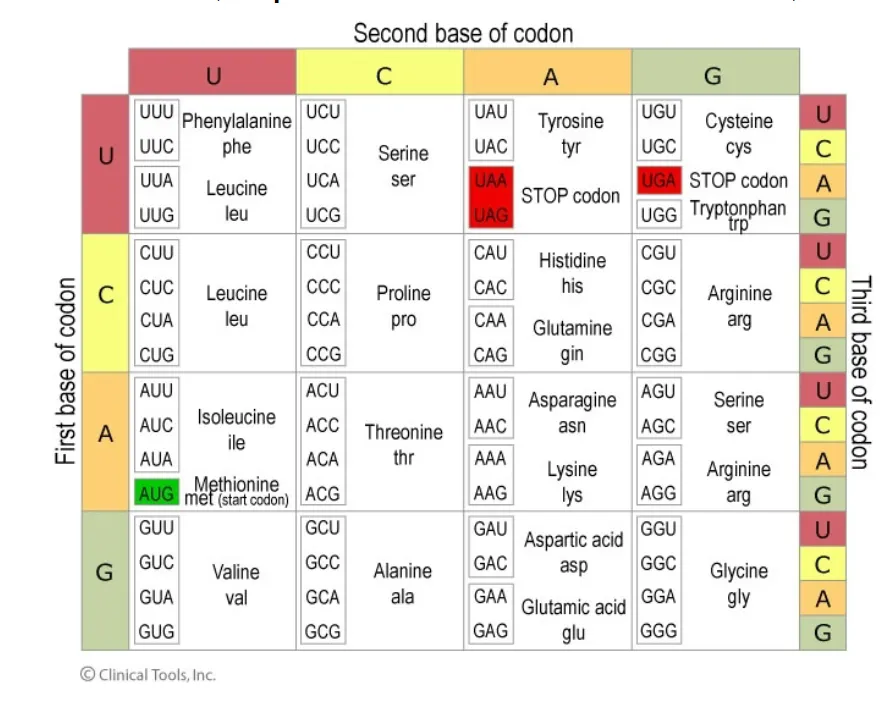 |
Amino Acid Structures | 20 amino acids are encoded directly by the codons of the universal genetic code |
Protein Structure | Proteins are polypeptides of 70-3000 amino-acids
• This structure is (mostly) determined by the sequence of amino-
acids that make up the protein |
Effect of an Amino Acid Change | 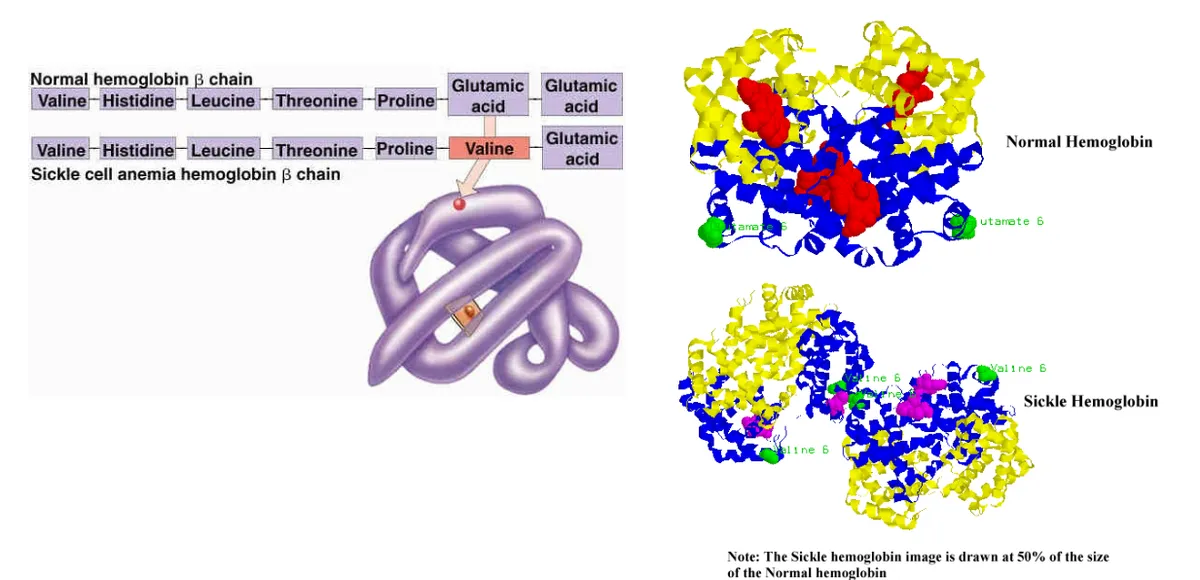 |
What is a Gene | A union of genomic sequences encoding a coherent set of
potentially overlapping functional products. |
Alternative Splicing | A regulated process during gene expression that results in a single gene coding for multiple proteins (~95% of multi-exonic genes in humans).
Allows the human genome to direct the synthesis of many more proteins than would be expected from its 20,000 protein-coding genes 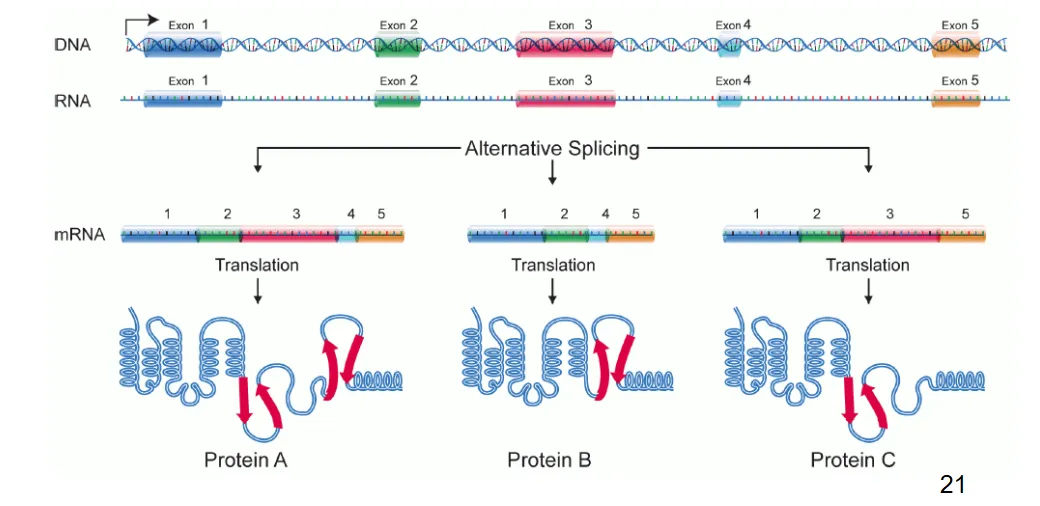 |
Mutation within chromosome | The ultimate cause of diversity in the genome
Covers a broad variety of events that vary in scale, cause, and phenotypic effect
– neutral: no readily discernible effect on the phenotype at the time they occur
– deleterious: to greater or lesser extents, may be eliminated by natural selection
– beneficial: increasing an organism’s fitness in its present environment, expect such mutations to spread in the
population |
actors Affecting Genetic Diversity | If a new mutation (a new allele) in a population is neutral
(being neither advantageous nor deleterious), then its fate is determined by random genetic drift
In the absence of selection, allele frequencies in large populations
change only slowly over generations (left). In small populations, the stochastic nature of reproductive processes means that alleles may be lost or fixed within a few generations (right). 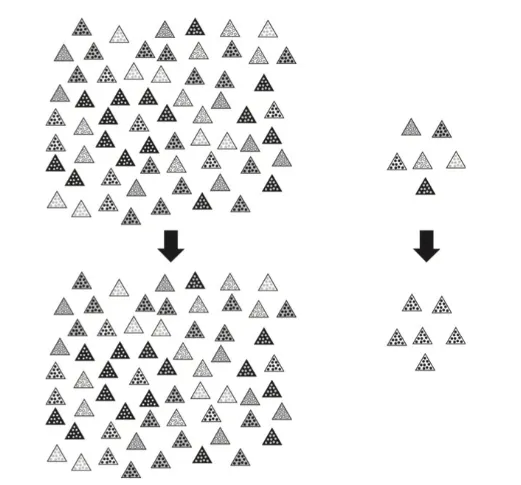 |
Bottlenecks and Founder Effects | A reduction in effective population size, whether because of reduction in total population size by, for example, disease (a
bottleneck) or because of isolation of a subpopulation (founder
effect),will reduce genetic diversity.
• Subsequent population expansion is derived from only a small
sample of the genetic diversity present in the original population 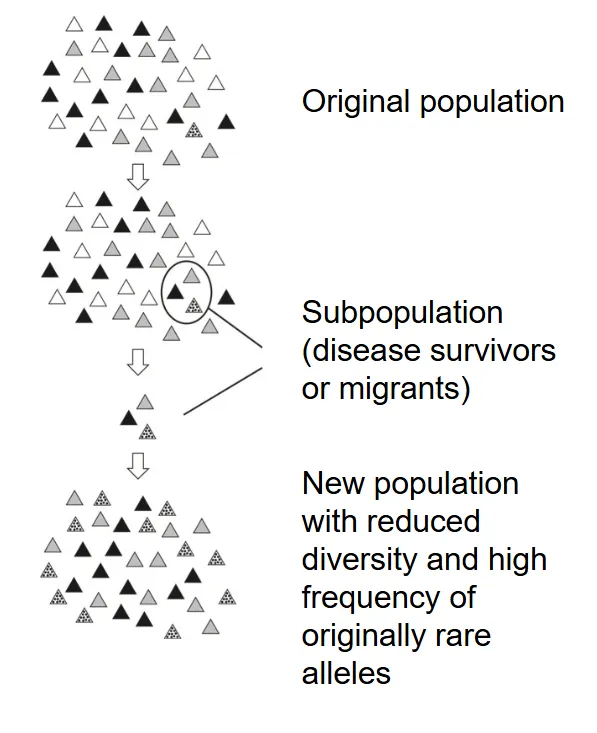 |
Classes of Sequence Variation | Single nucleotide polymorphisms (or SNPs),
Insertions or deletions of one or more nucleotides (indels),
Variable number of tandem repeats (VNTRs):
– changes in the number of repeat sequences arranged in tandem (next to each other) arrays
Presence or absence of transposable elements,
Structural polymorphism
– including segmental duplications and copy-
number variants (CNVs) |
GWAS Revisited | Most sequence variations associated with mental health
disorders represent very small effect sizes. 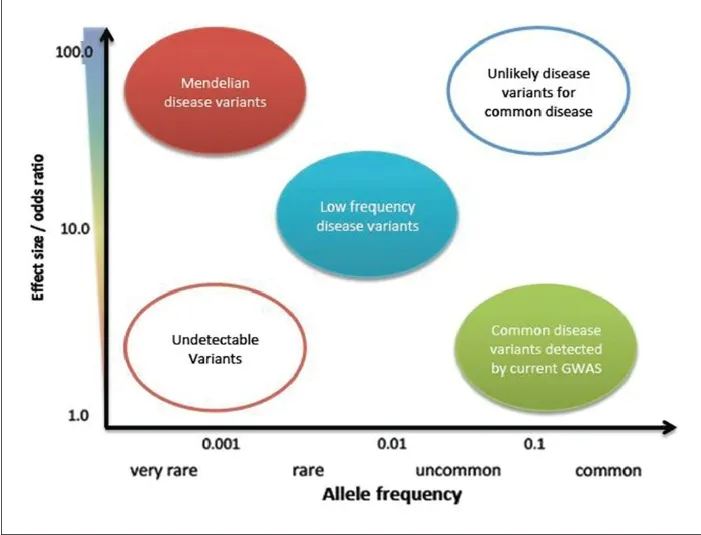 |
Schizophrenia as an Exemplar | Is it a specific disease with a common biological origin?
– Diversity of symptoms used to classify “delusions, hallucinations, loosening of associations, disorganised speech and behaviour, illogical thinking, social isolation, cognitive deficit
– Two individuals can be classified as schizophrenic with completely different symptoms
The differences may be due to many genetic variables (sequence
variations), each with a tiny effect. |
More Generally | Or, common disorders may be due to much rarer variations
with very powerful effects
There is also great variability in the penetrance of single genes, due to:
– different mutations having different effects on the resulting protein
– effects of other gene variants in an individual
– unique environmental influences to which an individual is exposed
we have, in truth, learned nothing from the genome other than probabilities. How does a 1 or 3 percent increased risk for
something translate into the clinic? It is useless information.”
Craig Venter
|
Schizophrenia Again | Black people of Caribbean origin living in Britain are nine times
more likely to be diagnosed than white people (Pinto et al., 2008)
– is this a genetic difference in susceptibility?
• Incidence among black people in the Caribbean similar to British
whites
– racism may be a key factor (i.e. in Britain)
• in diagnoses, and providing triggers for the condition
– or, related to differences in social/family structures in immigrant communities |
DNA in Context | DNA does nothing outside the context of a cell
Regulation of how the “code” is read from the gene is a complex
process, subject to many influences in addition to the DNA
• Genes are not simply programs |
Genes in Context | The triad of genes, development and environment is responsible for the adult phenotype of an individual organism.
Developmental plasticity is the capacity to adjust the phenotype
arising from a single genotype by changing pathways of
development in early life.
Developmental plasticity can be an important source of
evolutionary novelty. 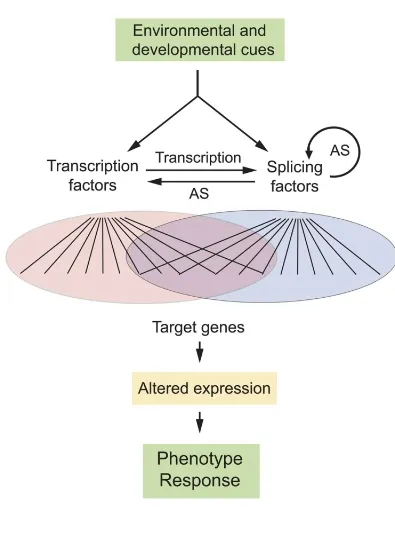 |
Summary | The human genome varies by about 0.5% between individuals
arising from SNPs, insertions, deletions, inversions, and duplications of longer sequences.
Only a small proportion of sequence variation causes detectable phenotypic change
Genetic susceptibility to mental health disorders probably arises from:
- the combined effects of numerous alleles contributing to risk, each having small effects,
- or, rare alleles exerting very powerful effects (high penetrance)
- coupled with the influence of environmental and developmental factors |