| Term | Definition |
|---|---|
What does a bone begin as? | osteoid |
What are osteoids produced by? | osteoblast cells |
Once osteoids are crystalized, what are they referred as? | mature ossified bone |
What do osteoblasts differentiate into? | osteocytes |
What does 40% of the bone consist? | the organic framework: bone cells, collagen, and polysaccharides |
What does the other 60% of the bone consist of? | inorganic minerals: calcium phosphate, calcium carbonate, sodium, etc. |
What type of cells break down bones? | osteoclasts |
What are cartilage producing cells called? | chondrocytes |
What's the function of short bones? | to absorb impact and accommodate complex movement and locomotion |
Where are short bones found? | complex joints |
What's the purpose of flat bones? | protection and muscle attachment |
What is a sesamoid? | bones important for protecting tendons as they cross over joints or bony processes |
What doe sesamoids kinda look like? | sesame seeds |
What are pneumatic bones? | hollow bones with cavity to help reduce weight |
What do pneumatic bones in birds help with? | additional space for respiratory tissues (air sacs) |
In mammals, where are the pneumatic bones located at? | frontal and maxillary bones of the skull |
All species contain 7 cervical vertebrae except..... | chickens! they have 14 |
How many thoracic vertebrae do chickens have? | 7 |
Species usually contain how many Sacral vertebrae? | 3-5 |
What is the green arrow pointing towards? 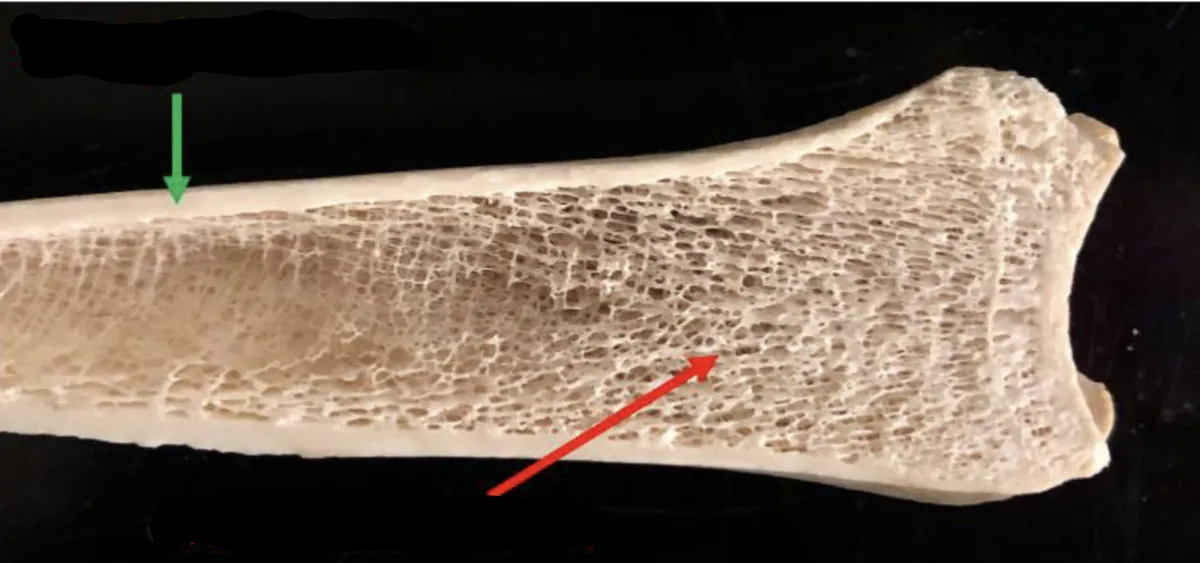 | Compact bone |
What is the red arrow pointing towards? | Trabecular bone |
What is the compact bone? (dense or cortical) | comprises around the hard outer layer of usually long bones |
What are osteons/haversian systems? | - microscopic parallel cylinders of bone that provide strength
- makes up hard compact bone |
What is the Osteonal lamella? | encircling layers of bone that form osteons |
What is the red line encircling the central canal called? 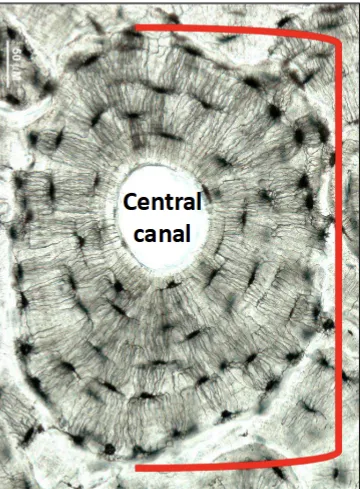 | Osteon |
What do osteon cylinders help with? | providing strength to bone and resisting torque (twisting force) |
What is the orange area referred to as? 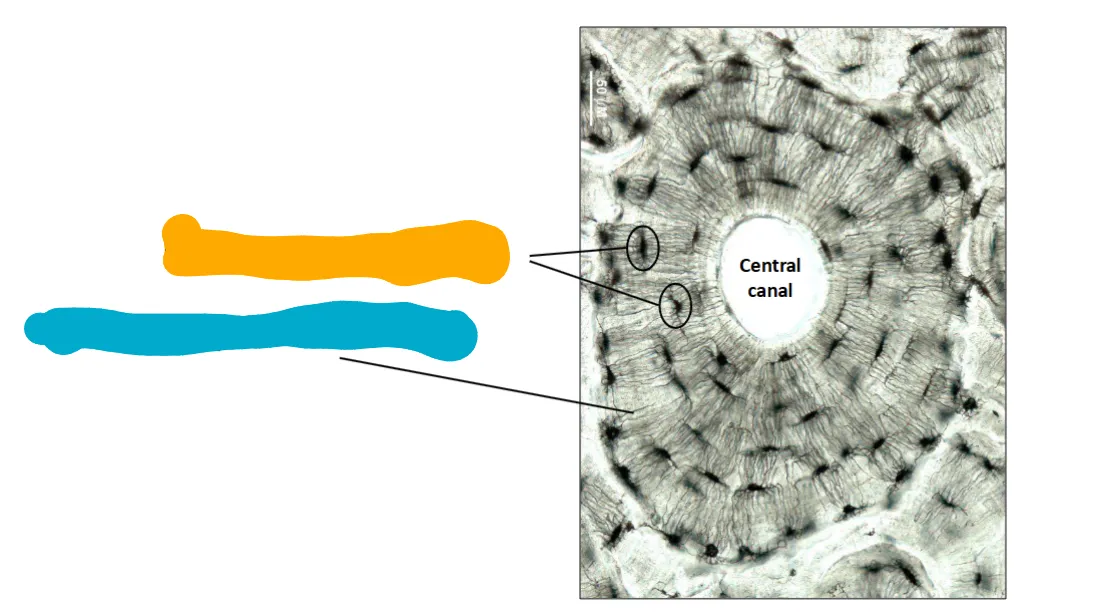 | Lacunae (little lakes) |
What is the turquoise area referred to as? | Canaliculi (small channel) |
What is found inside long and flat bones and consists of trabeculae? | Cancellous bone, a.k.a Spongy bone |
What is Trabeculae? | a network of bone that forms rod like structures or columns (like a web) |
where is bone marrow located? | in trabeculae |
Which type of bone is bone marrow particularly found in? | long bones |
What is the site of red and white blood cells? | Bone marrow |
How many red blood cells are produced each day? | 500 BILLION |
What is a Hematopoietic cell? | stem cells that differentiate into red blood cells and white blood cells |
What is the hematopoietic differentiation process called? | Hematopoiesis |
What is the orange box pointing towards? 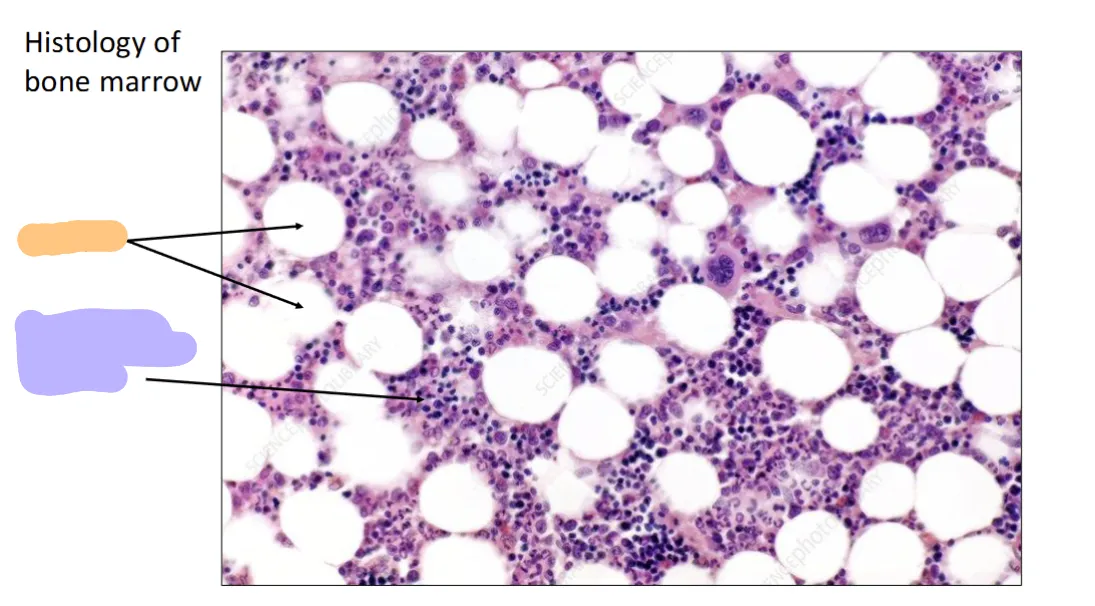 | Adipocytes |
What is the purple box pointing towards? | Fibroblast and hematopoietic stem cells |
What is Intramembranous bone formation? | a type of bone formation that starts during fetal life when stem cells gather, differentiate into osteoblasts, and produce osteoid |
Which type of bones does Intramembranous bone formation produce? | flat bones (ex. skull, mandible) |
What is responsible for bone repair after a fracture? | Intramembranous bone formation |
What begins during fetal life when stem cells differentiate into chondrocytes that produce cartilage? | Endochondral bone formation |
Osteoblasts migrate into cartilage and produce what? | an osteoid |
How are most bones formed through? | Endochondral bone formation |
In long bones, Endochondral bone formation is initiated through what action(s)? | primary and secondary ossification centers |
Longitudinal bone growth continues along where? | epiphysial plate |
What is this area called? 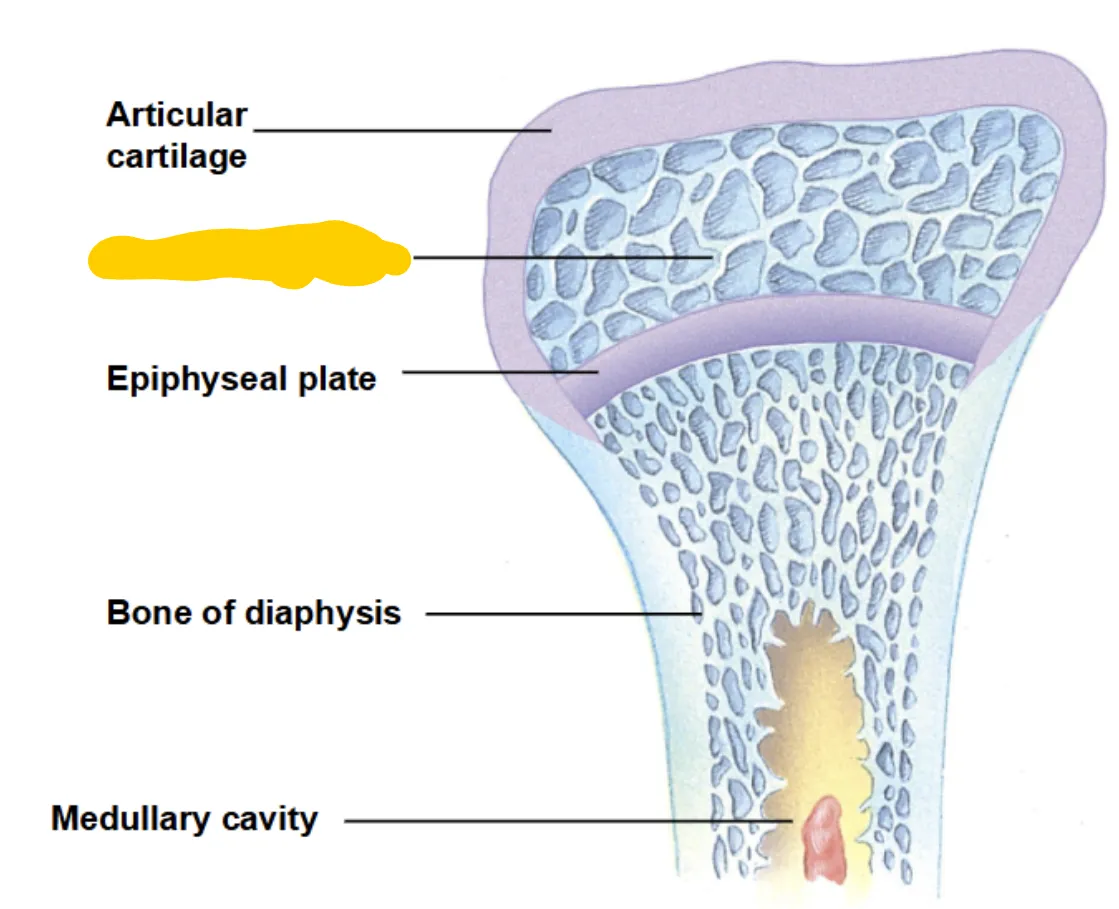 | Bone of epiphysis |
"Osteoblasts replace cartilage with osteoid" resulting in.... | longitudinal bone growth |
What causes thickening of epiphyseal plate? | Chondrocytes undergo cell division then grow larger |