| Term | Definition |
|---|---|
modular programming | breaking program into set of manageable sized functions |
function definition | includes statements that make up the function |
function can have zero to many parameters and either 0 or one return values | TRUE |
function header | -name of function, data type of parameter, identifier name, data type of return value |
function prototype | -name of function, data type for each parameter, data type for return
-NOT necessary: identified name for parameter |
function call | -name of function, identified name/constant for each argument |
void | returns no value |
local variable | define inside body of function, not accessible outside |
static local variable | value is retained between function calls |
when a function needs to use copy of argument, the argument should be passed by value | TRUE |
reference variable | when used as a parameter --> allows function to access and modify original argument |
function can have some parameters with default arguments and some without | TRUE |
two are more functions may have the same name if ____ | their parameter lists are different |
overloaded function | more than one function has the same name |
return statement | causes function to end and flow of control to move back to point of call |
bool function | returns true or false |
exit() | causes entire program to terminate |
driver | program module, purpose is to test other modules by calling them |
funcation call | statement that causes a function to execute |
if no return statement, flow of control moves to next function | FALSE |
definition | argument - information that is passed to function
parameter - special variable that receives/holds that info |
function can have | zero to many parameters, zero or one return value |
function call, order of arguments doesn't matter | FALSE |
copy of argument is passed | passed by value |
when function needs access to original argument (ex to change its value) | argument needs to be passed into a reference parameter |
function prototype | eliminates needs to place the function definition before call |
global variable | declared outside all functions |
cout << sqrt(22.0); | 22.0 is an argument |
both function headers and calls must list data types | FALSE |
default argument | automatically passed to parameter when argument is left out of function call |
global and local variables initialized to zero by default | FALSE |
static local variable | value is retained between calls |
can use exit() to return flow of control back to main() | FALSE |
stub | dummy function that is called instead of the actual function it represents, tests call and return function; tests if working correctly |
pass by value 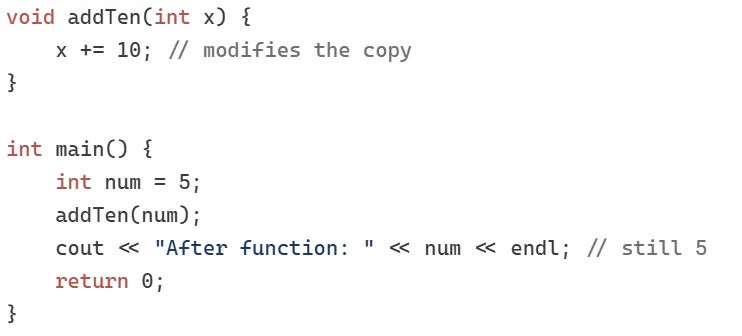 | -copy of the argument
-og isn't affected
-void f(int x) |
pass by reference 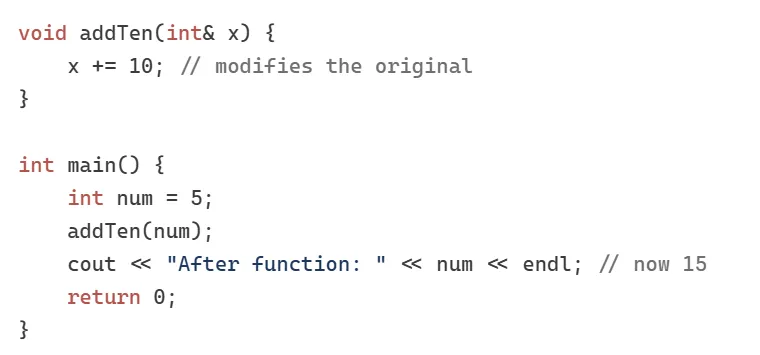 | -alias to og variable
-affect the og
-void f(int& x) |