| Term | Definition |
|---|---|
Anatomy | Study of the structure of the body. |
Physiology | Study of the dynamic processes and functions of the living body. |
Structure → Function | A structure's design helps determine what it can do. |
Gross anatomy | Structures visible to the naked eye. |
Systemic anatomy | Study of one organ system at a time. |
Regional anatomy | Study of multiple systems in the same body region. |
Cytology | Study of cell structure. |
Histology | Microscopic study of tissues. |
Histopathology | Microscopic study of tissues for disease. |
Developmental anatomy | Structural changes from conception to adulthood. |
Embryology | Development from conception through the end of week 8. |
Surface anatomy | Study of external body structures. |
X-ray | Uses X-rays; dense structures appear lighter. Good for bones/fractures. |
CT | Computerized X-ray slices; less organ overlap and can create 3D images. |
MRI | Magnet + radio-frequency energy; excellent soft-tissue detail. |
PET | Shows metabolic activity using a radioactive tracer such as labeled glucose. |
Ultrasound | High-frequency sound waves; can show movement but cannot penetrate bone well. |
Six Levels of Organization | |
1.chemical | atoms and molecules; chemical interactions determine structure and function. |
2. Cellular | cells are the basic structural and functional units of life. |
3. Tissue | groups of similar cells and surrounding material. |
4.Organ | two or more tissue types working together. |
5.Organ System | multiple organs working together. |
6.Organism | the complete living human. 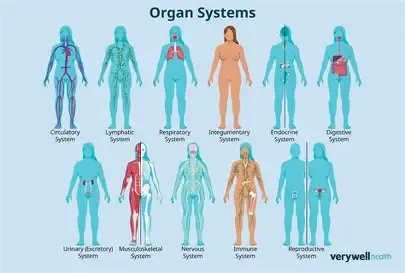 |
11 Organ Systems | |
Integumentary | Skin, hair, nails, glands |
Skeletal | Bones, cartilage |
Muscular | Skeletal muscles |
Nervous | Brain, spinal cord, nerves |
Endocrine | Hormone-producing glands |
Cardiovascular | Heart, blood, vessels |
Lymphatic | Lymph, vessels, lymph organs |
Respiratory | Lungs and airways |
Digestive | GI tract and accessory organs |
Urinary | Kidneys, ureters, bladder, urethra |
Reproductive | Male/female reproductive organs |
Six Characteristics of Life | |
Organization | living things have an organized structure. |
Metabolism | chemical reactions occurring in the body. |
Responsiveness | ability to sense and respond to stimuli. |
Growth | increase in size. |
Development | changes in form and function. |
Reproduction | production of new cells or offspring. |
Differentiation = cells become specialized. | cells become specialized. |
Morphogenesis | tissue/organ change in shap |
Homeostasis | - Maintenance of a relatively stable internal environment (dynamic equilibrium).
- Important because cells and organs function properly only within acceptable internal ranges. |
Basic feedback loop | Receptor → Control Center → Effector. |
Negative Feedback | Reduces or reverses the original change. It is the most common type of homeostatic control.
Example: Body temperature rises → sweating increases → heat is lost → temperature decreases. 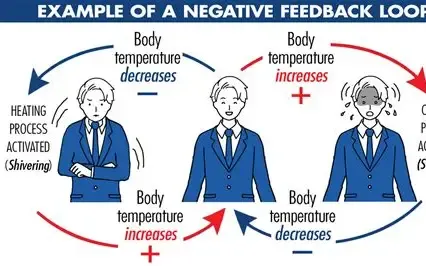 |
Positive Feedback | Amplifies the original change.
Example: Childbirth: cervical stretch → hormone release → stronger uterine contractions → more stretch. 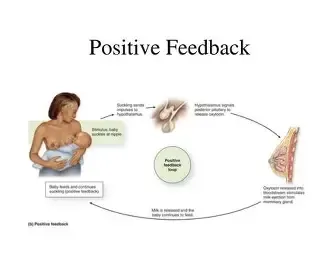 |
Anatomical Position & Directional Terms | 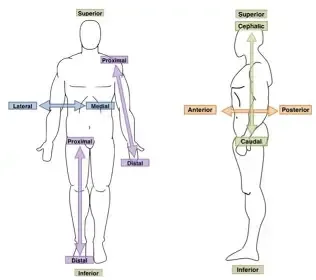 |
Anatomical position | standing upright, feet flat, arms at sides, palms facing forward, face forward. |
Superior | Above / toward the head |
Inferior | Below / toward the feet |
Anterior | Front |
Posterior | Back |
Ventral | Toward the belly/front |
Dorsal | Toward the back |
Medial | Toward the midline |
Lateral | Away from the midline |
Proximal | Closer to the point of attachment |
Distal | Farther from the point of attachment |
Superficial | Toward the surface |
Deep | Farther from the surface |
Cephalic | Toward the head |
Caudal | Toward the tail/lower end |
Body Planes | 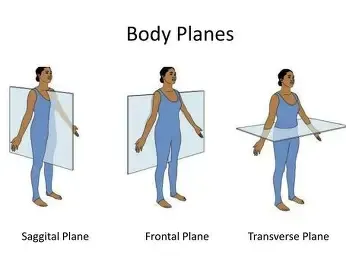 |
Plane | Divides the body into |
Sagittal | Left and right portions |
Midsagittal | Equal left and right halves |
Frontal / coronal | Anterior and posterior portions |
Transverse / horizontal | Superior and inferior portions |
Body Regions & Cavities | 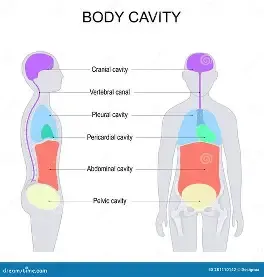 |
Axial region include | head, neck, and trunk. |
Appendicular region include | upper and lower limbs. |
Dorsal cavity | cranial cavity (brain) + vertebral cavity (spinal cord). |
Thoracic cavity | contains lungs and heart; mediastinum is the central region between the lungs. |
Pericardial cavity | surrounds the heart. |
Pleural cavities | surround the lungs. |
Abdominal cavity | contains many digestive and other abdominal organs. |
Pelvic cavity | contains urinary bladder, reproductive organs, and lower large intestine. |
Abdominopelvic Quadrants & Regions | |
Four quadrants | RUQ, RLQ, LUQ, LLQ. |
Nine regions. | right hypochondriac, epigastric, left hypochondriac; right lumbar, umbilical, left lumbar; right iliac, hypogastric, left iliac. 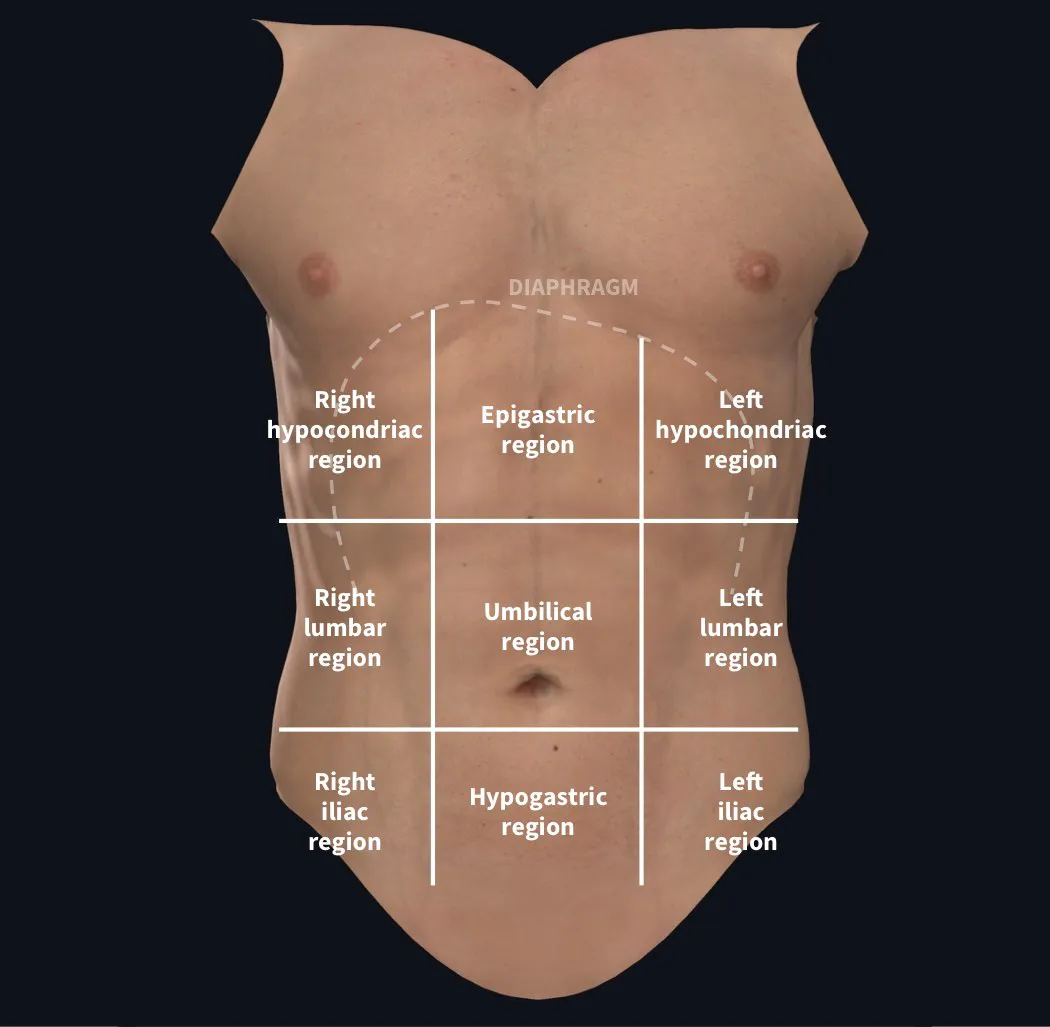 |
Serous Membranes | are double-layered, line body cavities, cover organs, and secrete lubricating fluid. 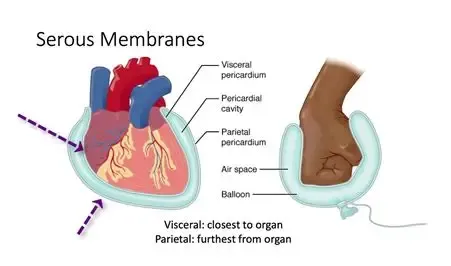 |
Pericardium | Heart |
Pleura | Lungs |
Peritoneum | Abdominal/pelvic organs |
Matter | Anything that occupies space and has mass. |
Mass | Amount of matter. |
Weight | Gravitational force acting on mass. |
Element | Simplest type of matter with unique chemical properties. |
Atom | Smallest particle of an element that retains its chemical properties. |
Proton | (+) Charge |
Neutron | (0) charge |
Electron | (−) charge |
Atomic number | number of protons. |
Mass number | protons + neutrons. |
Isotope | same element (same protons), different number of neutrons. |
Mole | a counting unit for an extremely large number of particles. |
Ionic bond | Electrons are transferred; forms ions. |
Covalent bond | Electrons are shared. |
Hydrogen bond | Attraction between partially charged parts of polar molecules. |
Molecule | two or more atoms chemically bonded. |
compound | substance made from two or more different elements chemically combined. |
compound | substance made from two or more different elements chemically combined. |
Solubility | ability of one substance to dissolve in another. |
What does like dissolve? | Like dissolves like. |
Dissociation | ionic compounds separate into ions when dissolved in water. |
What do electrolytes conduct? | Electrolytes conduct electrical current because they form ions in solution. |
What can't nonelectrolytes do? | Nonelectrolytes do not dissociate into ions and do not conduct electrical current. |
Synthesis | Smaller molecules combine to form a larger molecule. |
Decomposition | Large molecules are broken into smaller molecules. |
Dehydration synthesis | Builds a molecule and produces water. |
Hydrolysis | Uses water to break a molecule apart. |
Reversible reaction | Can proceed in either direction. |
Equilibrium | Forward and reverse reaction rates are equal. |
Metabolism & Energy | 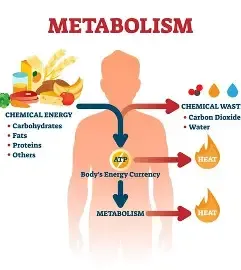 |
Metabolism | All chemical reactions in the body. |
Catabolism | Breakdown reactions; generally release energy. |
Anabolism | Synthesis/building reactions; generally require energy. |
Exergonic | Releases energy. |
Endergonic | Requires energy input. |
Potential energy | Stored energy, such as energy in chemical bonds. |
Kinetic energy | Energy of motion or change. |
Factors Affecting Reaction Rate | |
temperature | higher temperature generally increases molecular motion and collisions. |
reactant concentration | greater concentration increases the likelihood of collisions. |
activation energy | minimum energy required to start a reaction. |
catalysts reaction | increase rate without being permanently changed. |
enzymes are what? | are protein catalysts that lower activation energy. |
Inorganic compounds | lack carbon-hydrogen bonds; examples include O₂, CO₂, water, calcium phosphate, and metals. 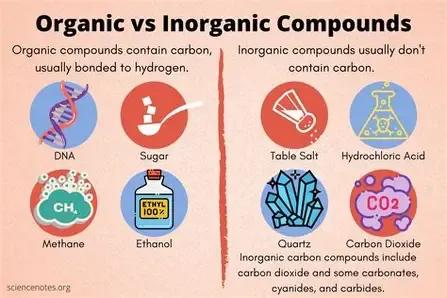 |
Organic compounds | contain carbon-hydrogen bonds and can form chains, branches, and rings. 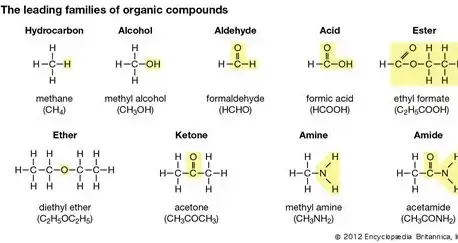 |
Components of water | -polar molecule forms hydrogen bonds.
-universal solvent
- high specific heat helps stabilize body temperature
-Water participates in chemical reactions and ionizes many chemicals.
-High surface tension results from cohesion.
-Cohesion= attraction of water molecules to each other.
-adhesion= tendency of water to cling to other substances. |
Acids, Bases, pH & Buffers |  |
Acid | Proton (H⁺) donor. |
Base | Proton acceptor; many release OH⁻. |
pH | Measures H⁺ concentration. |
Acidic | pH below 7. |
Neutral | pH 7. |
Basic | pH above 7. |
Buffer | Resists changes in pH. |
what is the pH of blood? | Blood pH is about 7.35–7.45. |
Macromolecules | 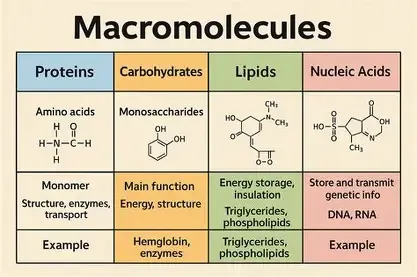 |
Macromolecule | Building blocks / key roles |
Carbohydrates | Monosaccharides; quick energy and energy storage. Glycogen stores energy in humans. |
Lipids | Triglycerides, phospholipids, steroids; energy, insulation, protection, membranes, hormones. |
Proteins | Amino acids; enzymes, structure, transport, movement, regulation. |
Nucleic acids | Nucleotides; DNA and RNA store/use genetic information. |
DNA, RNA & ATP | 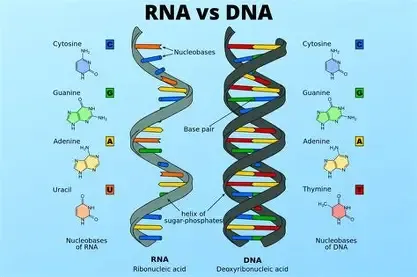 |
Nucleotide | sugar + phosphate + nitrogenous base. |
DNA | double helix, deoxyribose, thymine, stores genetic information. |
RNA | usually single stranded, ribose, uracil, carries out DNA instructions. |
DNA base pairing is....... | A–T and C–G. |
ATP | - adenine + ribose + three phosphate groups; major energy-transfer molecule.
- ATP can lose a phosphate to become ADP and release usable energy |
General Parts of a Cell | 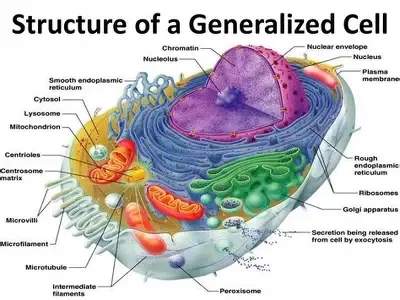 |
plasma membrane | outer boundary and controls entry/exit of substances. |
nucleus | contains DNA and regulates protein synthesis. |
cytoplasm | cytosol plus organelles outside the nucleus. |
Plasma Membrane | Made primarily of a phospholipid bilayer with cholesterol, proteins, and carbohydrates. |
fluid mosaic model | membrane is dynamic and flexible, with proteins embedded in or attached to the lipid bilayer. 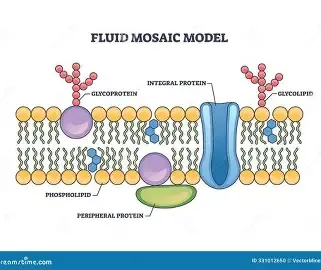 |
Phospholipid heads vs tails | Phospholipid heads are hydrophilic; tails are hydrophobic. |
integral protein vs peripheral protein | Integral proteins are embedded in the membrane; peripheral proteins attach to the membrane surface. |
what can membrane protein function as? | Membrane proteins can function as transporters, receptors, enzymes, markers, or attachment proteins. |
Transport Across the Plasma Membrane | 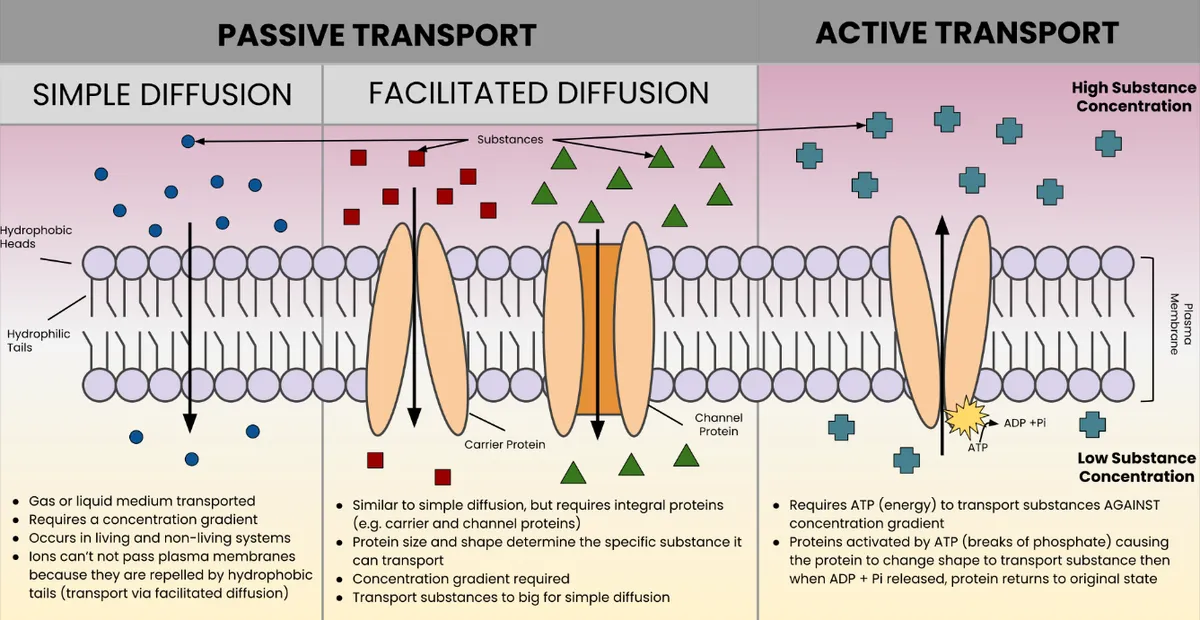 |
Process | Direction / energy |
Simple diffusion | High → low concentration; no ATP. |
Osmosis | Water movement across a selectively permeable membrane; no ATP. |
Facilitated diffusion | High → low through a transport protein; no ATP. |
Active transport | Against gradient; requires energy/ATP. |
Secondary active transport | Uses an ion gradient established by active transport. |
Endocytosis | Brings material into the cell using vesicles. |
Exocytosis | Moves material out of the cell using vesicles. |
Solution | Water movement |
Hypotonic | Water moves into cell |
Isotonic | No net water movement |
Hypertonic | Water moves out of cell |
Transport Protein Terms | 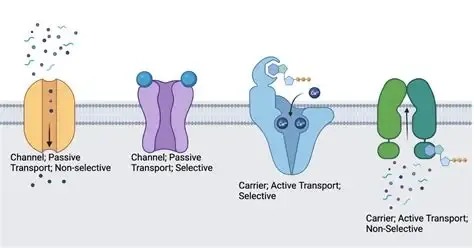 |
specificity | transport proteins recognize/select particular substances. |
competition | similar substances may compete for the same transporter. |
saturation | transport reaches a maximum when available transport proteins are occupied. |
symport | substances move in the same direction. |
antiport | substances move in opposite directions. |
uniport | one substance is transported. |
Major Organelles | 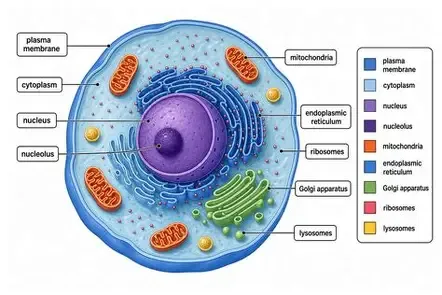 |
Organelle | Main function |
Nucleus | Control center; DNA. |
Nucleolus | Produces ribosomal components. |
Ribosome | Protein synthesis. |
Rough ER | Protein synthesis and transport; has ribosomes. |
Smooth ER | Lipid/carbohydrate production, detoxification, calcium storage. |
Golgi apparatus | Modifies, packages, sorts, and distributes proteins/lipids. |
Lysosome | Intracellular digestion. |
Peroxisome | Lipid/amino acid breakdown and hydrogen peroxide breakdown. |
Proteasome | Breaks down proteins in the cytoplasm. |
Mitochondria | Major site of ATP synthesis when O₂ is available. |
Centrosome/centrioles | Microtubule organization and roles in cell division. |
Cilia | Move material across cell surfaces. |
Flagellum | Propels sperm. |
Microvilli | Increase surface area for absorption/secretion. |
Gene Expression | 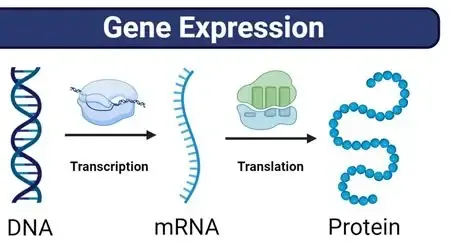 |
transcription | DNA → mRNA. |
translation | mRNA → protein. |
where does mRNA carry instruction from? | mRNA carries the instructions from DNA. |
where does the tRNA bring amino acids to? | tRNA brings amino acids to the ribosome. |
what is rRNA part of? | rRNA is part of the ribosome and participates in protein synthesis. |
Cell Cycle | 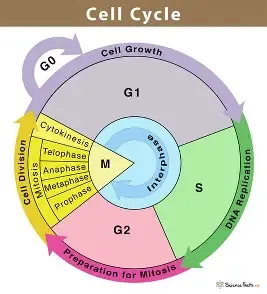 |
(stage) G1 | Cell grows, performs normal functions, and prepares for DNA replication. |
(stage) S | DNA replication occurs; replication is semiconservative. |
(stage) G2 | Cell prepares for division; division-related enzymes are produced. |
(stage) M | Mitosis divides the nucleus; cytokinesis divides the cytoplasm. |
Mitosis (include the 5 stages) | 1. Prophase — chromosomes condense; spindle begins forming.
2. Prometaphase — nuclear envelope breaks down; spindle fibers attach to chromosomes.
3. Metaphase — chromosomes line up at the equator.
4. Anaphase — sister chromatids separate and move toward opposite poles.
5. Telophase — new nuclear envelopes form and chromosomes uncoil. |
Cytokinesis | division of the cytoplasm; a cleavage furrow pinches the cell into two daughter cells. |
Apoptosis | programmed cell death used in development and to remove damaged, infected, or potentially cancerous cells. |
CHAPTER 4 — TISSUES | 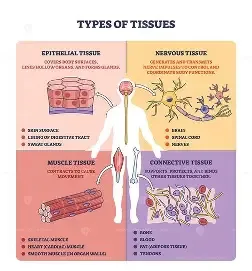 |
what is a tissue? | A tissue is a group of specialized cells plus extracellular substances working together. |
Histology | Histology = microscopic study of tissues. |
Biopsy | tissue removed from a living patient for examination. |
Autopsy | postmortem examination. |
Four Primary Tissue Types | 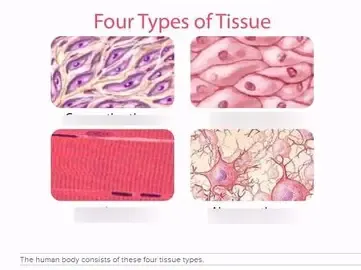 |
what tissue is shown below? 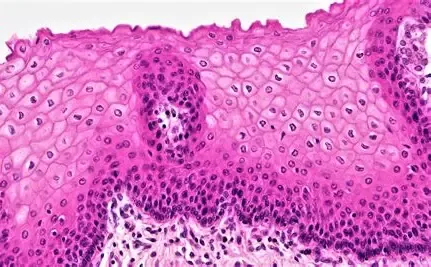 | Epithelial tissue |
what tissue is shown below? 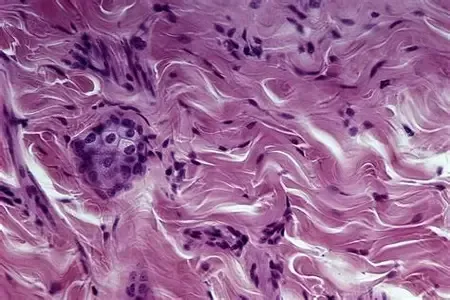 | Connective tissue |
what tissue is shown below? 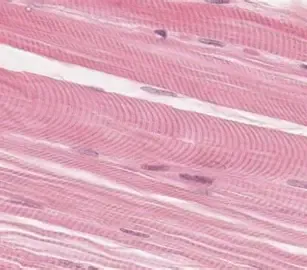 | Muscle tissue |
what tissue is shown below? 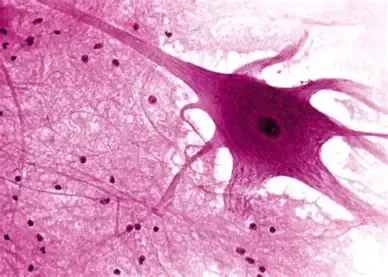 | Nervous tissue |
Embryonic Germ Layers | 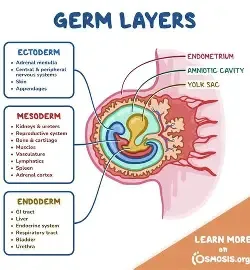 |
Germ layer | Major derivatives |
Ectoderm | Skin and nervous system (including neuroectoderm derivatives). |
Mesoderm | Muscle, bone, blood vessels, and connective tissues. |
Endoderm | Lining of the digestive tract and its derivatives. |
• | Usually tightly packed cells with little extracellular material. |
• | Apical surface faces a free space; basal surface attaches to basement membrane. |
• | Generally avascular but receives nutrients by diffusion. |
• | Functions: protection, barrier formation, absorption, secretion, and passage of substances. |
Epithelial Classification | |
Classification | Meaning |
Simple | One cell layer. |
Stratified | Multiple cell layers. |
Pseudostratified | Looks multilayered, but all cells contact the basement membrane. |
Transitional | Changes cell shape as it stretches. |
Squamous | Flat cells. |
Cuboidal | Cube-shaped cells. |
Columnar | Tall cells. |
Major Epithelial Tissues | |
Tissue | Main function |
Simple squamous | Diffusion/filtration |
Simple cuboidal | Absorption/secretion |
Simple columnar | Absorption/secretion |
Pseudostratified columnar | Mucus production/movement |
Stratified squamous | Protection |
Stratified cuboidal | Protection/secretion |
Stratified columnar | Protection/secretion |
Transitional | Stretching |
Glands | |
Type | Key idea |
Endocrine | Ductless; secretes hormones into blood/interstitial fluid. |
Exocrine | Uses ducts to deliver secretions. |
Unicellular | One secretory cell, such as a goblet cell. |
Multicellular | Many secretory cells organized into a gland. |
Modes of exocrine secretion | Merocrine = exocytosis; Apocrine = part of cell pinches off; Holocrine = entire cell breaks down. |
Connective Tissue | |
Connective tissue cells are separated by.... | an extracellular matrix and can support, connect, protect, store, cushion, insulate, and transport. |
Connective Tissue Cells | |
Blasts | create/build matrix. |
Cytes | maintain matrix. |
clasts | break down matrix. |
adipocytes | store lipids. |
mast cells | release inflammatory chemicals. |
macrophages | large phagocytic cells. |
leukocytes | immune cells. |
platelets | function in blood clotting. |
mesenchymal cells | adult stem cells with potential to form multiple cell types. |
Extracellular Matrix | |
• | Protein fibers |
• | Ground substance |
• | Fluid |
• | Collagen fibers provide strength. |
• | Reticular fibers form branching networks. |
• | Elastic fibers stretch and return toward their original shape. |
Connective Tissue Classification | |
Group | Examples |
Embryonic | Mesenchyme; mucous connective tissue (Wharton's jelly) |
Loose connective tissue | Areolar; adipose; reticular |
Dense connective tissue | Dense regular collagenous/elastic; dense irregular collagenous/elastic |
Supporting connective tissue | Hyaline cartilage; elastic cartilage; fibrocartilage; bone |
Fluid connective tissue | Blood; hematopoietic tissue |
High-Yield Connective Tissues | |
Tissue | Function / location |
Areolar | Cushions organs; attaches skin to underlying tissues. |
Adipose | Energy storage, insulation, protection. |
Reticular | Framework in lymph nodes, spleen, bone marrow, liver. |
Dense regular collagenous | Strong in one direction; tendons and ligaments. |
Dense regular elastic | Elastic support; vocal folds/nuchal ligaments. |
Dense irregular collagenous | Strength in many directions; dermis and organ capsules. |
Dense irregular elastic | Elastic support in many directions; elastic arteries. |
Hyaline cartilage | Support with flexibility; joints, ribs, trachea/bronchi. |
Fibrocartilage | Strong support and resistance to compression. |
Elastic cartilage | Flexible support. |
Bone | Support, protection, mineral storage, movement. |
Blood | Fluid connective tissue for transport. |
(Muscle tissue) Type | Control / location / function |
(Muscle tissue) Skeletal | Voluntary; attached to bones; body movement. |
(Muscle tissue) Cardiac | Involuntary; heart; pumps blood. |
(Muscle tissue) Smooth | Involuntary; walls of hollow organs; moves substances. |
Nervous Tissue | Neurons receive and transmit electrical/chemical signals. |
function of Gila | Glia supports, protects, nourish, and maintain neurons. |
Membranes | |
Mucous | Lines passages open to the outside; protection/secretion. |
Serous | Lines closed body cavities and covers organs; produces lubricating fluid. |
Synovial | Lines joint cavities; produces synovial fluid. |
Inflammation | Inflammation is a protective response to tissue damage that helps bring blood flow and immune defenses to an injured area and begins repair. |
Five classic signs: Rubor (redness), calor (heat), tumor (swelling), dolor (pain), and loss of function. | |
Tissue Regeneration & Repair | 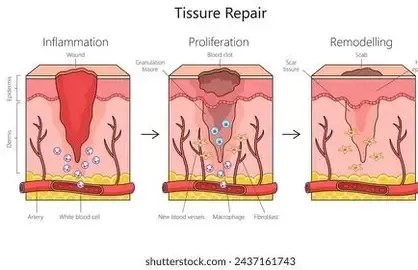 |
Labile cells do what?.... | continuously divide. |
stable cells | usually divide little but can divide after injury. |
permanent cells | have very limited ability to divide. |
general repair involves.... | inflammation, organization, regeneration and/or fibrosis, and remodeling. |
CHAPTER 5 — INTEGUMENTARY SYSTEM | |
Main Functions | |
• | Protection from physical damage, microorganisms, UV radiation, and water loss. |
• | Sensation: touch, pressure, pain, heat, and cold. |
• | Temperature regulation. |
• | Vitamin D production. |
• | Excretion of small amounts of waste through sweat. |
Layers of the Skin | |
Layer | Description |
Epidermis | Superficial layer; stratified squamous epithelium; avascular. |
Dermis | Deep connective tissue layer containing vessels, nerves, hair follicles, and glands. |
Subcutaneous tissue / hypodermis | Loose connective tissue and adipose beneath skin; technically not part of the skin. |
Epidermal Strata — Deep → Superficial | |
12. | Stratum basale — deepest; stem cells and new keratinocytes; attached to basement membrane. |
13. | Stratum spinosum — cells connected by desmosomes; keratin fibers develop. |
14. | Stratum granulosum — keratohyalin granules; lipid release; cells begin dying. |
15. | Stratum lucidum — clear layer found only in thick skin. |
16. | Stratum corneum — many layers of dead, keratin-filled cells; cells are shed. |
Memory aid: Before Signing Good Legal Contracts = Basale → Spinosum → Granulosum → Lucidum → Corneum. | |
Keratinization | |
Keratinocytes move upward through the epidermis, accumulate keratin and protective lipids, die, and are eventually shed from the surface. | |
Thick vs Thin Skin | |
Thick skin | Thin skin |
All 5 epidermal strata | No stratum lucidum |
Palms, soles, fingertips | Most of the rest of the body |
Especially adapted for friction | Generally thinner and has hair follicles in many regions |
Skin Color | |
• | Melanin — pigment that helps protect against UV radiation. |
• | Carotene — yellowish pigment. |
• | Blood flow/hemoglobin — contributes to skin color. |
• | Erythema = redness associated with increased blood flow. |
• | Cyanosis = bluish coloration associated with reduced oxygenation. |
Dermis | |
Layer | Main features |
Papillary layer | Loose connective tissue; dermal papillae; superficial portion. |
Reticular layer | Dense irregular connective tissue; most of dermis; contains many hair follicles and glands. |
Subcutaneous Tissue | |
• | Mostly loose connective tissue and adipose. |
• | Insulates, pads/protects, stores energy, and anchors skin to deeper structures. |
Hair | |
• | Hair shaft = portion above the skin. |
• | Hair root = portion below the skin. |
• | Hair bulb = enlarged base. |
• | Matrix = actively dividing cells that produce hair. |
• | Hair papilla = vascular connective tissue supplying the growing hair. |
• | Hair layers from inside → outside: medulla → cortex → cuticle. |
Hair Growth | |
Phase | Main idea |
Growth | Hair actively grows. |
Transition | Growth stops and follicle changes. |
Resting | Hair remains in a resting state before being shed/replaced. |
Arrector Pili | |
Arrector pili are smooth muscles attached to hair follicles. Contraction makes hairs stand up and produces goosebumps. | |
Skin Glands | |
Gland | Secretion / function |
Eccrine sweat gland | Watery sweat; major role in temperature regulation. |
Apocrine sweat gland | Thicker secretion; associated especially with axillary and pubic regions. |
Sebaceous gland | Sebum; lubricates and protects skin and hair. |
Nails | |
• | Major parts: nail plate, nail bed, nail root, nail matrix, lunula, and cuticle. |
• | Nails grow from dividing cells in the nail matrix. |
• | New cells push older nail material forward. |
Skin as a Sense Organ | |
Sensory receptors in the skin detect touch, pressure, temperature, and pain. | |
Temperature Regulation | |
• | Vasodilation increases skin blood flow and promotes heat loss. |
• | Vasoconstriction decreases skin blood flow and conserves heat. |
• | Sweating followed by evaporation removes heat from the body. |
Vitamin D & Excretion | |
• | UV exposure initiates vitamin D production in the skin. |
• | Vitamin D is important for calcium-related body functions. |
• | Sweat glands allow the skin to excrete small amounts of waste. |
HIGH-YIELD EXAM MEMORIZATION | |
Chapter | Know these especially well |
1 | Anatomy vs physiology; 6 organization levels; 11 organ systems; characteristics of life; homeostasis; feedback loops; directional terms; planes; cavities; serous membranes. |
2 | OCHN; subatomic particles; atomic/mass number; ionic/covalent/hydrogen bonds; dehydration vs hydrolysis; catabolism vs anabolism; exergonic vs endergonic; enzymes; pH/buffers; macromolecules; DNA/RNA; ATP. |
3 | Membrane structure; membrane proteins; diffusion/osmosis; tonicity; facilitated vs active transport; endo/exocytosis; organelles; RER vs SER; Golgi; mitochondria; gene expression; DNA replication; cell cycle; mitosis; apoptosis. |
4 | 4 tissue types; germ layers; epithelial classification; glands; secretion types; connective tissue cells/ECM; major connective tissues; muscle types; neurons vs glia; membranes; inflammation; tissue repair. |
5 | Epidermis/dermis/hypodermis; 5 epidermal strata; keratinization; thick vs thin skin; skin color; dermal layers; hair; hair growth; arrector pili; glands; nails; temperature regulation; vitamin D. |
DON'T MIX THESE UP | |
Concepts | Quick distinction |
Anatomy vs Physiology | Structure vs function |
Gross vs Histology | Visible structures vs microscopic tissues |
Medial vs Lateral | Toward vs away from midline |
Proximal vs Distal | Closer vs farther from attachment |
Sagittal vs Frontal | Left/right vs front/back |
Negative vs Positive feedback | Reduces change vs amplifies change |
Ionic vs Covalent | Transfer vs share electrons |
Dehydration vs Hydrolysis | Builds + makes water vs breaks + uses water |
Catabolism vs Anabolism | Breakdown vs building |
Exergonic vs Endergonic | Releases vs requires energy |
Hypertonic vs Hypotonic | Water leaves cell vs enters cell |
RER vs SER | Protein-related vs lipid/detox/Ca²⁺ functions |
Lysosome vs Peroxisome vs Proteasome | Digestion vs peroxide/lipid breakdown vs protein breakdown |
Cilia vs Flagella vs Microvilli | Move material vs move sperm vs increase surface area |
Endocrine vs Exocrine | Ductless vs ducts |
Merocrine vs Apocrine vs Holocrine | Exocytosis vs part of cell vs whole cell |
Epidermis vs Dermis | Epithelium vs connective tissue |
Papillary vs Reticular dermis | Loose CT vs dense irregular CT |
Mitosis vs Cytokinesis | Nuclear division vs cytoplasmic division |