What is the Proplanetary disk
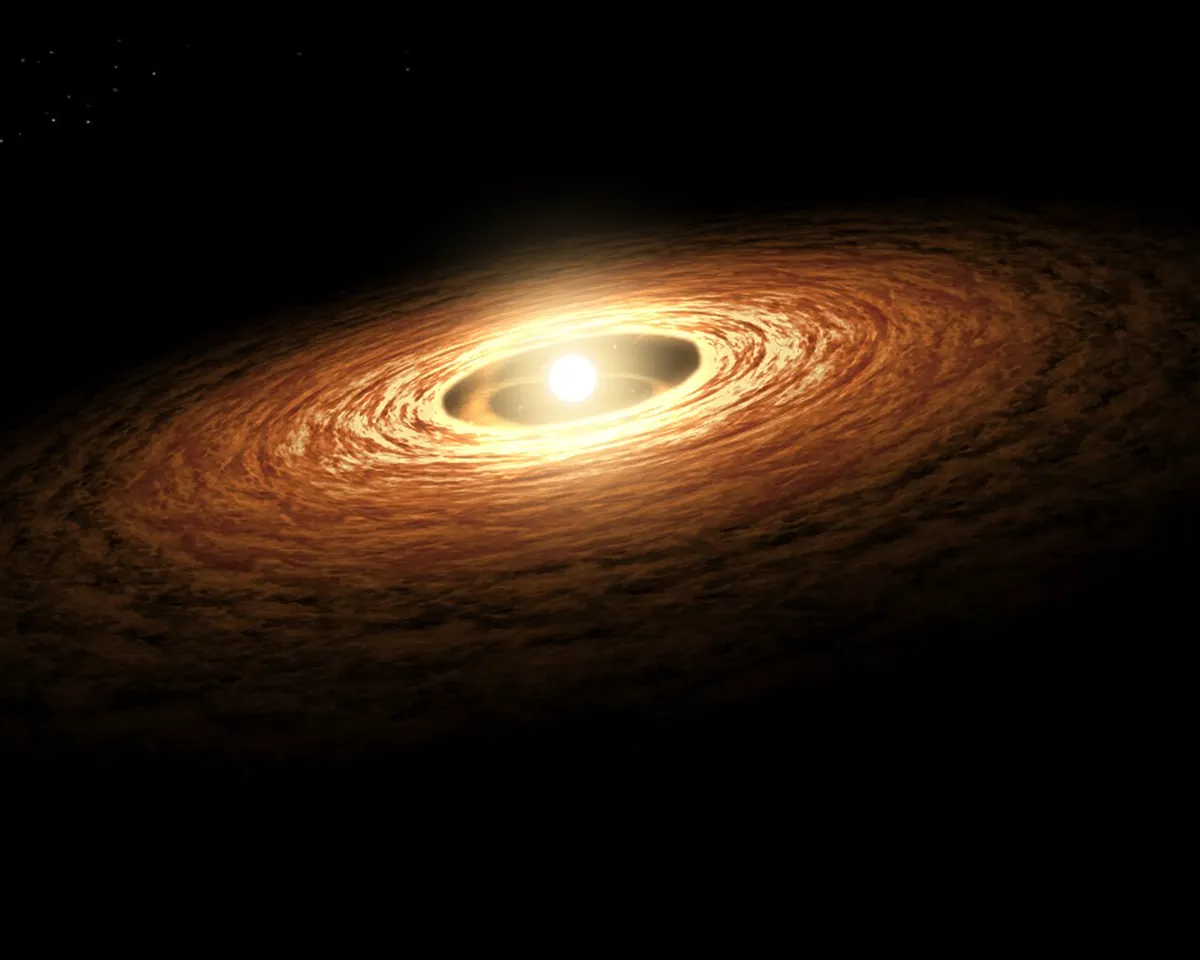
It is/was a spinning belt of dense gasses and dust that surrounds a newborn star. Pressure within the center mass of the disk (newborn star) triggers nuclear fusion. FUN FACT! Nuclear fusion is the process that the sun used, it combines two lighter atoms into a bigger one.
| Term | Definition |
|---|---|
What is the Proplanetary disk | It is/was a spinning belt of dense gasses and dust that surrounds a newborn star. Pressure within the center mass of the disk (newborn star) triggers nuclear fusion. FUN FACT! Nuclear fusion is the process that the sun used, it combines two lighter atoms into a bigger one. |
Approximately how long ago was earth created? And how many stages of life has it gone through? | 4.6 Billion years ago.
and four stages. |
What are the four stages of earths life? | 1.) Precambrian 4.6bya- 543mya
2.) Paleozoic era 543mya- 250mya
3.) Mesozoic era 250mya- 65mya
4.) Cenozoic era 65mya - now |
What was the Precambrian Supereon, what two parts did it consist of? | It was the first part of earths life consisting of two major parts. Hadean and Archean. |
What was the Hadean slot of time like, from its prime to the late part? | Prime- It was a hellish landscape with crazy solar winds, it was pretty rough and no life was able to exist due to the surface of the earth literally being made of molten lava. There were no oceans and no free air. Hadean= hell in Latin!
Late- The world cooled down and asteroids pelted the earth, this caused cracks in the earth's surface to form volcanos, lots of them. The steam and gasses produced formed the earliest atmosphere. This was consisted of hydrogen, carbon dioxide and nitrogen. Yikes! 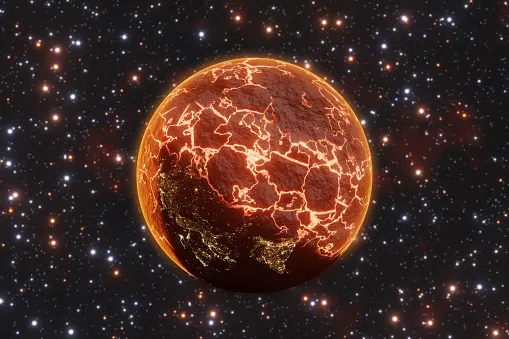 |
What was the Archean slot of earth lifetime like? | Because the earth cooled there was finally small signs of life being born into existence. However, these were just unicelled organisms, not multicellular life. EX: Bacteria, and yeast. |
Describe the Paleozoic era | Land is dominated by reptiles, and the oceans are filled with aquatic creatures. With an abundance of plants and trilobites. |
What was the Cabrian explosion? | A slot of about 60 million years where the world flourished with many different types and kinds of life, it created various different kinds of life. EX: Carpet Moss and Tetrapods (Fish with legs) |
What was the Permian Extinction, and how much of life was lost? (%) | It was a mass extinction caused by massive volcanic eruptions in the Siberian traps; it released massive amounts of greenhouse gasses killing of approximately 96% of life. |
What happened during the Mesozoic era? | After crawling back from such a killer extinction, the first mammals came into picture, early mammals were pretty tiny compared to dinosaurs. |
What was the KT extinction? | This was caused by a big asteroid hitting the earth, causing heat and smoke as well as debris to hide away all the sunlight, causing photosynthesis to stop occurring, this killed off massive amounts of life. Surprisingly alligator and crocodile like creatures survived and birds. |
What is the Cenozoic era and its significance? | The Cenozoic era was the beginning of the age of mammals and more intellectual life, as well as the development of the mammals the earth was shifting as well. Continental drift, ice ages and other event occurred during this time to shift how the physical earth looked. |
What is Panspermia? | It's the theory that life came from somewhere else. Nothing specific, but somewhere else most likely via asteroid. Crazy? Not crazy? |
What is life's two major characteristics? | 1.) That it's organized.
2.) That it can replicate itself. Asexually, sexually, whatever else ig? |
How many steps are there to take with making life? | Four steps... |
What was the first step? | Abiotic synthesis of organic materials, early earth was dominated by hydrogen and a little nitrogen. |
What was the Miller Urey experiment (1953)? | It was an experiment Miller Urey conducted see how early life formed. He replicated the environment that life had to form through. He founded that amino acids and nucleotides began to form. The building blocks of life. |
What was step two? | The formation of polymers, it's as hard as it sounds. Monomers had to float by themselves across the ocean to find a buddy to pair up with. This was called the (hint hint remember) PROXIMITY PROBLEM! Scientists believe that clay at the bottom of the ocean floor was the reason for the formation of polymers. Clay is positively charged and monomers were negatively charged. Due to this the monomers floated to it and bonded with each other. |
What is the PROXIMITY PROBLEM? | Literally the inability of monomers to find each other. In the prebiotic ocean. |
What's the third step to the creation of life? | The formation of photobionts, these are simple spherical collections of organic molecules that are surrounded by membrane. This made lysosomes and repeatable life. 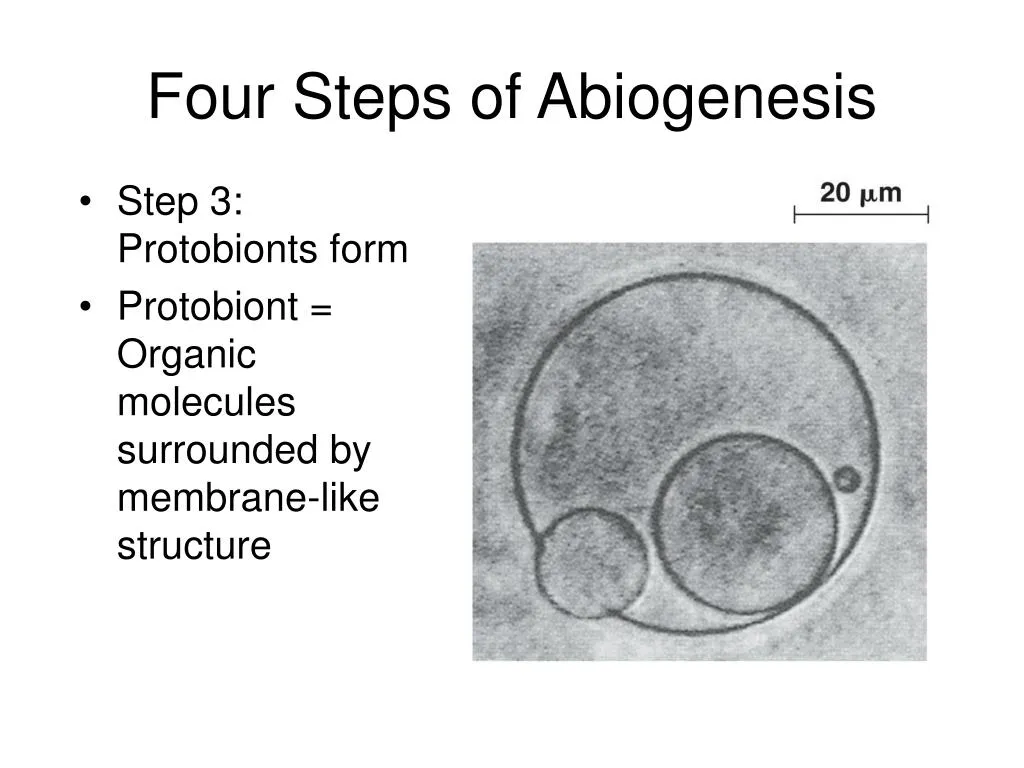 |
What's the final step to the formation of life in the prebiotic world? | The origin of hereditary material. The earliest life had it, RNA. This biotically forms/ replicates itself and acts as an enzyme. |
What is a viroid? | It is an infectious little bugger that is smaller than a virus however it doesn't have a protein coat, it's just nucleic acid. It creates mutations in plants. 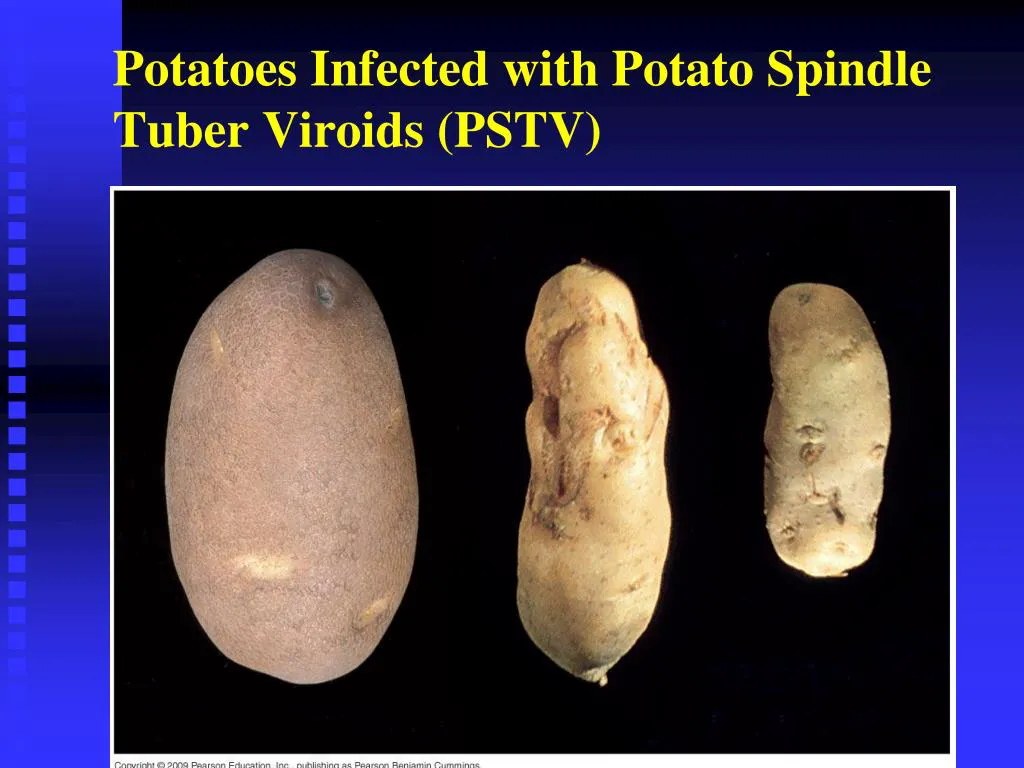 |
Who was Anaximander? | He was this guy from 6th century B.C.E who believed in common decent, and the transmutation of species. |
Who was Carolus Linnaeus? | He was this guy in the 1700s who found similarity among organisms and created bionumanclature and hierarchal classification systems. |
Who was James Hutton? | He was this guy in the 1720s who...
*Founder of modern geology
*Founded uniformitarism and gradualism
*Challenged catastrophism
*The great geological cycle
*Changed the "young earth theory"
*Erosion and renewal |
Who was Adam Smith? | He was this guy from the 1720s who...
*Is the father of modern economics
*Natural Law
*Division of Labor
*Self-interest
*Specialization
*The invisible hand |
Define Catastrophism... | Earth's history was shaped by periodic catastrophic event that wiped out species. |
Define Uniformitarisim and Gradualism... | Uniformitarisim: The idea that all the stuff that's going on now that is shaping the world, geologically, was also going on back then as well. And that the earth is continuously being shaped by a steady accumulation of changes.
Gradualism: Gradualism is basically the same, the earth is continuously being shaped by a steady accumulation of changes. |
Who was Jean- Baptiste Lamerck? | He was a guy from the late 1700s who came up with the first theory of evolution. Hi theory of use and disuse, and that organisms can change over time (generationally) in response to their environment. Also known to me as the Giraffe guy. |
What does use and disuse mean? | It was the big JBL's theory on evolution. Basically, just the stuff that's used gets stronger and the stuff that isn't used weakens. |
Who was Thomas Malthus? | A guy from the late 1700s who's main theory is that as the population growth increases it outpaces the food supply available. And because of that it leads to societal and physical hardship like famine. This idea is also known as the "Malthusian Trap" |
Georges Cuvier | This guys got alot of stuff
*Comparative anatomy: what organs do what how they interact w/ each other.
*Paleontology: Reconstruction of extinct species like the..,. MEGATHERIUM and PYERODACTLUS or sm like that idk.
*Extinction: He was the first person to introduce extinction as a scientific fact.
*Catastrophism: Earth history was shaped by bunch of periodic bad stuff that wiped out lots of things.
***Even though this guys like really smart this chud didn't believe in evolution?? |
Who was Charles Lyell? | So he basically took Hutton's stuff and made it popular. He made uniformitarisim super popular and he was also a volcano geek, (seismology) |
Who was Charles Darwin? | I'm not typing out all the shit he did here, basically Charles believed in evolution by natural selection and gradually moved from religious faith to agnosticism, emphasizing natural processes over divine intervention. |
Who was Alfred Russel Wallace? | He is best known for his work with Darwin, lowk he figured out natural selection all by himself so that's pretty cool. He figured out that species didn't go to other areas based on their unique features gained from the environment they lived in. This was found when he went on a voyage to Bali and Lumbera its known as the "Wallace line". |
What is Darwin's theory of evolution, the five part one. | 1.) Individuals vary
2.) Populations tend to overbreed relative to the available resources
3.) Better variation leads to better chances of survival
4.) Survivors will reproduce; the ones who didn't survive wont... because they're dead.
5.) Traits that lead to better survival are going to be heritable. |
Who were Grant and Grant, what was their deal? | A couple who discovered after a La Nina that birds with bigger and stronger beaks survived. This showed evolution in action and that natural selection can happen in one generation and the heritability of traits. So that's cool. |
What's Anthropause? | Lowk just the reduction in activity. Like humans with Covid. |
Try and name on transitional form... | - Archaepteryx
- Ambulocetus Natons
- Tiktaalik
- Equidae
- Hyracotherium |
What's the old earth theory? | Its a huge shift from the thought that humans were like boom there, its the theory that earth must have been old enough for evolution to occur. We can see the evidence for this within fossils and old and new strata. |