Section 03: Effects of exercise and physical activity on the body
Created by catrionaandersonn
Responses vs adaptations
Responses : Short term effects occurs as the body seeks to adapt to demands of exercise or activity in the moment. (heart rate, blood pressure).
Adaptations : Long-term effects on the body occur when the body has various structural changes that take place post-activity to help the body prepare for similar demands in the future. (reversibility principle applies here)
| Term | Definition |
|---|---|
Responses vs adaptations | Responses : Short term effects occurs as the body seeks to adapt to demands of exercise or activity in the moment. (heart rate, blood pressure).
Adaptations : Long-term effects on the body occur when the body has various structural changes that take place post-activity to help the body prepare for similar demands in the future. (reversibility principle applies here) |
Benefits of physical activity | Weight management/loss/control, improved bone strength, reduced risk of cardiovascular diseases, improved muscle strength, improved cholesterol levels, reduced risk of some cancers, reduced risk of type 2 diabetes and metabolic disorders, improved mental health and sleep, and more!
*Note: person does not have to do structured exercise to be healthy and active, manual work, gardening, walking, cleaning etc that involve increase in body temperature can have a significant impact on a person's health. |
Effects of resistance training | Resistance training sources can include : Dumbells, kettlebells, suspension trainers, bodyweight exercises, resistance bands.
2 Main aims : develop muscular strength and/or hypertrophy and to develop muscular endurance. |
Muscular strength training | Should ensure that training plan has 'muscular balance' and that all antagonistic groups of muscles are challenged equally.
Little cardiovascular benefits as little reliance on oxygen for energy. |
Women and strength training myths | Many women avoid strength training due to fear of developing large and masculine looking muscles. But this is not physically possible as the female body does not have enough testosterone.
Women SHOULD perform regular strength training as the effects will serve them well later in life (osteoporosis). |
Hypertrophy | This is the way in which skeletal muscles adapt to heavy resistance training in order to become thicker, stronger, and larger.
In response to training stimulus, the cross sectional area of the active muscle fibres increases, then the muscle becomes larger in volume.
At cellular level, additional proteins deposited along the length of the attic and myopic filaments causing them to be thicker. The more muscle fibres this occurs in the greater the effect will be. 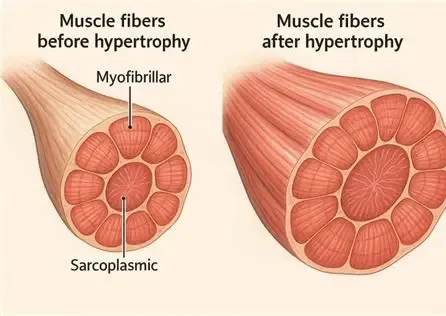 |
Atrophy | Reverse of atrophy and results in muscle fibres becoming thinner and weaker.
Described as muscle wasting.
Causes can be ageing process, poor diet, inactivity, the cessation of heavy resistance training programme.
Usually occurs due to the reversibility principle. 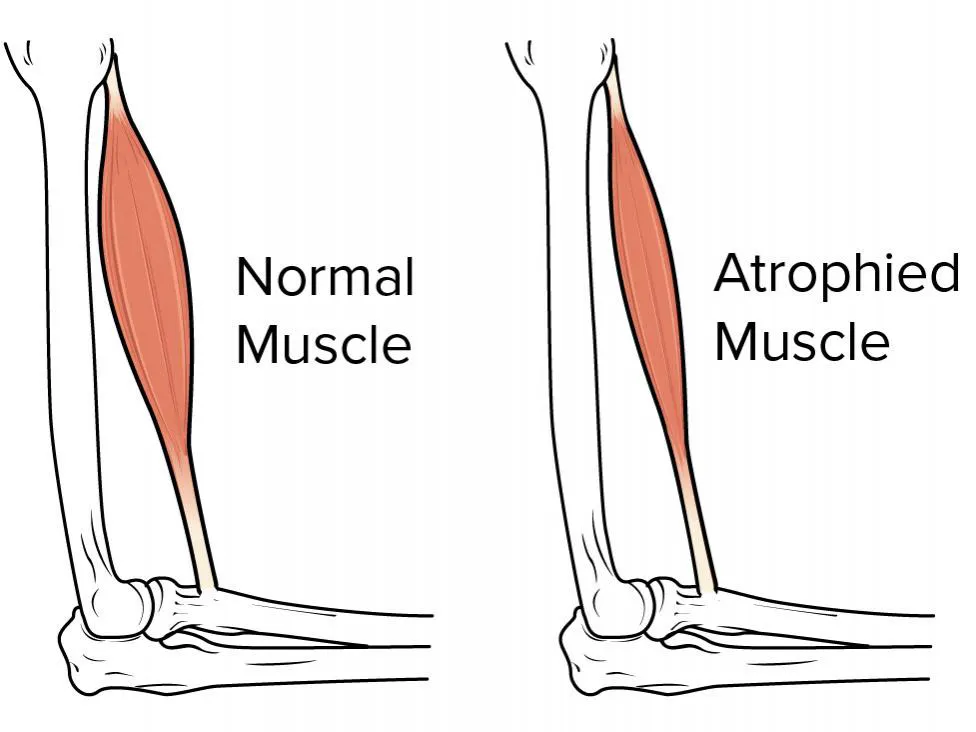 |
Muscular endurance training | Used early on in training programme before moving to muscular strength development where greatest structural benefits will be realised.
Though less adaptations than muscular strength, still very relevant for long-distance running, cycling, rowing.
Can be delivered in circuit training format, gym resistance classes and more. |
Effects of cardiovascular training | Perhaps provides the most significant health benefits out of all modes, dramatically reducing risk of high blood pressure, diabetes, heart disease, some cancers, and strokes.
Burns fat due to the heart, lungs and vascular system having to dramatically increase output to supply exercising muscles with more oxygen. |
Adaptations | There are adaptations in the skeletal system, muscular system, nervous system, cardiovascular system, mental health and general health.
Strength training, endurance training, and cardiovascular training all have different effects.
Detailed tables are on pages 28-30 of textbook. |
Response to exercise | Different types of exercises will have different responses. These responses include:
Nervous system activity increase (greater control of bodily systems.
Heart rate and blood flow increase to active tissues.
Joints are more mobile due to increase synovial fluid.
Concentration of CO2 in blood increases therefore increased rate of breathing.
Blood pressure increases to further increase blood flow.
Arterties to the active tissues dilate to further increase blood flow.
AND MORE |
Blood pooling | Blood pooling = accumulation of blood in the lower extremities (usually legs) due to gravity
Happens when muscle pump isn’t active (e.g. standing still, sudden stop after exercise)
Reduces venous return to the heart → less blood pumped out
Can cause drop in blood pressure
Symptoms: dizziness, lightheadedness, fainting (syncope)
More likely after exercise if no cool-down
Prevented by: gentle movement, cool-down, ankle pumps, walking, elevating legs
Relevant in Pilates: avoid sudden stops, encourage gradual transitions + circulation |